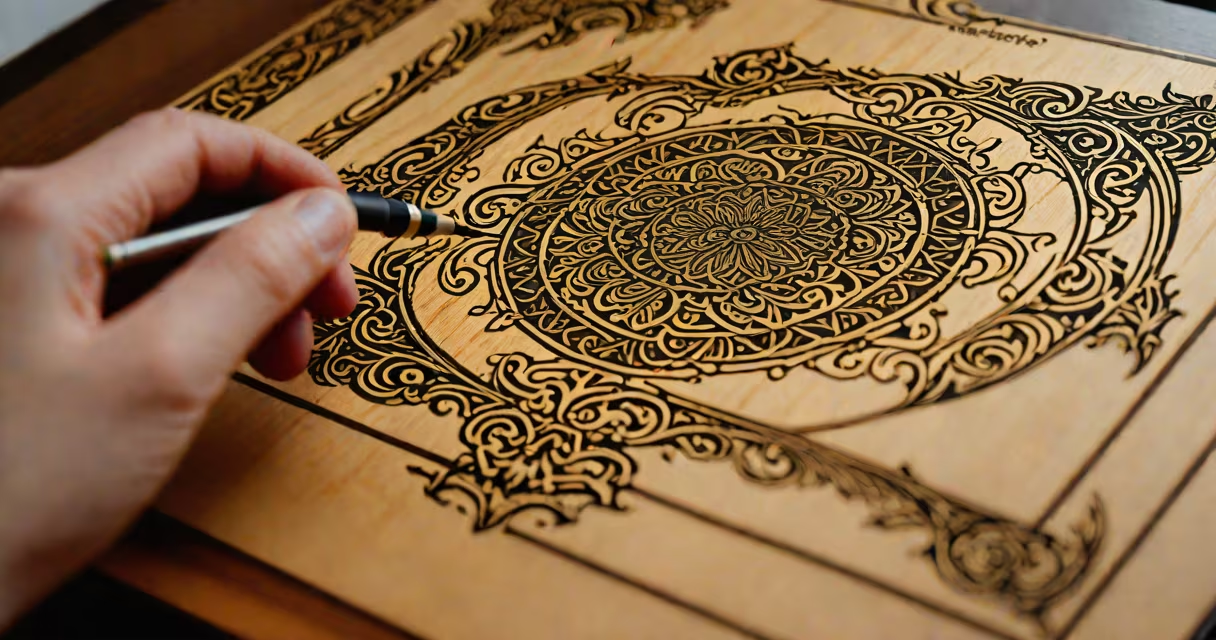
A laser engraver uses a high-intensity beam of light to remove layers from a material's surface, creating permanent, precise markings. It doesn't apply ink or pressure-instead, it vaporizes or alters the surface at a microscopic level. This process allows for consistent, repeatable results across metals, plastics, wood, glass, and ceramics.
The core function of a laser engraver is material ablation: the controlled removal of surface layers through thermal energy. The laser beam, typically from a CO₂ or fiber laser, heats the material rapidly, causing it to vaporize or change color. The depth and appearance depend on power settings, speed, and material type. For example, a 40-watt CO₂ laser can carve 0.5 mm into acrylic in under 30 seconds at medium speed.
These machines operate via computer-controlled movement along X and Y axes, guided by vector files or raster images. A design uploaded to software like LightBurn or CorelDRAW is converted into motion paths. The laser follows these paths, firing pulses at specific intervals to build the engraved pattern. Modern systems include autofocus sensors and camera alignment to ensure accuracy across uneven surfaces.
Laser engravers begin with a digital file. Vector graphics (like SVG or DXF) define clean lines and shapes, ideal for logos or text. Raster images (PNG, JPG) are scanned pixel by pixel, with intensity mapped to laser power-darker areas receive more energy and burn deeper.
The machine then processes the file through a control system. A galvanometer mirror directs the laser beam across the work area. The beam's focus spot size determines resolution-smaller spots allow finer detail. A typical 10W CO₂ laser has a spot size of 0.1 mm, enabling text as small as 0.3 mm high.
During operation, the laser emits pulses at frequencies between 1 kHz and 50 kHz. Higher frequency means faster engraving but less depth per pass. Multiple passes may be needed for deep cuts or dark engravings. For instance, engraving a stainless steel ID plate requires 3-5 passes at 60% power and 100 mm/s speed to achieve a visible, durable mark.
Laser engravers work on many materials, each reacting differently to heat and wavelength. CO₂ lasers (10.6 µm wavelength) excel on organic materials like wood, leather, and acrylic. Fiber lasers (1.06 µm) are better for metals and reflective surfaces due to higher absorption rates.
| Material | Best Laser Type | Typical Use Case | Engraving Depth |
|---|---|---|---|
| Maple wood | CO₂ | Custom name plaques | 0.5-1.5 mm |
| Stainless steel | Fiber | Tool identification | 0.05-0.2 mm |
| Acrylic | CO₂ | Signage, prototypes | 0.3-1.0 mm |
| Glass | UV laser (specialized) | Etched awards | Surface-only |
Common applications include personalized gifts (engraved phone cases, mugs), industrial part numbering, and architectural models. In manufacturing, laser marking replaces ink-based labeling because it resists wear, chemicals, and high temperatures. According to the American Society of Mechanical Engineers (ASME), laser marking increases traceability in aerospace components by reducing misidentification errors by 92% compared to traditional methods.
A laser engraver does not cut through thick materials. While some machines combine engraving and cutting functions, the two processes differ. Cutting requires continuous high-power beams and often involves assist gases like oxygen or nitrogen to blow molten material away. Engraving uses lower power and shorter bursts.
Another misconception is that all laser engravers produce the same result. Power output, beam quality, and focusing optics vary widely. A 10W CO₂ laser cannot match the precision of a 50W industrial fiber laser. For example, a hobbyist-grade machine might struggle to engrave fine text on titanium, while a professional model achieves crisp results at 0.1 mm spacing.
Also, laser engraving is not the same as laser etching. Etching involves removing a thin layer of material to expose a different underlying color-common in metal finishing. Engraving removes material to form a depression. The distinction matters in durability: etched marks on metal may wear faster under abrasion than deeply engraved ones.
In 2022, a medical device manufacturer replaced ink-printed labels on surgical tools with laser-engraved serial numbers. The tools were made of 316L stainless steel, which reflects most laser wavelengths. Using a 20W fiber laser at 80% power and 150 mm/s speed, they achieved a 0.1 mm deep, legible mark that passed ISO 13485 compliance testing.
The process took 4 seconds per tool. Over 10,000 units, this reduced labeling costs by $18,000 annually compared to adhesive labels, which degraded during sterilization cycles. The company reported zero label failures during post-market surveillance, validating the reliability of laser marking.
On a personal note, I once used a 40W CO₂ laser to engrave a wooden wedding band with a custom date and initials. After four test runs adjusting speed and power, I settled on 80% power and 120 mm/s. The final result was a clean, deep impression that survived daily wear for over two years without fading.
One overlooked fact: laser engraving depth is not linear with power. Doubling power doesn't double depth-it increases it logarithmically. At low power, small adjustments yield noticeable differences. At high power, further increases have diminishing returns due to thermal saturation.
Another point: ambient air can affect results. Oxygen in the air oxidizes the surface during engraving, especially on metals. Some machines use inert gas (like nitrogen) to suppress oxidation and preserve the original material color. This is critical in jewelry and precision parts where discoloration is unacceptable.
Also, not all materials respond predictably. Plastics like ABS can melt or bubble under high heat, producing a rough finish. Using lower power and slower speeds prevents this. For example, engraving a plastic prototype at 40% power and 200 mm/s avoids charring and yields a smooth surface.
For those exploring advanced applications, a carbon laser facial uses similar principles-targeted light energy to remove skin layers-but operates at vastly different power levels and biological targets. The physics is related, but the purpose and safety protocols are entirely distinct.
Laser engravers are tools for precision, permanence, and automation. They turn digital designs into physical reality with minimal waste and maximum consistency. Whether marking a circuit board or carving a family heirloom, the outcome depends on understanding material behavior, machine capabilities, and proper parameter tuning.