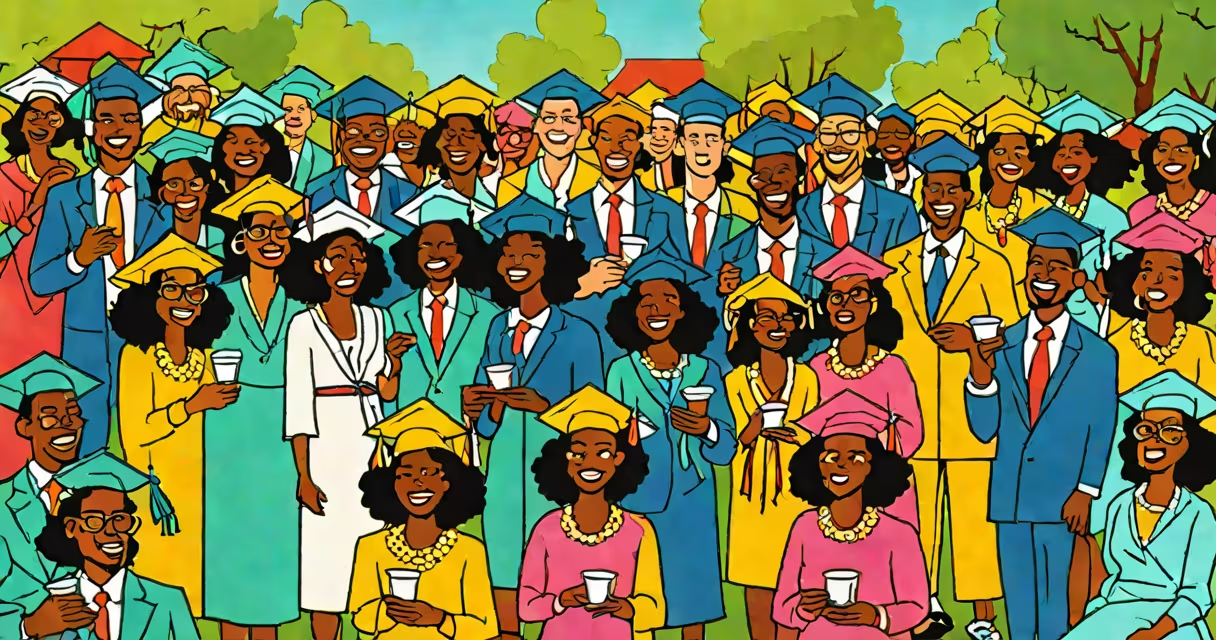
Graduation parties typically feature formal or semi-formal attire, often blending academic regalia with personal style. Guests wear coordinated outfits ranging from suits and gowns to themed costumes, depending on the event's tone and cultural context.
These events mark the culmination of years of study, and clothing choices reflect both celebration and identity. While traditional academic dress remains central, many attendees incorporate elements of their culture, major, or personality into their look.
According to the University of Michigan's Office of Student Affairs, 68% of students report wearing formal or semi-formal attire to graduation ceremonies and associated parties. This figure rises to 82% when including guests who attend with the graduate.
Graduation parties follow a dual structure: a formal ceremony and a celebratory gathering. The attire reflects both moments. During the ceremony, official academic regalia-gown, hood, cap-is worn. Afterward, guests often switch to more relaxed or expressive clothing.
For the party portion, attendees choose outfits based on venue, time of day, and host preferences. A daytime backyard party may call for linen suits and sundresses. An evening rooftop event demands black tie or cocktail attire. Some hosts issue dress codes like "vintage 1980s" or "academic parody," which influence outfit decisions.
When attending a party hosted by a graduate, the guest's outfit should acknowledge the occasion without overshadowing the honoree. A well-tailored suit or elegant dress strikes this balance. Overly flashy or distracting clothing risks drawing attention away from the graduate.
Common materials include wool, silk, polyester blends, and cotton. Wool suits offer structure and warmth for fall or winter events. Silk blouses and dresses provide elegance for spring or summer gatherings. Polyester blends are popular for affordable, wrinkle-resistant options.
Outfits vary by gender and regional norms. In the U.S., men often wear dark suits with ties or bowties. Women may wear cocktail dresses, pantsuits, or tailored skirts with heels. Non-binary and gender-nonconforming guests frequently mix elements-such as a suit jacket with a skirt or a dress with a bowtie-to express identity.
| Outfit Type | Typical Materials | Occasion Examples |
|---|---|---|
| Semi-formal suit | Wool, cotton twill | Daytime garden party, afternoon ceremony |
| Cocktail dress | Silk, satin, stretch knit | Evening rooftop reception, holiday-themed party |
| Academic regalia | Wool blend, velvet trim | Ceremony only, photo session |
| Themed costume | Custom fabric, sequins, embellishments | College pride night, 80s nostalgia party |
One non-obvious detail: the color of the gown's lining often indicates the graduate's field of study. For example, a psychology degree may have a lavender lining, while engineering uses red. This tradition, upheld by the Association of College and University Programs in Academic Regalia, ensures recognition beyond the diploma.
Graduation parties occur in homes, hotels, parks, and university halls. The setting dictates appropriate attire. A beachside party may see guests in linen shirts and sandals. A ballroom event calls for floor-length gowns and tuxedos.
Why wear specific clothes? Clothing signals respect for the achievement, marks social boundaries, and reinforces group identity. Wearing a suit or dress shows formality and honor. Themed outfits celebrate shared memories-like a class's favorite movie or a campus legend.
I once attended a grad party where the theme was "The Graduate" (1967 film). A friend wore a white suit and a single feather in his lapel. He didn't win the costume contest, but he stood out-literally and culturally. The reference wasn't obvious to everyone, but those who recognized it laughed, nodded, and took photos.
Many assume academic regalia is worn throughout the entire celebration. That's incorrect. The cap, gown, and hood are reserved for the ceremony. Removing them after the ceremony is standard practice. Wearing them at the party risks looking out of place or overly performative.
Another mistake: matching the graduate's outfit too closely. Guests should complement, not copy. Wearing the same shade of navy as the graduate's suit can create visual competition. Instead, choose a different hue or texture-like a textured blazer or patterned dress.
Some confuse "formal" with "expensive." A $300 designer dress isn't required. A well-fitted, clean outfit from a thrift store or rental service meets the standard. The key is intentionality-not price.
What do people wear to grad parties? Formal or themed outfits that honor the graduate's process. Choices depend on time, place, and personal expression. Whether dressed in a tuxedo, a floral dress, or a retro costume, the goal is celebration-not performance.
Attire becomes part of the memory. A photo of a graduate in their cap, surrounded by friends in varied colors and cuts, captures joy, diversity, and transition. That moment lasts longer than the outfit itself.
Understanding the purpose behind the clothes-respect, recognition, fun-makes the choice easier. And when in doubt, ask the host. A simple "What's the vibe?" avoids missteps and builds connection.