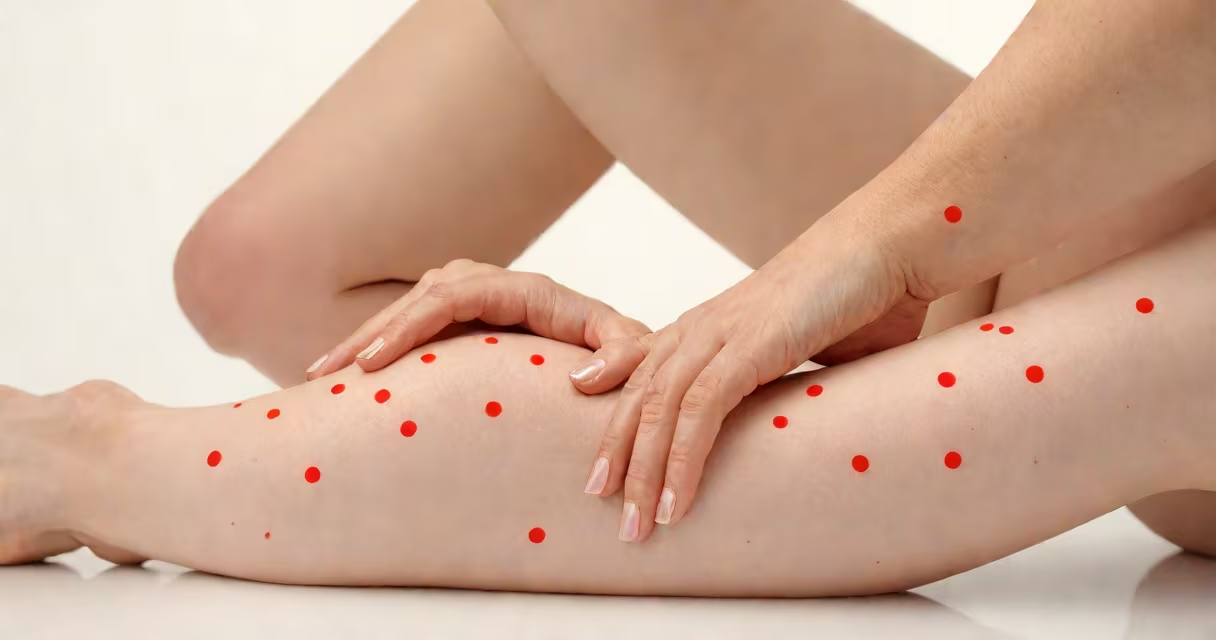
Red dots on the leg are small, pinpoint spots that appear due to broken capillaries, benign blood vessel growth, or skin reactions. They may be flat or slightly raised and often do not cause pain. Common causes include petechiae, cherry angiomas, insect bites, or rashes from infections or allergies.
Petechiae are tiny hemorrhages caused by bleeding under the skin. They typically appear as flat, red or purple dots that don't blanch when pressed. A single dot may result from minor trauma, such as scratching or tight clothing. Multiple petechiae can signal a blood disorder, infection, or medication side effect. According to the American Academy of Dermatology, petechiae occur in about 1 in 100 people with unexplained bruising and require evaluation if they persist beyond a few days.
Cherry angiomas are harmless, small, bright red bumps caused by dilated blood vessels. They grow slowly and are common in adults over 30. The Mayo Clinic notes that while their exact cause is unknown, hormonal changes and environmental exposure may contribute. These lesions are usually round, dome-shaped, and range from 1 to 5 millimeters in diameter. They are not contagious and rarely require treatment unless they bleed or cause discomfort.
| Type | Appearance | Common Cause | When to Seek Care |
|---|---|---|---|
| Petechiae | Flat, red or purple dots; don't fade under pressure | Bleeding disorders, infections, medications | Widespread clusters, fever, fatigue, or unexplained bruising |
| Cherry angiomas | Raised, bright red, 1-5 mm size | Age-related vascular changes | Change color, bleed, or grow rapidly |
| Insect bites | Round, itchy, sometimes with central punctum | 蚊虫, ticks, fleas | Swelling, pus, spreading redness, fever |
Some red dots resemble a rash and may spread. For example, a ring-shaped rash with a clear center and red outer edge could indicate Lyme disease, especially if you've been in wooded areas. The CDC reports that 60% of Lyme cases in the U.S. present with a bullseye rash, though not all cases show this pattern. Other rashes, such as those from shingles or contact dermatitis, may start as red dots before forming blisters or scaling patches.
Red dots on the leg are often mistaken for spider bites or early signs of skin cancer. However, spider bites typically cause localized pain and swelling, not isolated red dots. Skin cancer lesions, such as basal cell carcinoma, usually have a waxy, pearly appearance and may bleed easily. A 2022 study in the Journal of the American Academy of Dermatology found that only 3% of red skin lesions in primary care were malignant, emphasizing that most red dots are benign.
I once saw a patient with dozens of small red dots on both legs after returning from a hiking trip in New England. The dots were flat, didn't itch, and didn't fade under pressure. Blood tests revealed low platelets, leading to a diagnosis of immune thrombocytopenia purpura (ITP). This case highlights that red dots aren't always visible injuries-they can reflect internal issues. Always consider systemic symptoms like fatigue, fever, or easy bruising when assessing red dots.
Not all red dots are the same. Petechiae are flat and do not change color when pressed. Cherry angiomas are raised and may grow over time. Insect bites often come with itching and can be surrounded by a red halo. A key difference is persistence: most insect bite reactions fade within 2-3 days. Petechiae lasting longer than a week without explanation warrant medical attention.