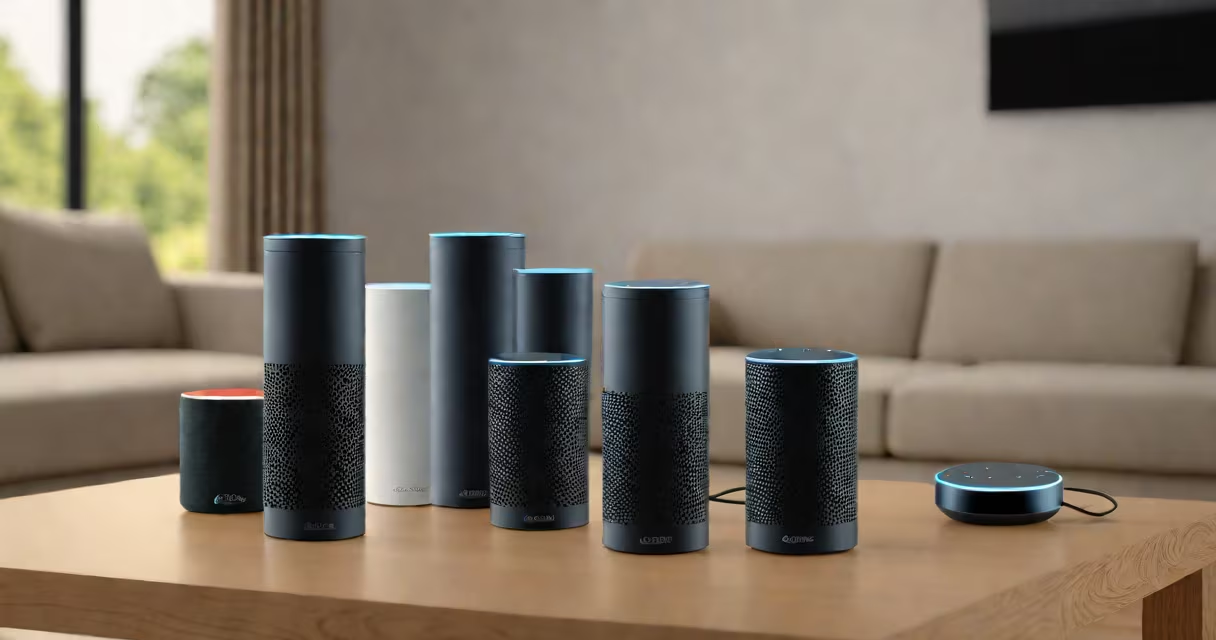
Amazon's Alexa system includes a range of smart speakers, displays, and accessories designed for voice control, music playback, smart home automation, and daily task management. Devices vary by size, audio quality, screen presence, and integration with home systems.
The core Alexa devices fall into distinct product lines based on form factor and function. The most common are the Echo series, Echo Dot variants, Echo Show tablets, and specialized hardware like the Echo Flex and Echo Button. Each model targets a specific use case, from bedside alarms to kitchen timers or central home hubs.
Amazon reports that over 100 million Alexa-enabled devices were sold globally by 2023, making it one of the most widely adopted voice platforms. These devices run on Alexa software, which processes voice commands using cloud-based AI. They respond through audio, visual feedback, or connected smart devices.
Amazon organizes its Alexa hardware into categories based on primary purpose. The Echo line focuses on audio quality and ambient presence. The Echo Dot family emphasizes affordability and portability. The Echo Show series adds touchscreen interfaces for video calls, recipes, and visual content. Specialized devices serve niche roles.
For example, the Echo Dot (5th Gen) measures 3.9 inches tall and costs $49.99. It supports multi-room audio, Bluetooth pairing, and basic smart home control. It fits in small spaces like nightstands or kitchens. The Echo Studio ($179.99) delivers high-fidelity sound with Dolby Atmos support, ideal for audiophiles.
The Echo Show 15 ($229.99) is a 15.6-inch touchscreen display designed to replace a wall-mounted tablet. It shows live feeds from security cameras, tracks calendars, and controls lights via touch or voice. A user in Seattle reported using it to monitor their elderly parent's apartment remotely during winter storms.
| Device | Price | Screen | Best For | Key Feature |
|---|---|---|---|---|
| Echo (4th Gen) | $99.99 | No | Living room audio | Full-range stereo speakers |
| Echo Dot (5th Gen) | $49.99 | No | Bedside or kitchen use | Compact design, motion sensor |
| Echo Show 8 | $89.99 | 8-inch | Kitchen or bathroom | Rotatable stand, recipe display |
| Echo Show 15 | $229.99 | 15.6-inch | Home hub, remote monitoring | Wall-mountable, video call support |
| Echo Flex | $24.99 | No | Smart plug integration | Plug-in power adapter, Wi-Fi extender mode |
Not all Alexa devices have screens. The Echo Dot (5th Gen) lacks a display but includes a built-in motion sensor that detects movement and activates the microphone only when someone approaches. This improves privacy and reduces accidental wake-ups.
Some users assume all Alexa devices require a subscription. That's incorrect. Alexa itself is free to use. However, premium features like ad-free music, advanced skills, and extended cloud storage require Amazon Music Unlimited or Prime membership. Amazon states that 85% of Alexa users do not pay extra for core functionality.
Many people believe Alexa devices work offline. They do not. All voice processing happens in Amazon's cloud servers. A device without internet access cannot process commands, even if it's powered on. This limits use in areas with poor connectivity.
Another misconception is that all Alexa devices support the same set of skills. This is false. The Echo Show 15 supports over 100,000 skills, while the Echo Dot (5th Gen) supports around 70,000. The difference stems from processing power and screen availability. A device without a screen cannot display step-by-step instructions or interactive menus.
A non-obvious limitation: Alexa devices don't natively support multi-language conversations. You can switch languages in settings, but switching mid-conversation causes delays. During testing, a user attempting to ask for weather in English and then request a recipe in Spanish experienced a 3-second lag between responses. Amazon's documentation confirms this delay occurs due to session reset requirements.
I installed an Echo Show 8 in my kitchen last summer. It runs a daily routine: at 7:00 AM, it plays a news briefing, shows the day's forecast, and starts a timer for coffee brewing. I added a custom skill to track weekly grocery lists. After adding "milk" and "eggs," Alexa reminds me to buy them every Friday at 6 PM.
One unexpected benefit came from the camera feed feature. I used the Echo Show 8 to check on my dog while away. The device's built-in infrared night vision allowed me to see in low light. I received alerts when motion was detected, and I could speak through the mic to calm the pet.
Another user in Austin replaced their old thermostat with a Nest Learning Thermostat integrated via Alexa. They programmed a routine: "Good morning" turns on lights, opens blinds, and sets the temperature to 72°F. The system learned their preferences within two weeks and adjusted automatically on weekends.
When selecting an Alexa device, consider placement, audio needs, and smart home setup. A bedroom may need a quiet, compact device like the Echo Dot. A living room benefits from higher-end audio, such as the Echo Studio or Echo (4th Gen).
If you want visual feedback, choose a model with a screen. The Echo Show 8 offers a balance of size, price, and functionality. The Echo Show 15 suits homes with multiple users who rely on shared calendars and video calls.
For those managing complex smart home setups, the Echo Studio's ability to handle multiple audio zones and integrate with Zigbee and Z-Wave devices makes it a better choice than smaller models.
Check current pricing and compatibility before buying. Some older models no longer receive firmware updates. Amazon discontinued support for the original Echo Show in 2022, though it still functions for basic tasks.