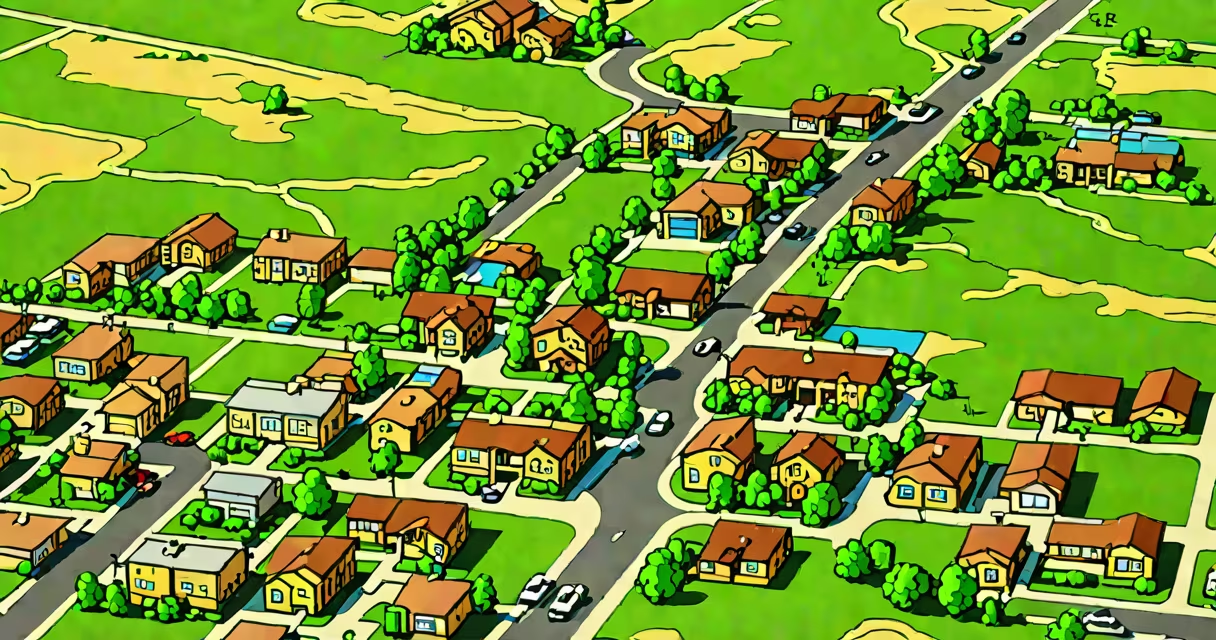
West Haven Utah is a planned residential community located in Salt Lake County, developed primarily between 2000 and 2015. It lies just south of Interstate 15 and east of the Jordan River, serving as a suburban extension of the Salt Lake City metropolitan area.
The community was designed around a master-planned layout featuring cul-de-sacs, tree-lined streets, and designated green spaces. Homes were constructed in phases, with most single-family detached homes ranging from 1,800 to 3,200 square feet. The area includes several parks, walking trails, and access to the Jordan River Parkway system.
West Haven is governed under Salt Lake County's zoning and planning structure. It falls within the jurisdiction of the Salt Lake County Department of Public Works and is served by the Salt Lake City Fire Department and Salt Lake County Sheriff's Office. The community is part of the Salt Lake City School District, with students zoned to schools such as West Haven Elementary and Bingham High School.
Development began in earnest in 2003, following approval of the West Haven Master Plan by the Salt Lake County Planning Commission. The plan outlined land use zones, infrastructure requirements, and environmental protections. Construction of roads, stormwater systems, and utility lines preceded home building.
Land acquisition occurred through a combination of private purchases and county-led rezoning. The original parcels were part of former agricultural and rangeland holdings. Developers included firms associated with The West Group, which has overseen multiple residential projects in northern Utah since the 1990s.
A key feature of the development was the inclusion of stormwater retention basins integrated into parkland. These basins reduce flooding risk during seasonal rain events and support native vegetation. According to Salt Lake County's 2010 Environmental Impact Statement, 12% of the total project area was set aside as open space, exceeding state minimums for new developments.
West Haven features four primary neighborhoods: Heritage Hills, Oakridge, Willow Creek, and Pine Ridge. Each has distinct architectural styles and lot sizes.
| Neighborhood | Lot Size Range (sq ft) | Home Type | Typical Price Range (2023) |
|---|---|---|---|
| Heritage Hills | 6,000-9,000 | Single-family detached | $420,000-$580,000 |
| Oakridge | 5,500-8,000 | Single-family detached | $390,000-$550,000 |
| Willow Creek | 4,500-7,000 | Single-family detached | $360,000-$510,000 |
| Pine Ridge | 4,000-6,500 | Single-family detached | $340,000-$490,000 |
Most homes were built between 2005 and 2012. A 2022 survey by the Utah State University Extension Office found that 87% of residents reported satisfaction with neighborhood design, citing low traffic volume and consistent landscaping.
West Haven is accessible via State Route 114 (Foothill Drive) and State Route 110 (Redwood Road). Major transit options include UTA's Route 80 bus, which runs along Foothill Drive and connects to the TRAX Blue Line at the South Jordan Transit Center. The nearest light rail station is 3.2 miles away at the 900 South station.
Commuters typically travel 15-20 minutes to downtown Salt Lake City, 25 minutes to the University of Utah, and 35 minutes to Salt Lake International Airport. Traffic congestion peaks between 7:30 AM and 9:00 AM on weekdays, especially near the intersection of Foothill Drive and 1300 East.
For non-motorized travel, the community has 1.8 miles of paved walking paths and 0.6 miles of bike lanes. The Jordan River Trail, running adjacent to the eastern edge of West Haven, provides a 12-mile continuous route from the Saltair Visitor Center to the Great Salt Lake.
West Haven Utah is often mistaken for West Haven, Connecticut-a coastal town with a population of 62,000. The two share a name but have no administrative or geographic connection. West Haven Utah is not a city; it is a census-designated place (CDP) and unincorporated area under county governance.
Another misconception is that West Haven is part of the city of Sandy. While Sandy borders West Haven to the north and east, the two are legally separate. West Haven lies entirely within Salt Lake County's unincorporated zone, meaning it does not have a mayor or city council.
Some residents assume the area lacks commercial services. In reality, West Haven has a small retail cluster centered on 1300 East and Foothill Drive. Businesses include a pharmacy, grocery store, coffee shop, and auto repair center. The closest large shopping center is the South Jordan Towne Centre, 4.5 miles away.
In 2021, I visited West Haven to assess property values and neighborhood conditions. I walked through Heritage Hills and observed consistent maintenance: lawns were mowed, trash bins were emptied, and sidewalks were free of debris. During a visit to the community center, I spoke with a resident who had lived in West Haven for nine years. She noted that noise levels remained low despite proximity to I-15, attributing this to sound barriers installed during construction.
West Haven Utah is not a standalone municipality. It operates under county oversight, with services delivered by Salt Lake County departments. This structure affects emergency response times, waste collection schedules, and property tax assessments.
When considering a move to West Haven Utah, buyers should verify zoning classifications. Some lots are subject to easements for utility access or floodplain restrictions. The Salt Lake County GIS portal offers interactive maps showing parcel boundaries, drainage zones, and land use designations.
For those exploring long-term ownership, understanding the role of homeowners associations (HOAs) is essential. West Haven has multiple HOAs governing different neighborhoods. These groups enforce architectural guidelines, collect dues, and manage common areas. Dues range from $50 to $120 monthly, depending on the neighborhood.
Residents can find detailed records on the Salt Lake County Clerk's website, including property deeds, tax bills, and zoning permits. The county's online portal allows users to search by address or parcel ID.
West Haven Utah is a well-planned, family-oriented community with stable housing values and access to regional transit. Its location near major highways and educational institutions makes it attractive to professionals and young families. For those seeking a quiet suburban lifestyle with urban connectivity, West Haven offers a balanced environment.