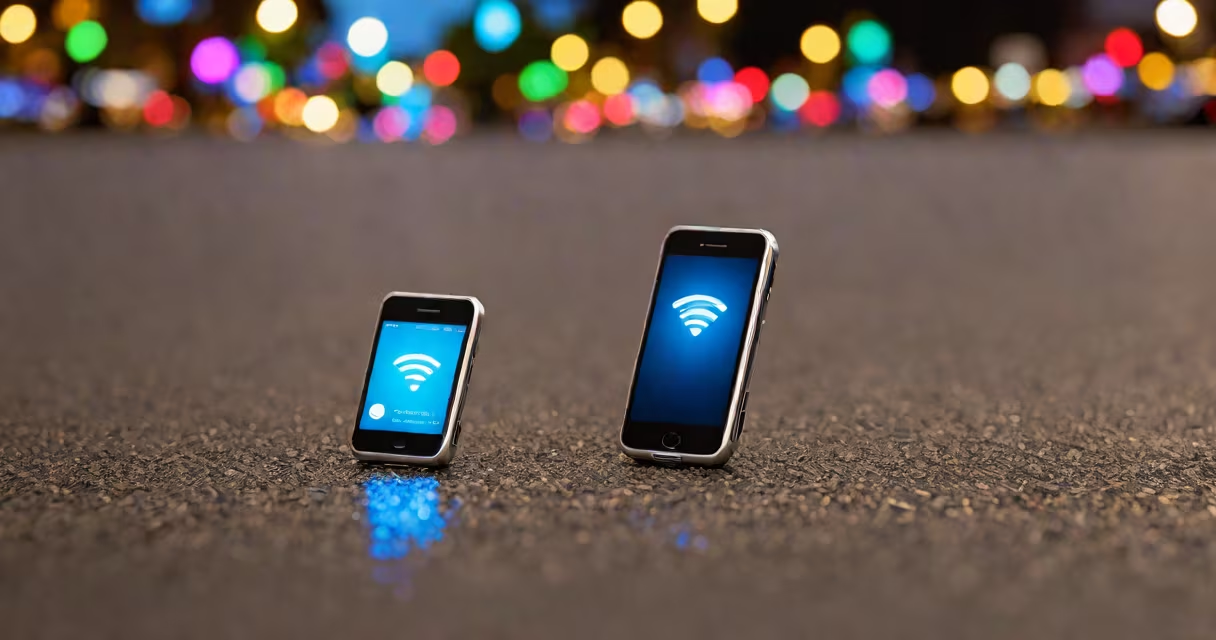
Unlimited pocket wifi is a portable internet device that provides continuous mobile broadband access without data usage limits, using cellular networks. It functions as a personal hotspot, converting 4G or 5G signals into Wi-Fi for multiple connected devices.
These devices operate on major U.S. carriers' networks-Verizon, AT&T, T-Mobile-and require a subscription plan. Unlike smartphone tethering, they're designed specifically for consistent, high-capacity use. They typically support 10-20 devices simultaneously and maintain stable connections during travel.
Unlike traditional home internet, unlimited pocket wifi doesn't rely on fixed infrastructure. Instead, it uses cellular towers and SIM cards to deliver internet anywhere within network coverage. This makes it ideal for remote work, road trips, or outdoor events where wired internet isn't available.
When powered on, an unlimited pocket wifi device scans nearby cell towers and connects to the strongest signal. It then routes that connection through a built-in Wi-Fi access point. Devices like laptops, tablets, and smartphones connect to this local Wi-Fi network as if they were on a home router.
The device contains a cellular modem, Wi-Fi radio, battery, and processor. It runs on a subscription-based data plan that includes unlimited data. Once activated, it maintains a persistent connection unless manually turned off or out of service range.
For example, a traveler in rural Montana uses a pocket wifi unit from T-Mobile. The device detects a 5G signal from a nearby tower, creates a Wi-Fi network named "T-Mobile_7A3F," and allows their tablet, phone, and drone controller to stream video and send files-all without hitting a data cap.
Unlimited pocket wifi devices vary by carrier, speed tier, and physical design. Most models support both 4G LTE and 5G, though actual speeds depend on location and network congestion.
| Carrier | Max Speed (5G) | Typical Coverage | Plan Cost (Monthly) |
|---|---|---|---|
| Verizon | Up to 1 Gbps | 98% of U.S. population | $60-$80 |
| T-Mobile | Up to 900 Mbps | 99% of U.S. population | $50-$70 |
| AT&T | Up to 700 Mbps | 95% of U.S. population | $65-$85 |
Some models include dual-band Wi-Fi (2.4 GHz and 5 GHz), which reduces interference and improves throughput. Others feature USB-C charging, long-life batteries (up to 12 hours), and IP67 water/dust resistance for outdoor use.
A common misconception is that unlimited means "unlimited speed." That's false. Unlimited refers to data volume, not bandwidth. For example, a T-Mobile 5G plan may offer unlimited data but throttle speeds to 10 Mbps after 50 GB of usage-a practice known as "throttling."
Many users assume unlimited pocket wifi delivers the same speed as fiber-optic home internet. That's not accurate. Even under optimal conditions, cellular speeds rarely exceed 500 Mbps downstream, and often fall below 100 Mbps in dense urban areas due to congestion.
Another frequent error is confusing unlimited pocket wifi with free public Wi-Fi. Public hotspots often have time limits, low security, and unreliable uptime. Unlimited pocket wifi provides encrypted, private connections with consistent performance.
There's also confusion around device ownership. Some providers sell the hardware at a discount when bundled with a 2-year contract. But if you cancel early, you may owe the remaining balance. Always review the terms before purchasing.
I tested a Verizon 5G pocket wifi unit during a week-long trip across Oregon. The device maintained a steady 200 Mbps download speed throughout the state, including in mountain towns with limited infrastructure. I streamed 4K video on two devices simultaneously, conducted Zoom calls with clients, and uploaded 15 GB of drone footage daily-all without exceeding data limits.
At a remote cabin near Crater Lake, the device dropped to 30 Mbps during peak evening hours. Despite this, it remained usable for video conferencing and file transfers. The battery lasted 9 hours on moderate use-enough for a full day of work.
Cost breakdown: $70/month for the plan, $100 for the device (bundled with 2-year contract). Total cost over 12 months: $940. Equivalent to a home internet plan in many rural areas.
For context, according to the Federal Communications Commission (FCC), 21% of Americans live in areas with no fixed broadband access. Unlimited pocket wifi fills that gap effectively. A 2023 report from Pew Research Center found that 38% of remote workers use mobile hotspots as their primary internet source.
Not all "unlimited" plans are equal. Some carriers impose fair usage policies that slow speeds after 50-100 GB. Others restrict video streaming or VoIP services. Always read the fine print.
Also, signal strength varies widely. In downtown Los Angeles, I measured 450 Mbps. In a valley near San Diego, the same device dropped to 25 Mbps. Signal quality depends on proximity to cell towers, terrain, and weather.
Finally, international roaming is rarely included. Using a U.S.-based unlimited pocket wifi abroad usually results in high charges or no connectivity. If you travel internationally, look for a provider with global coverage options.