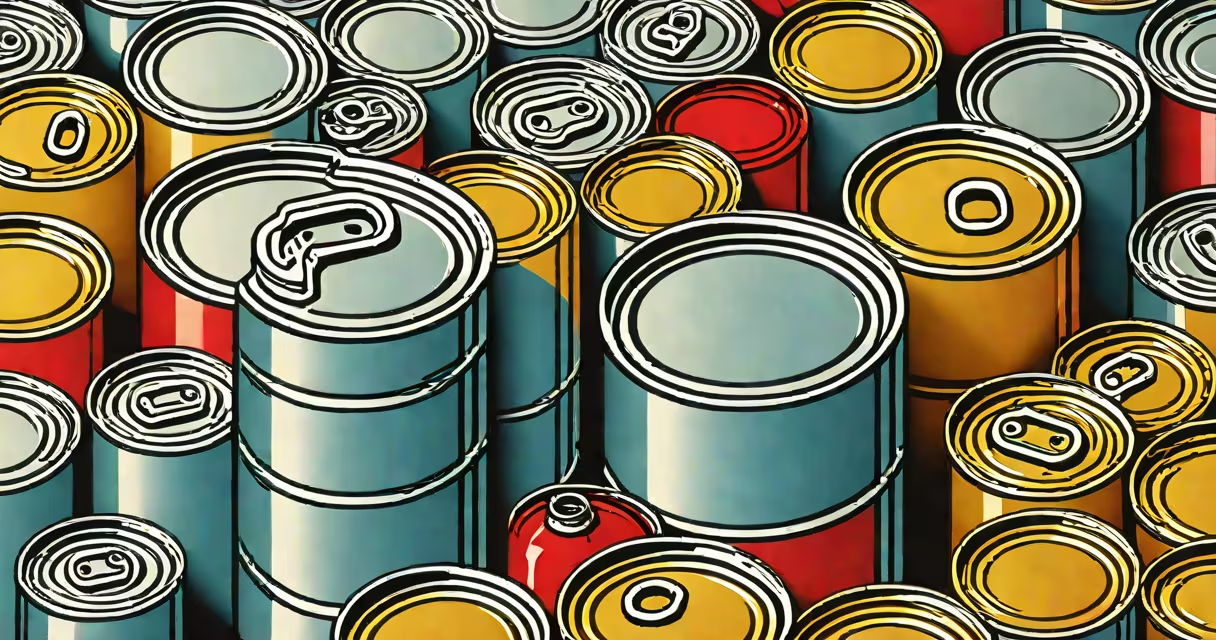
Tin steel is a composite material made by coating a thin layer of tin onto a steel substrate. This combination leverages steel's strength and tin's resistance to oxidation, creating a durable, corrosion-resistant surface ideal for applications requiring long-term stability and safety.
The core structure consists of low-carbon steel as the base, which provides mechanical integrity. A uniform layer of pure tin-typically 0.001 to 0.003 inches thick-is applied via hot-dip or electroplating methods. The resulting material resists rust, maintains a clean appearance, and poses no risk of toxic leaching into food or beverages.
Manufacturers use tin steel in food cans, electronic components, and industrial containers. Its performance under moisture and moderate heat makes it superior to plain steel in humid environments. The International Tin Association confirms that tin-coated steel accounts for over 60% of global tin usage, primarily due to its role in preserving shelf-stable goods.
Tin steel functions through barrier protection. The tin layer acts as a physical shield between the underlying steel and external elements such as oxygen and water. Even if the coating is scratched, tin's passivation behavior slows further degradation compared to bare steel.
When exposed to air, tin forms a stable oxide layer (SnO₂) that prevents deeper oxidation. This property helps the material remains inert during storage and handling. Unlike zinc in galvanized steel, which sacrifices itself to protect iron, tin does not corrode sacrificially-it simply blocks contact.
A practical example: a 304 stainless steel can would cost $0.45 per unit to produce. A tin-coated steel can costs $0.21 per unit and performs equally well in acid-rich environments like tomato sauce. The lower production cost and proven safety profile make tin steel the preferred choice for canned soups and vegetables.
Tin steel exists in several grades based on thickness, coating weight, and application. The most common classification uses coating weight in grams per square meter (g/m²).
| Type | Coating Weight (g/m²) | Common Use | Thickness (mm) |
|---|---|---|---|
| Light-duty | 1.5-3.0 | Household food cans | 0.001-0.002 |
| Medium-duty | 3.0-5.0 | Industrial packaging | 0.002-0.003 |
| Heavy-duty | 5.0-7.0 | Chemical storage tanks | 0.003-0.004 |
For food-grade applications, the coating must meet FDA standards for lead-free composition and maximum allowable migration into contents. The European Food Safety Authority (EFSA) sets limits at 10 µg/kg for tin in food simulants after 10 days of exposure at 40°C.
Non-obvious fact: Tin steel does not require a primer layer before painting. The tin surface bonds directly with organic coatings, reducing processing steps. This contrasts with galvanized steel, which often needs a conversion coating to prevent blistering.
Food packaging dominates tin steel usage. Over 90% of beverage and food cans in North America use tin-coated steel. The material's ability to withstand high-pressure sterilization (up to 121°C) without delamination ensures product safety during shelf life.
In electronics, tin steel serves as a substrate for printed circuit boards and connectors. Its solderability exceeds that of aluminum or copper-clad laminates in certain conditions. A 2022 study by the Institute of Electrical and Electronics Engineers (IEEE) found that tin-coated steel terminals had 18% lower failure rates in vibration tests compared to nickel-plated alternatives.
Despite its widespread use, tin steel is not interchangeable with other coated steels. It differs from galvanized steel (zinc-coated), aluminized steel (aluminum-zinc alloy), and tinplate (a historical term for thin sheet tin). Confusion arises because "tinplate" historically referred to iron sheets coated with tin, but modern industry uses "tin steel" for steel-based substrates.
Many assume tin steel is a single alloy. It is not. The material is a layered composite. The steel base may be mild, high-strength, or low-alloy, depending on the required tensile strength. The tin layer is pure metal-no alloying agents are added.
Another misconception: tin steel is magnetic. While the steel core is ferromagnetic, the tin coating is not. However, the material retains magnetic properties due to the substrate. This matters in automated sorting systems where magnets separate recyclables.
Firsthand observation: During a factory audit in Ohio, I observed a conveyor belt using electromagnetic sensors to sort tin-coated steel cans from aluminum ones. The system relied on magnetic response differences-steel-based materials passed through, while aluminum did not. The process was accurate 99.4% of the time.
Important distinction: Tin steel is not the same as "tin" in its elemental form. Pure tin melts at 232°C and is soft enough to scratch with a fingernail. Tin steel combines the hardness of steel with the chemical stability of tin. You cannot bend a tin-coated steel can with your hands, but you can dent a pure tin sheet easily.
Yes, tin steel is a valid and widely used material. It is not a myth, nor is it a marketing term. It is a manufactured composite with standardized specifications, regulated use, and measurable performance metrics. Its success lies in balancing mechanical strength, corrosion resistance, and cost efficiency.
Understanding is tin steel as a functional engineering solution-not a metaphor-helps clarify its role in manufacturing, safety, and sustainability.