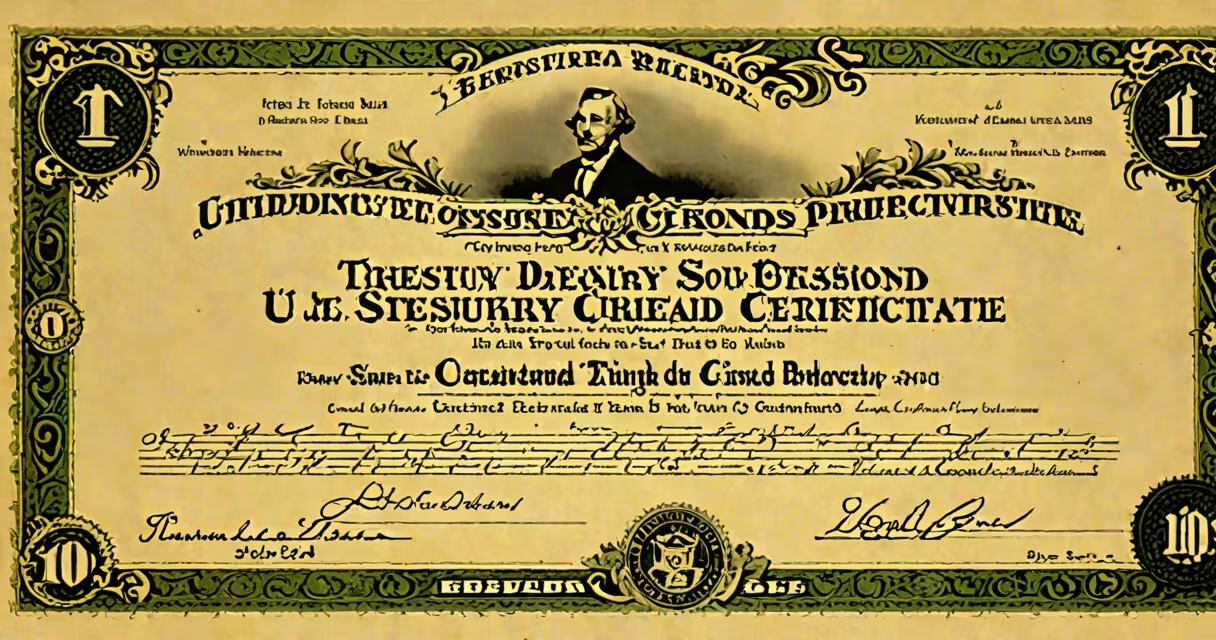
Treasury gov bonds are long-term U.S. government debt securities issued by the Department of the Treasury with maturities ranging from 10 to 30 years. They pay semiannual interest and return the principal at maturity. These instruments are backed by the full faith and credit of the United States government, making them among the safest investments available.
Issued in $1,000 denominations, treasury gov bonds are sold through auctions administered by the U.S. Treasury. Investors receive regular interest payments until the bond matures, at which point the face value is repaid. Unlike stocks, they do not fluctuate in price based on company performance. Instead, their value moves with changes in interest rates and inflation expectations.
The U.S. Treasury issues three main types of securities: bills (short-term, under one year), notes (intermediate-term, 2-10 years), and bonds (long-term, 10-30 years). Treasury gov bonds fall into the last category. They are traded in the secondary market and held by individuals, institutions, and foreign governments alike.
When the U.S. government needs to finance its deficit, it borrows money by issuing treasury gov bonds. These bonds are sold via competitive and non-competitive bidding during regular auctions. The interest rate-called the coupon rate-is set at auction and remains fixed for the life of the bond.
For example, a $10,000 30-year treasury gov bond with a 3.5% annual coupon pays $175 every six months. Over 30 years, the investor receives 60 interest payments totaling $10,500, plus the original $10,000 principal at maturity. This predictable cash flow makes them ideal for retirement planning and long-term savings goals.
Bond prices move inversely to interest rates. If market rates rise after purchase, the bond's price falls because newer bonds offer higher yields. Conversely, falling rates increase demand for existing bonds with higher coupons. This changing affects trading in the secondary market but doesn't change the final payout at maturity.
While "treasury gov bonds" typically refers to nominal bonds with fixed interest rates, the Treasury offers several related instruments. The following table outlines the differences:
| Type | Maturity | Coupon Type | Primary Use |
|---|---|---|---|
| Treasury gov bonds | 10-30 years | Fixed, paid semiannually | Long-term income, portfolio diversification |
| Treasury notes | 2-10 years | Fixed, paid semiannually | Intermediate-term yield, liquidity |
| Treasury bills | 4 weeks - 1 year | Zero-coupon (discounted) | Short-term cash management |
| Savings bonds (I and EE) | 10-30 years | Variable, compounded semiannually | Individual savings, tax-deferred growth |
Each instrument serves a different purpose. Treasury gov bonds are designed for investors seeking steady income over decades. Notes provide balance between duration and yield. Bills suit those needing quick access to capital. Savings bonds offer tax advantages for personal use.
These bonds are considered risk-free assets because they are backed by the U.S. government's ability to tax and print money. According to the Federal Reserve, U.S. Treasury securities are the benchmark for global fixed-income markets. Their yields influence mortgage rates, corporate borrowing costs, and central bank policy decisions.
During economic uncertainty, investors flock to treasury gov bonds as a safe haven. In March 2020, during the early stages of the pandemic, demand surged, pushing 10-year Treasury yields below 1%. This caused the price of existing bonds to rise sharply, even though their coupon rates were fixed.
Many institutional investors-including pension funds, insurance companies, and sovereign wealth funds-hold large portions of treasury gov bonds. The California Public Employees' Retirement System (CalPERS) reported holding $12.3 billion in Treasury bonds as of Q1 2023, citing stability and liquidity as key reasons.
One widespread error is equating treasury gov bonds with high-yield investments. While they are safe, their returns are modest. As of May 2024, the 10-year Treasury yield was 4.2%, lower than the average S&P 500 return of 10% annually over the past decade. They are not meant to outperform equities but to preserve capital.
Another misconception is that buying a bond guarantees a profit. If sold before maturity, the investor may realize a loss due to price volatility. For example, in 2022, rising inflation led to aggressive Fed rate hikes. The price of a 10-year Treasury bond dropped nearly 18% from its peak in January to December, despite receiving regular interest payments.
A lesser-known fact: Treasury gov bonds are issued in both physical and electronic form. The Treasury Direct program allows individuals to buy and hold bonds electronically, avoiding brokerage fees and settlement delays. Physical bonds exist but are rarely used today.
In January 2023, an investor bought a $25,000 30-year treasury gov bond at auction with a 3.8% coupon rate. The bond pays $475 annually ($237.50 every six months). Over 30 years, the investor receives 60 payments totaling $14,250 in interest. At maturity, the full $25,000 is returned.
If the investor holds the bond to maturity, the total return is $39,250. The effective annual yield, assuming reinvestment of interest, is approximately 3.8%. If sold in Year 15, the sale price depends on current market rates. With rates at 5%, the bond's price would drop to around $20,800-resulting in a capital loss even though interest was earned.
This illustrates that while treasury gov bonds are safe from default, they carry interest rate risk. Investors must align their time horizon with their financial goals.
Investors can also buy them through brokers, but this adds transaction costs and potential delays. The Treasury's direct system ensures ownership is recorded in the investor's name, reducing counterparty risk.
As of 2024, the U.S. national debt exceeds $34 trillion, with approximately $22 trillion held in Treasury securities. Of that, about $7.3 trillion is owned by foreign governments, including China and Japan. This widespread ownership underscores the global trust in U.S. fiscal responsibility.
Understanding treasury gov bonds is essential for anyone building a diversified investment strategy. They serve as a foundation for risk management and income generation, especially for retirees and conservative investors.
For those exploring fixed-income options, treasury bonds and notes offer detailed comparisons of maturity, yield, and purchase methods. These tools help match investor profiles with appropriate instruments.