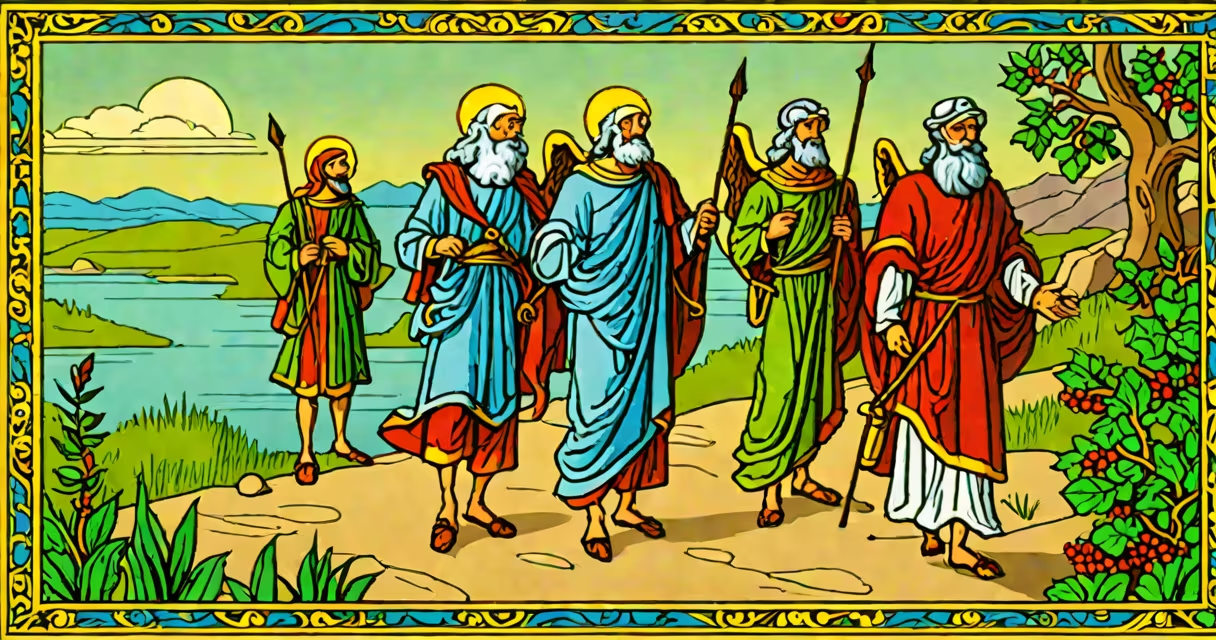
The Book of Tobit is a deuterocanonical narrative composed in the 2nd century BCE, recounting the trials and faith of a righteous Israelite named Tobit who lives in Nineveh during the Assyrian exile. It combines elements of folk tale, religious instruction, and divine intervention, emphasizing God's hidden presence in suffering and justice.
Set during the Assyrian captivity of the northern tribes (circa 722 BCE), the story follows Tobit, a devout Jew who consistently performs acts of charity despite losing his sight. His son, Tobias, journeys to Media to retrieve money owed to Tobit and encounters supernatural aid from the archangel Raphael, disguised as a human traveler. The narrative unfolds through a series of trials: illness, blindness, financial loss, and marital uncertainty-all resolved through prayer, obedience, and divine assistance.
Unlike canonical biblical books, The Book of Tobit was excluded from the Hebrew Bible but retained in the Septuagint and included in Catholic and Orthodox Christian Bibles. It is classified as part of the Apocrypha or Deuterocanonical writings, reflecting its status as sacred scripture in some traditions but not others. Its inclusion in the Catholic canon stems from its alignment with core theological values such as piety, almsgiving, and the efficacy of prayer.
The book operates through a layered structure of cause and effect rooted in divine providence. Tobit's initial act of burying the dead-despite the risk of punishment under Assyrian law-leads to his blindness and exile. This sets the stage for a larger theme: righteousness brings suffering, but suffering is not meaningless. God sees and remembers the faithful.
Tobias's process to Media to collect a debt illustrates the practical challenges of diaspora life. He faces danger from a river monster and a woman whose previous husbands died on their wedding nights. The solution lies in ritual purification: using the heart and liver of a fish caught during the process to drive away demons. This detail reflects ancient Near Eastern beliefs about bodily substances possessing spiritual power-a concept scholars trace to Mesopotamian and Persian magical traditions.
Raphael's role as a divine agent is central. He reveals himself only at the end: "I am Raphael, one of the seven holy angels who enter and serve before the glory of the Lord." This moment confirms the book's theological claim: God acts through unseen messengers. The narrative thus functions as a theological argument against despair-God is active even when absent from view.
The Book of Tobit blends genres: it is a romance, a miracle story, a legal document (the marriage contract), and a didactic tale. Its prose style alternates between vivid storytelling and formal legal phrasing, especially in the marriage agreement between Tobias and Sarah. The text uses Aramaic and Hebrew vocabulary, suggesting a literary origin in the Jewish communities of Babylon or Egypt.
Modern scholarship identifies three primary layers in the composition:
Its literary techniques include irony (Tobit prays for death yet survives), repetition (prayer is invoked 12 times), and symbolic names (Tobias means "God is good"; Sarah means "princess" but also evokes the matriarch).
In Catholic and Eastern Orthodox liturgies, passages from The Book of Tobit are read during Lent and on feast days honoring saints like Saint Raphael. The Church emphasizes its lessons on charity, humility, and intercessory prayer. For example, Tobit's act of burying the dead is cited in the Catechism of the Catholic Church (§1901) as an example of corporal works of mercy.
Protestant traditions generally exclude it from Scripture, citing the lack of Hebrew original and its absence from the Jewish canon. However, it remains a valuable resource for understanding Second Temple Judaism. Scholars at the Hebrew University of Jerusalem have analyzed its legal references, noting parallels to Babylonian family law codes.
Within modern education, the book appears in comparative religion courses and New Proof studies. Its depiction of marriage, healing, and divine justice informs discussions on theodicy-the problem of evil in a good world. For instance, the story of Sarah's seven husbands dying on their wedding nights anticipates themes in later Christian martyrology and apocalyptic literature.
Many assume The Book of Tobit is purely fictional or allegorical. But archaeological evidence supports its setting: Nineveh had a significant Jewish population during the Assyrian period, and records from the Elephantine Papyri confirm Jewish communities in Egypt and Mesopotamia during the 5th century BCE. These communities practiced similar rituals, including burial customs and prayer for the dead.
A common error is equating Raphael with the archangel Michael or Gabriel. Raphael is unique among the named angels in the Bible-he appears only in Tobit and the Book of Enoch. His name means "God heals," which aligns with his role in restoring Tobit's sight and curing Sarah's affliction.
Another misconception is that the fish in the story is a metaphor. The text describes it literally: "Take the fish, cut it open, and take out its heart, liver, and gall." These organs are used in specific incantations to expel demons. This reflects actual ancient practices documented in the Dead Sea Scrolls and Ugaritic texts, where animal parts were believed to carry spiritual potency.
Consider the scene where Tobias prepares to marry Sarah. Her father has buried her seven previous husbands on their wedding night. The text states: "A demon named Asmodeus killed them because he loved her."
To break the curse, Tobias follows Raphael's instructions: "When you go into the bridal chamber, burn the heart and liver of the fish." The ritual is precise-burning the organs produces smoke that drives away the demon. Afterward, the couple sleeps together safely.
This sequence is not symbolic. It reflects a belief system where physical actions affect spiritual realities. The use of animal parts in ritual is well-documented in ancient Near Eastern religions. For example, the Code of Hammurabi (c. 1750 BCE) includes prescriptions for using goat blood in purification rites. The Book of Tobit extends this tradition into a Jewish theological structure.
Today, this passage is referenced in pastoral counseling. A priest in Rome reported using the story in a retreat for couples struggling with anxiety around intimacy. The narrative helped participants see that fear and trauma can be addressed through deliberate, faith-based action-not just emotional support.
The Book of Tobit continues to inform theology, ethics, and personal reflection. Its blend of realism and miracle, grounded in historical context and spiritual conviction, makes it a rare example of ancient literature that remains both accessible and profound.