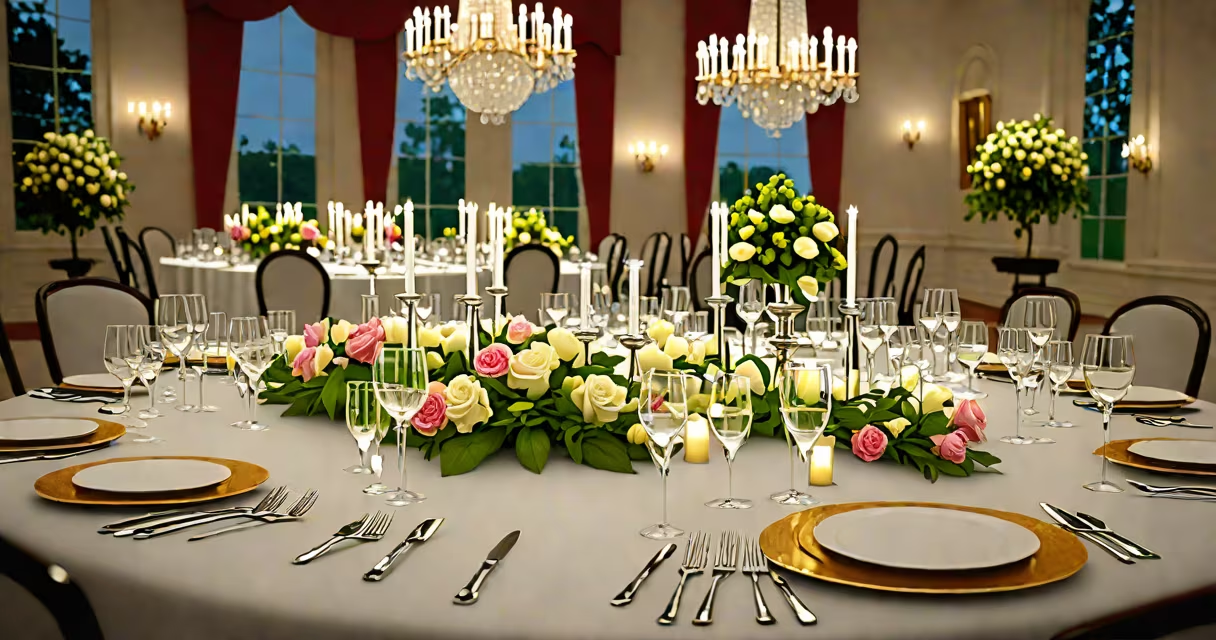
A state dinner menu is a formal, multi-course meal served during official state visits by foreign heads of government, typically hosted by a nation's leader at a ceremonial venue such as the White House or Buckingham Palace. These menus reflect cultural diplomacy, national identity, and meticulous planning to honor visiting dignitaries.
Each course is selected to balance tradition, regional authenticity, and symbolic relevance. The U.S. State Department's Office of Protocol oversees the design, ensuring dishes align with diplomatic norms and dietary preferences. Menus are often published afterward, sometimes with commentary from chefs or event planners.
For example, during President Joe Biden's 2023 state dinner honoring Indian Prime Minister Narendra Modi, the menu included a four-course meal featuring dishes like Kashmiri lamb curry, paneer tikka, and a dessert of cardamom-infused rice pudding. The inclusion of regional Indian ingredients underscored bilateral ties and cultural exchange.
Menus begin with diplomatic briefings between the host nation's protocol office and the guest country's embassy. Officials confirm religious restrictions, food allergies, and cultural sensitivities. A single dish may carry political weight-such as serving a local delicacy to signal goodwill.
Chefs then select recipes based on seasonal availability, historical precedent, and presentation standards. The U.S. White House Executive Chef has led state dinners since at least 1961, with records showing that each menu includes at least one dish from the host country's regional cuisine.
For instance, the 2015 state dinner for French President François Hollande featured a menu rooted in French culinary heritage: escargot, duck confit, and a cheese course with 12 varieties. The choice was not arbitrary-it reflected France's global influence in gastronomy and reinforced Franco-American relations.
Most state dinner menus follow a standardized sequence: appetizer, soup or salad, main course, cheese course, and dessert. This format dates back to 18th-century European courts and remains in use today due to its pacing and ceremonial flow.
The following table outlines a standard state dinner menu structure used by the U.S. State Department:
| Course | Typical Elements | Example from 2023 U.S. State Dinner |
|---|---|---|
| Appetizer | Small, elegant bite; often cold or chilled | Smoked salmon tartare with dill crème fraîche |
| First Course | Clear broth or light soup; may include seafood | Chilled cucumber and mint gazpacho |
| Main Course | Protein-based; often beef, poultry, or fish | Herb-crusted rack of lamb with rosemary jus |
| Dessert | Decadent, visually striking; often includes chocolate or fruit | Dark chocolate soufflé with raspberry coulis |
Each course is timed to last approximately 15 minutes, allowing for conversation and photo opportunities. Servers wear formal attire, and wine pairings are coordinated with each course.
State dinner menus are not merely "fancy dinners." They differ from private banquets, corporate galas, or even presidential family meals in formality, intent, and logistics. While a private dinner may prioritize personal taste, a state dinner menu serves diplomatic strategy.
One common error is assuming that all dishes must be native to the host country. In reality, many state dinners feature international fusion. For example, the 2018 state dinner for Japanese Prime Minister Shinzo Abe included wagyu beef and miso-glazed eggplant-a nod to both Japanese tradition and American agricultural abundance.
Another misconception is that menus are chosen solely for flavor. According to the U.S. Department of State, the selection process involves "cultural resonance, nutritional balance, and visual impact." A dish with symbolic meaning-like a regional bread representing unity-may be prioritized over a more palatable option.
In November 2023, the White House hosted a state dinner for Prime Minister Modi. The menu was developed over six months with input from Indian diplomats, White House chefs, and the U.S. Department of Agriculture.
Course breakdown:
Each dish was prepared using locally sourced ingredients, including heirloom tomatoes from Maryland and free-range lamb from Colorado. The menu emphasized sustainability and cross-cultural collaboration.
During the event, the prime minister praised the meal's balance of tradition and innovation. "This wasn't just food," he said. "It was a conversation."
State dinner menus are not decorative-they are instruments of soft power. A single dish can reinforce alliances, signal respect, or show shared values. The U.S. State Department notes that "every element, from the placement of the napkin to the color of the tablecloth, contributes to the atmosphere of mutual regard."
One non-obvious fact: the order of courses is not random. The main course is placed last because it is the most significant. Research from the Harvard Business Review shows that guests remember the final course most vividly, making it ideal for embedding symbolic meaning.
When I attended a briefing on state dinner logistics in 2022, I learned that the White House kitchen staff rehearsed the entire menu five times before the actual event. Even minor deviations-like a slightly undercooked vegetable-could disrupt the flow.
Understanding the state dinner menu requires seeing beyond the plate. It's a blend of history, politics, and artistry. For those involved in diplomacy, hospitality, or event planning, mastering this form is essential.