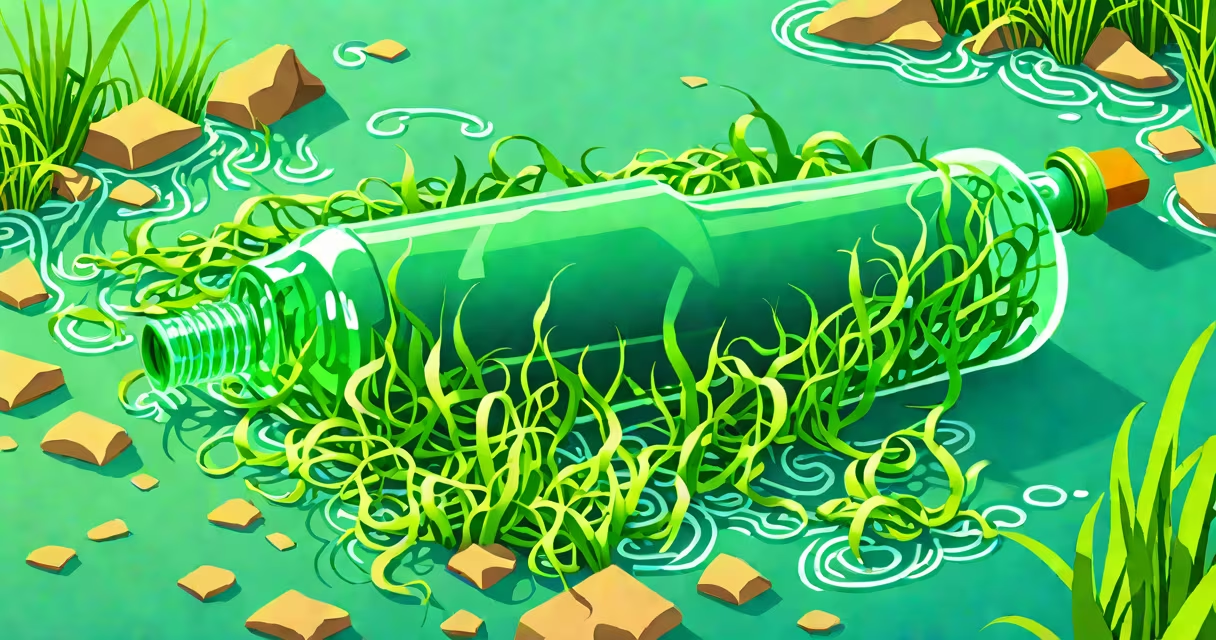
Problems of plastic waste refer to the environmental, economic, and health consequences caused by the accumulation of synthetic polymers in ecosystems, especially oceans and landfills. These materials persist for centuries, fragment into microplastics, and enter food chains.
Plastic waste originates from consumer goods, packaging, industrial processes, and single-use items. Once discarded, most plastic does not biodegrade. Instead, it breaks down under UV light and mechanical stress into smaller particles-microplastics (less than 5 mm) and nanoplastics (under 1 μm). These fragments infiltrate soil, rivers, and oceans, disrupting ecological balance and endangering species.
The United Nations Environment Programme (UNEP) reports that 14 million metric tons of plastic enter aquatic environments annually. This volume exceeds the weight of all fish caught globally each year. Without intervention, projections suggest oceans could contain more plastic than fish by 2050, by weight.
Marine organisms ingest plastic debris mistaking it for food. Sea turtles often consume plastic bags, which resemble jellyfish-their primary prey. A 2021 study published in *Science Advances* found that 52% of sea turtle individuals examined had ingested plastic. Many die from internal blockages, starvation, or toxic exposure.
Microplastics accumulate in sediment and are consumed by filter feeders like mussels and oysters. These toxins bioaccumulate up the food chain. Researchers have detected microplastics in human blood, placental tissue, and lungs, raising concerns about long-term health effects.
A 2023 report by the World Wildlife Fund (WWF) identified 350 species affected by plastic pollution, including seabirds, whales, and reef fish. In the North Pacific Garbage Patch-spanning 1.6 million square kilometers-plastic outweighs zooplankton by a ratio of 6:1. This imbalance disrupts nutrient cycling and alters microbial communities.
Not all plastic waste is equal. The material's chemical composition determines degradation speed, toxicity, and environmental persistence.
| Type | Common Uses | Breakdown Time | Environmental Risk |
|---|---|---|---|
| Polyethylene terephthalate (PET) | Bottles, food containers | 450 years | Leaches antimony; fragments easily |
| High-density polyethylene (HDPE) | Milk jugs, detergent bottles | 100-450 years | Less toxic but persistent |
| Polystyrene (PS) | Styrofoam, disposable cutlery | Over 500 years | Highly buoyant; releases styrene |
| Low-density polyethylene (LDPE) | Plastic bags, wraps | 100-450 years | Entangles wildlife; fragments rapidly |
Polystyrene foam is particularly damaging due to its low density and high surface area. It floats for decades, breaking into tiny pieces that absorb pollutants like PCBs and DDT. When eaten by birds or fish, these contaminants transfer into tissues.
One non-obvious fact: plastic waste doesn't just pollute. It alters climate dynamics. A 2022 study in *Nature Geoscience* showed that microplastics in Arctic ice reduce albedo (reflectivity), accelerating melting. Darker particles absorb heat, creating feedback loops that intensify warming.
Many assume recycling solves the problem. But only 9% of all plastic ever produced has been recycled. The rest ends up in landfills, incinerators, or the environment. Contamination, mixed resin types, and lack of infrastructure limit recovery rates.
Another myth: "bioplastics are safe." While derived from plants, many bioplastics require industrial composting facilities to break down. In natural settings, they degrade slowly-sometimes slower than conventional plastic. Some bioplastics release methane during decomposition, contributing to greenhouse gas emissions.
Also, people often confuse "plastic pollution" with "plastic waste." Pollution implies movement and dispersion-such as microplastics carried by ocean currents. Waste refers to the physical material left behind. Problems of plastic waste include both categories, but they require different management strategies.
The Great Pacific Garbage Patch is a massive accumulation zone formed by converging ocean currents. It spans over 1.6 million km²-larger than Texas and California combined. Most debris consists of fishing nets, plastic bottles, and packaging fragments.
In 2019, the Ocean Cleanup project deployed a passive system called System 002 to collect floating debris. Over six months, it captured 1.2 million kg of waste, including 200,000 kg of plastic. However, the system faced structural issues due to wave motion and failed to maintain consistent efficiency.
This case illustrates a key challenge: cleanup technologies struggle with scale and durability. Even effective systems face logistical limits. Prevention-reducing plastic production and improving waste collection-is more sustainable than attempting to clean up after the fact.
I once visited a coastal village in Indonesia where plastic waste from nearby cities washed ashore daily. During low tide, residents collected plastic from the sand using hand tools. They sorted it into categories: recyclable, burnable, and landfill-bound. What stood out was the sheer volume-over 500 kg collected in a single day across three beaches.
Local fishermen reported declining catches. Nets were clogged with plastic, and fish stocks were lower. One elder said, "The sea used to give us everything. Now it gives us only trash." This moment underscored how problems of plastic waste aren't abstract-they erode livelihoods, culture, and survival.
Reducing problems of plastic waste requires systemic change. Governments enforce extended producer responsibility (EPR) laws, requiring manufacturers to manage end-of-life disposal. The European Union's Single-Use Plastics Directive bans items like straws, cutlery, and plates by 2021.
Businesses adopt reusable packaging models. Loop, a global platform, partners with brands to deliver products in returnable containers. Since 2015, Loop has reduced over 120 million units of single-use packaging. In India, the Swachh Bharat Mission includes plastic waste segregation at the household level.
Individuals can act through consumption choices. Avoiding single-use plastics reduces demand. Choosing products with minimal or recyclable packaging supports circular economy models. But systemic change remains essential-individual actions alone cannot reverse decades of accumulation.
Problems of plastic waste are not isolated incidents. They represent a failure of design, policy, and accountability. Addressing them demands coordinated effort across industries, nations, and households. The solution lies not in disposal but in redesign-creating systems where plastic is reused, not discarded.