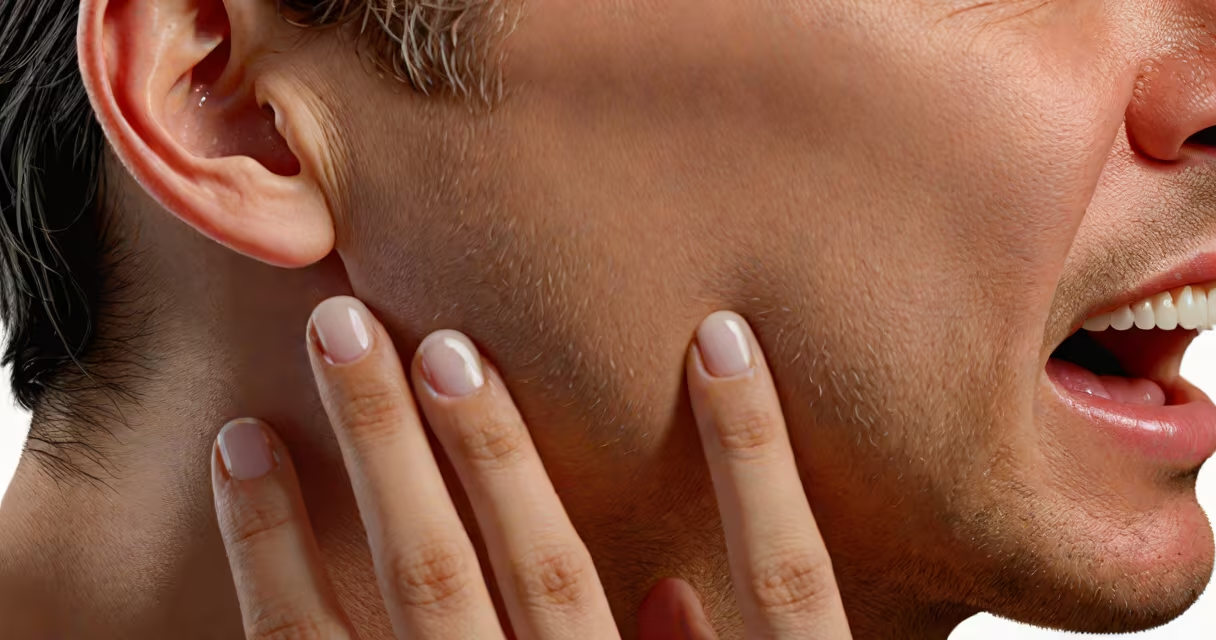
An ear infection can cause teeth pain because the trigeminal nerve, which supplies sensation to both the face and jaw, overlaps with nerves serving the middle ear. This overlap leads to referred pain-where discomfort is felt in a different location than the actual source.
When fluid builds up behind the eardrum during otitis media, pressure increases in the middle ear cavity. This pressure stimulates nearby sensory nerves, including branches of the trigeminal nerve that also innervate the lower jaw and upper teeth. The brain interprets signals from these shared pathways as originating in the teeth or jaw rather than the ear.
Research from the American Academy of Otolaryngology-Head and Neck Surgery confirms that up to 30% of patients with middle ear infections report facial or dental pain, especially in the molars and lower jaw. The pain often worsens when lying down or chewing, as these actions increase pressure in the ear canal.
Pain signals travel along specific nerves. The trigeminal nerve (cranial nerve V) handles sensation from the face, mouth, and jaw. Its mandibular branch extends into the lower teeth and jaw joint. Meanwhile, the glossopharyngeal nerve (cranial nerve IX) and auricular branch of the vagus nerve supply parts of the ear.
These nerves converge in the brainstem's trigeminal nucleus. When inflamed tissue in the middle ear sends signals through overlapping pathways, the brain cannot distinguish the origin. As a result, pain is perceived in the teeth or jaw-even though the problem lies in the ear.
A 2021 study published in *The Journal of Neurophysiology* demonstrated that electrical stimulation of the middle ear in animal models triggered responses in the trigeminal ganglion, confirming neural cross-talk between ear and dental regions.
Ear infections causing tooth pain typically stem from bacterial or viral upper respiratory infections. A cold can lead to Eustachian tube dysfunction, preventing proper drainage from the middle ear. Fluid accumulation creates pressure and inflammation, triggering referred pain.
Symptoms include:
Not all dental pain linked to ear issues is caused by infection. Temporomandibular joint (TMJ) disorders can mimic ear infection symptoms. However, if pain persists beyond 48 hours and is accompanied by fever or discharge, an ear infection is likely.
There are three main types of ear infections. Each affects pain distribution differently due to anatomical differences.
| Type | Location | Pain Pattern | Associated Dental Symptoms |
|---|---|---|---|
| Otitis media | Middle ear | Deep, constant ache; may radiate to jaw | Lower molars most affected; pain often unilateral |
| Otitis externa | Outer ear canal | Sharp, localized pain; worsens with ear movement | Rarely causes tooth pain; may affect upper teeth if near jawline |
| Otitis interna | Inner ear | Vertigo, ringing, deep pressure; less likely to refer to teeth | Minimal dental referral; pain usually in head or neck |
Most cases of ear infection cause teeth pain involve otitis media. The condition accounts for over 70% of pediatric ear infections and nearly half of adult cases reported in primary care settings.
Ear infection-related tooth pain is frequently mistaken for dental caries, abscesses, or TMJ disorder. Unlike a toothache from decay, pain from an ear infection doesn't respond to local numbing agents applied to the tooth.
One key difference: dental pain from decay is usually sharp and localized to one tooth. Ear-related pain is dull, diffuse, and often affects multiple teeth on the same side of the jaw. It may also come and go with changes in head position.
A 2019 clinical review in *BMJ Clinical Evidence* noted that 15% of patients initially diagnosed with toothaches were later found to have undiagnosed otitis media. Early misdiagnosis delays treatment and increases risk of complications like mastoiditis.
In 2022, a 34-year-old woman visited her dentist complaining of persistent pain in her left lower molar. She had no history of cavities or gum disease. The dentist found no visible decay and administered a local anesthetic to the tooth-pain remained unchanged.
After referral to an ENT specialist, imaging revealed fluid buildup in the left middle ear. The patient reported that the pain worsened when lying on her left side and improved slightly when standing. She also described a feeling of fullness in the ear and mild hearing loss.
She was diagnosed with acute otitis media. After a course of antibiotics and decongestants, the ear fluid resolved within seven days. Her tooth pain disappeared completely, confirming the diagnosis of referred pain.
The reason ear infections cause teeth pain lies in neuroanatomy-not pathology. The trigeminal nerve's extensive branching allows signals from the ear to be interpreted as coming from the jaw or teeth. This is not rare-it's a well-documented phenomenon in clinical neuroscience.
Many people assume that if they feel tooth pain, the issue must be in the tooth. But the nervous system can misroute signals. The brain relies on context and prior experience to assign location. When inflammation occurs near shared nerve endings, the brain defaults to familiar areas-like the jaw-creating the illusion of dental trouble.
Understanding this helps avoid unnecessary dental procedures. If tooth pain persists after treatment or lacks typical signs of decay, consider an ear evaluation.
Recognizing that ear infection cause teeth pain is essential for accurate diagnosis. When pain originates in the ear but feels like a toothache, prompt medical evaluation prevents prolonged suffering and avoids ineffective treatments.