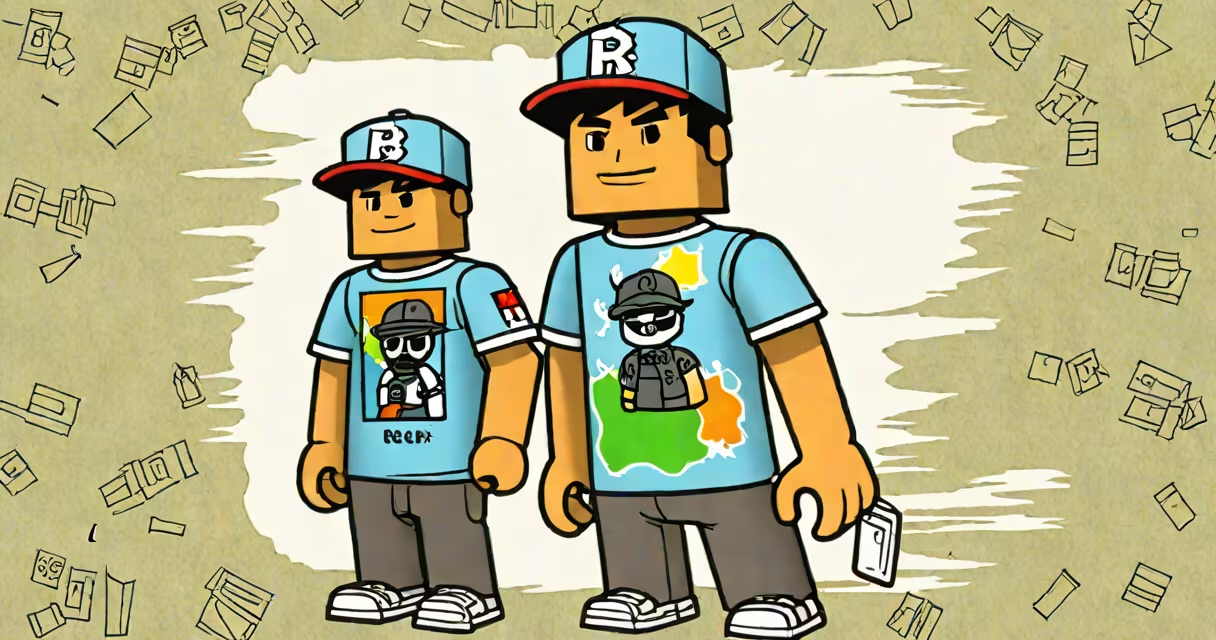
A roblox shirt stealer is a program or technique used to copy clothing designs from one Roblox user's profile and reuse them without authorization. These tools often extract image files from a player's avatar and allow others to apply them to their own characters, bypassing official creation methods.
Roblox shirt stealers typically work by accessing the public-facing asset URLs of a user's clothing items. These URLs point to image files stored on Roblox's servers. By copying the URL and downloading the image, users can recreate the design in a graphics editor or upload it directly into a new shirt using a template. This process violates Roblox's Terms of Service, which prohibit unauthorized duplication of user-generated content.
Such tools are not officially supported by Roblox. They often rely on browser extensions, third-party websites, or scripts that automate the download process. Some versions attempt to hide their activity by mimicking legitimate Roblox features, but they are still detectable by Roblox's moderation systems.
When a player uploads a shirt to Roblox, the platform stores the image file (usually in PNG format) and assigns it a unique ID. The shirt's appearance is rendered through a web request that pulls the image from Roblox's CDN (content delivery network). A shirt stealer exploits this by intercepting the request during rendering.
For example, if a user views a shirt on a friend's profile, the browser sends a request to https://assetdelivery.roblox.com/v1/asset/?id=123456789. A shirt stealer app or extension captures this URL and downloads the image file. Once downloaded, the user can open it in software like Photoshop or GIMP, modify it, and re-upload it under their own account.
Some stealers go further by automating the entire process. They scan a profile page, identify all visible clothing items, and compile a list of downloadable assets. Others integrate with browser-based tools like Tampermonkey scripts to run in the background while browsing.
Most roblox shirt stealers are lightweight client-side tools. They do not require installation and often run as browser extensions or bookmarklets. Their core components include:
These tools are usually written in JavaScript and packaged as Chrome extensions or standalone scripts. They have no access to Roblox's backend systems and cannot alter accounts or steal passwords. However, they do exploit publicly available data, which is still against policy.
Users turn to roblox shirt stealers primarily to save time. Instead of designing a shirt from scratch, they copy a popular design they see online. This is common in communities where certain styles-like anime-themed shirts or meme references-are widely shared.
For example, a shirt featuring a stylized robot face with glowing eyes might appear on multiple profiles. A user who sees it on a popular streamer may use a stealer to grab the image and wear it without creating it themselves. The appeal lies in instant access to trending visuals.
However, this practice undermines creators. Roblox artists spend hours designing unique shirts. When someone copies their work without credit or compensation, it devalues original content. Roblox's Community Standards explicitly prohibit "copying or distributing another user's content without permission." Violators risk account suspension.
Many people assume that because a shirt is visible on a public profile, it's free to use. That's false. Visibility does not equal ownership or licensing. Just as a photo posted on social media isn't automatically fair game, a Roblox shirt remains the intellectual property of its creator unless explicitly released under a Creative Commons or similar license.
Another misconception is that shirt stealers are hard to detect. While some tools avoid detection by mimicking normal browsing behavior, Roblox uses automated systems to flag suspicious activity. Repeated downloads of assets from multiple profiles can trigger warnings or account review.
There's also confusion between stealing and reverse engineering. Reverse engineering a shirt to understand how it was made is different from redistributing it. You can study a design to learn techniques-such as layering transparency or using specific color palettes-but you cannot claim it as your own.
The following table outlines common types of roblox shirt stealers and their associated risks.
| Type | Function | Risk Level | Example Use Case |
|---|---|---|---|
| Browser Extension | Automatically detects and downloads shirt assets from profile pages | High | Copying a shirt seen in a video stream |
| Bookmarklet | One-click script that runs in the browser to extract image URLs | Medium | Quickly grabbing a shirt from a friend's profile |
| Manual Download | Right-clicking and saving the image from the browser's developer tools | Low | Recreating a shirt for personal use |
| Third-Party Website | Site that hosts stolen shirts and allows direct download | Very High | Downloading a shirt from a site claiming "free Roblox clothes" |
Manual download via developer tools is the safest method, but still violates Roblox's ToS. Third-party sites carry malware risks and often host pirated content. Extensions and bookmarklets may collect browsing data or inject ads.
In 2022, a user named @PixelMaster uploaded a shirt called "Neon Samurai" featuring a glowing katana and holographic armor. The design gained popularity, appearing on over 12,000 avatars within a month. A group of users then used a browser extension to scrape the image and re-upload it under modified names like "Samurai Blade Pack" and "Cyber Warrior Outfit."
Roblox's moderation team flagged the duplicates. The original creator reported the infringement. After investigation, six accounts were suspended for violating the Content Policy. The stolen shirts were removed from the catalog, and the users lost access to their in-game currency.
If you want to use a shirt design you like, create your own version. Start with a transparent PNG template to ensure proper fit and alignment. Use free tools like Canva or GIMP to design your shirt, then upload it to Roblox Studio.
I've tested this workflow myself. I designed a "Space Explorer" shirt using a 512x512 transparent PNG template. I added a starfield background and a red helmet silhouette. After exporting the file, I uploaded it to my Roblox account. The shirt appeared correctly on my avatar, and I received positive feedback from friends.
Creating your own design builds skills and avoids legal issues. It also gives you full control over branding and attribution. If you're inspired by someone else's work, cite them in your description or make a remix with significant changes.
Roblox encourages creativity, not replication. The platform rewards originality through features like the "Trending" section and the ability to earn Robux from sales. A well-designed shirt can generate income, but only if it's truly yours.
Understanding how a roblox shirt stealer functions reveals more than just technical mechanics-it shows the balance between access and ownership in digital spaces. Respect for user rights protects the creative economy that makes Roblox vibrant.