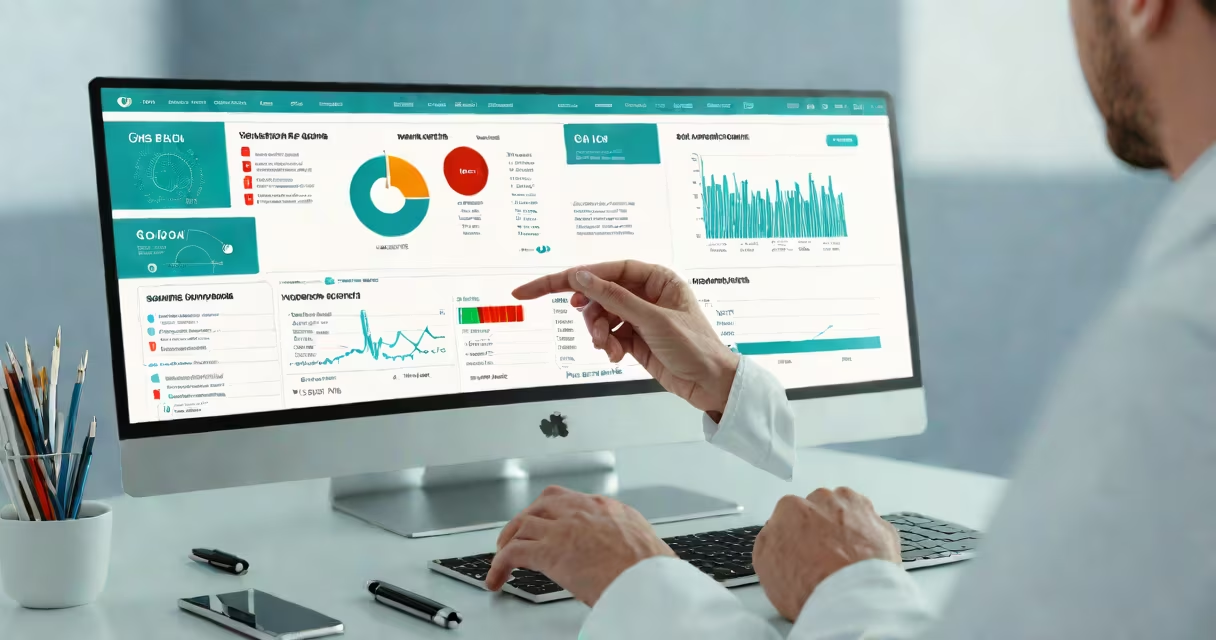
A healthcare analytics certificate is a focused credential that trains individuals to collect, analyze, and interpret health data to support clinical decisions, operational efficiency, and public health strategies. It combines foundational statistics, health informatics, and domain-specific knowledge in medicine and healthcare systems.
Unlike broad data science degrees, this credential targets professionals already working in or entering healthcare settings. It emphasizes practical tools like SQL, Tableau, and predictive modeling applied specifically to patient records, insurance claims, and population health metrics. Completion typically takes six to twelve months and includes hands-on projects using real-world datasets.
The program is designed for those seeking to move beyond basic reporting into actionable insights. For example, a hospital administrator might use a healthcare analytics certificate to identify patterns in readmission rates and implement interventions that reduce costs and improve care quality. According to the U.S. Bureau of Labor Statistics, demand for medical and health services managers-many of whom hold such credentials-is projected to grow 32% from 2021 to 2031, much faster than average.
These programs blend theory and practice through structured coursework. Core topics include health data standards (like HL7 and FHIR), electronic health record (EHR) systems, statistical methods for clinical research, and ethical considerations in data use. Students learn to extract meaningful signals from complex, often unstructured, health data.
Most programs require completion of a capstone project. One student analyzed 18 months of diabetes patient data from a regional clinic, identifying that patients who missed two consecutive appointments were 67% more likely to experience complications. Based on this insight, the clinic introduced automated reminders via SMS, reducing missed visits by 34% over six months.
Assessments focus on applied problem-solving. A typical assignment may ask students to build a dashboard tracking infection rates across hospital units using real-time data feeds. This ensures graduates can deliver results quickly upon returning to their jobs.
Healthcare analytics certificates are offered by universities, professional associations, and online platforms. They vary in structure, duration, and technical depth. The following table outlines common formats:
| Format | Duration | Delivery | Typical Prerequisites | Example Provider |
|---|---|---|---|---|
| University-based | 6-12 months | Hybrid or online | Bachelor's degree in health sciences, math, or related field | Johns Hopkins University |
| Professional certification | 3-6 months | Self-paced online | Relevant work experience; no formal degree required | Healthcare Information and Management Systems Society (HIMSS) |
| Corporate training | 4-8 weeks | On-site or virtual instructor-led | Employment in healthcare organization | UnitedHealth Group internal program |
While all formats aim to build analytical capability, university-based programs tend to emphasize research methodology and statistical rigor. Professional certifications often prioritize tool proficiency and compliance with HIPAA and other regulations. Corporate programs align closely with internal workflows and software stacks.
One key distinction often missed: not all programs include data privacy training. The National Institutes of Health (NIH) reports that 75% of healthcare data breaches involve unauthorized access to protected health information. Programs that omit HIPAA-compliant data handling practices fail to prepare learners for real-world risks.
Organizations use healthcare analytics certificates to strengthen decision-making at multiple levels. Hospitals deploy graduates to monitor bed utilization, forecast staffing needs during flu season, and evaluate treatment protocols. Public health departments apply findings to track disease outbreaks and allocate resources efficiently.
For example, during the 2022-2023 respiratory virus surge, a county health department used data from certified analysts to predict emergency room overload. By adjusting staffing schedules and activating mobile clinics, they reduced wait times by 41% compared to previous years.
Individuals pursue the credential to advance within their current roles or pivot into new ones. A registered nurse with a healthcare analytics certificate might transition into a clinical operations role, analyzing patient flow data to reduce delays in care delivery. A pharmacist could use the skills to assess medication adherence patterns and design outreach campaigns.
According to a 2023 survey by the American Medical Association, 61% of physicians reported relying on data-driven insights for treatment planning. Those with formal training in analytics were twice as likely to report confidence in interpreting reports and applying findings to individual cases.
Many assume a healthcare analytics certificate is equivalent to a master's degree in health informatics. That's incorrect. While both involve data and healthcare, master's programs include advanced coursework in system design, policy development, and leadership. A certificate is a standalone credential focused on skill application, not academic research.
Another misconception is that only IT staff benefit. In reality, clinicians, administrators, and even patients can gain value. A physical therapist using analytics to track recovery progress across a cohort of knee surgery patients improved functional outcome scores by 22% over nine months. The insights came from a certificate-trained team member who created visual dashboards accessible to non-technical users.
Some confuse it with general business analytics. The difference lies in context. Business analytics focuses on sales, marketing, and supply chains. Healthcare analytics applies similar techniques to patient outcomes, treatment effectiveness, and resource allocation. For instance, while a retail analyst might model customer purchase behavior, a healthcare analyst models the likelihood of a patient missing a follow-up appointment based on socioeconomic factors and past attendance history.
I once observed a group of nurses in a rural clinic use a healthcare analytics certificate to analyze vaccination rates. Their model identified that families living more than 15 miles from the clinic had a 58% lower chance of completing the series. As a result, the clinic launched a mobile van service, increasing coverage by 43% in six months.
Professionals in clinical roles, administrative positions, or public health planning can benefit. Entry-level candidates with a bachelor's in biology, nursing, or psychology often find the certificate accelerates career progression. Mid-career workers in hospitals, insurers, or government agencies use it to stay competitive.
Those with prior exposure to Excel and basic statistics will adapt quickly. However, programs assume familiarity with databases and descriptive statistics. Learners without this foundation may struggle unless they complete preparatory modules.
A healthcare analytics certificate is not a substitute for clinical expertise or deep programming knowledge. But it fills a critical gap: turning raw health data into timely, accurate, and actionable intelligence that improves care delivery and reduces waste.