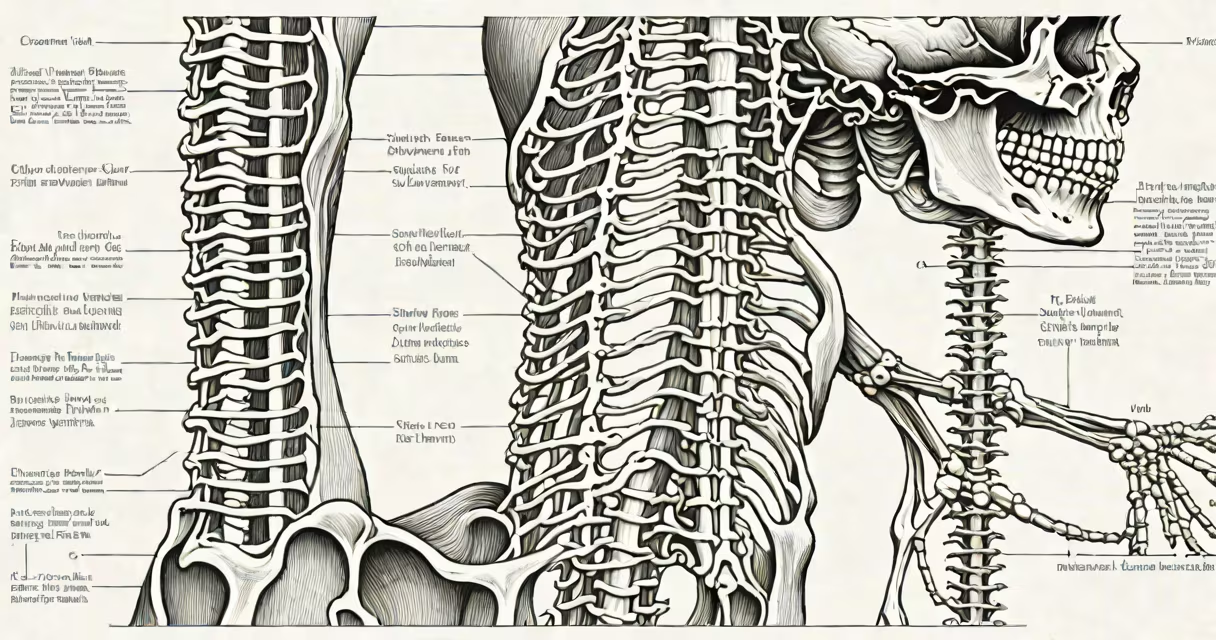
The nervous system skeletal system refers to the integrated network of nerves and bones that enables voluntary movement, maintains posture, and coordinates reflex responses through continuous communication between neural signals and musculoskeletal structures.
This partnership operates in real time. When you decide to lift your arm, motor neurons in the spinal cord send electrical impulses along peripheral nerves to specific muscle groups attached to the humerus and scapula. Simultaneously, sensory receptors in muscles, tendons, and joints feed feedback to the brain via the peripheral nervous system, allowing adjustments to grip strength or joint angle. This loop ensures precision and stability during motion.
Without coordination between the nervous system and skeletal system, even basic actions like walking or holding a cup would be impossible. The nervous system provides the command center; the skeletal system supplies the structure and use. Both must function in sync for effective movement.
Nerve signals originate in the central nervous system (CNS)-the brain and spinal cord-and travel through peripheral nerves to skeletal muscles. These signals trigger muscle contractions that pull on bones, creating movement at joints. For example, when the corticospinal tract sends a signal to the biceps brachii, the muscle contracts, flexing the elbow and lifting the forearm.
Sensory feedback runs in reverse. Muscle spindles detect changes in muscle length, while Golgi tendon organs monitor tension. This information travels back to the CNS via dorsal root ganglia and spinal cord interneurons. The brain uses this data to fine-tune motor output-adjusting force during a handshake or stabilizing balance while standing on one foot.
A clinical example: a patient with multiple sclerosis may have demyelination in spinal cord tracts. This disrupts signal transmission from the brain to leg muscles, leading to weakness and unsteady gait. Despite intact bones and joints, movement fails due to impaired neural signaling-a clear demonstration of the nervous system's role in activating the skeletal system.
The nervous system skeletal system involves both structural and functional subsystems. The primary elements include:
Three types of motor neurons control skeletal muscle activity:
| Type | Function | Example |
|---|---|---|
| Alpha motor neurons | Directly innervate skeletal muscle fibers | Stimulate quadriceps during knee extension |
| Beta motor neurons | Modulate muscle spindle sensitivity | Adjust stretch reflex gain during running |
| Gamma motor neurons | Control intrafusal muscle fiber tension | Regulate feedback loop during fine finger movements |
Each neuron type plays a distinct role in maintaining muscle tone and coordinating complex motions. Disruption in any one can lead to ataxia, tremors, or paralysis.
Many assume the nervous system controls movement independently of the skeleton. But bones are not passive levers-they actively participate in neural feedback. Joints contain mechanoreceptors that send signals about position and pressure, influencing spinal reflexes and cortical planning.
Another error is thinking that skeletal strength alone determines physical performance. A study published in Journal of Neurophysiology found that individuals with high muscle strength but poor neuromuscular coordination performed worse in changing tasks than those with moderate strength and better neural control. This shows that neural efficiency often outweighs raw skeletal power.
Also, people often confuse the nervous system with the skeletal system's role in protection. While the skull shields the brain and the vertebral column protects the spinal cord, this is a secondary function. The primary purpose of the nervous system skeletal system integration is movement and balance-not defense.
Consider a basketball player jumping to dunk. The process begins in the cerebellum, which calculates trajectory and timing based on visual input and past experience. Motor cortex signals travel down the spinal cord via the corticospinal tract. Alpha motor neurons activate the gastrocnemius and quadriceps, generating explosive force against the ground.
As the player lands, sensory feedback from ankle and hip joints activates stretch reflexes through muscle spindles. The nervous system adjusts muscle contraction speed and force within milliseconds to prevent injury. Without this rapid integration, the player could twist an ankle or fall.
This entire sequence happens in under half a second. The nervous system skeletal system operates at speeds exceeding 120 meters per second in myelinated axons-faster than most mechanical systems in engineering.
Damage to either system affects the other. Spinal cord injuries impair motor output, leading to paralysis. Conversely, conditions like osteoarthritis reduce joint range of motion, limiting the ability of muscles to generate force effectively. The nervous system cannot compensate for lost mechanical advantage.
For rehabilitation, clinicians focus on restoring both neural pathways and skeletal integrity. After a stroke, patients undergo physical therapy to retrain motor circuits while also strengthening weakened muscles and improving joint flexibility. Recovery depends on rebuilding the connection between neural command and skeletal response.
Understanding the nervous system skeletal system relationship is essential for diagnosing movement disorders, designing prosthetics, and optimizing athletic training. It's not just about bones or nerves-it's about their synergy.
The nervous system skeletal system is not a collection of separate parts. It is a single functional unit where neural signals direct skeletal action, and skeletal feedback refines neural output. Their smooth collaboration enables everything from typing to sprinting to breathing.