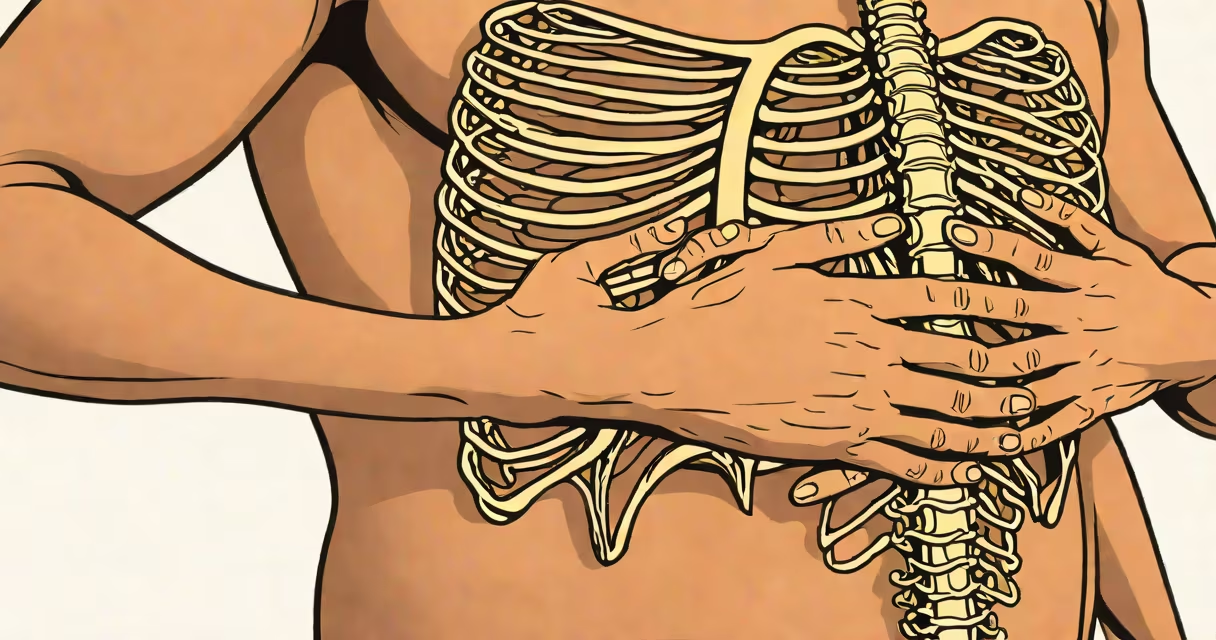
Pain below ribs when breathing is discomfort felt beneath the lower edge of the ribcage, typically worsened by inhaling deeply, coughing, or twisting. It arises from structures in the lower thorax, including muscles, nerves, ribs, or underlying organs like the liver or spleen. This condition may stem from minor injuries or signal serious internal issues.
The sensation usually originates in the intercostal muscles between the ribs or the costochondral joints where ribs attach to the sternum. Pain may feel sharp, dull, or aching and often localizes to one side. It can result from physical strain, trauma, or inflammatory conditions affecting the chest wall or lungs.
When breathing triggers pain below the ribs, it's essential to distinguish between musculoskeletal strain and internal organ involvement. While most cases are benign, persistent or worsening pain requires medical evaluation to rule out pneumonia, pleurisy, or referred pain from abdominal organs.
During inhalation, the diaphragm contracts and the ribcage expands. This movement stretches the tissues around the lower ribs. If those tissues are inflamed, injured, or under tension, they send pain signals to the brain. The pain is often localized and reproducible-meaning pressing on the area or taking a deep breath makes it worse.
Common triggers include sudden twisting motions, heavy lifting, repetitive coughing, or direct blows to the torso. For example, a person who lifts a heavy suitcase while bending sideways may strain the external oblique muscle along the lower rib margin, leading to sharp pain with each breath.
Another mechanism involves irritation of the pleura-the thin membrane lining the lungs and chest cavity. When inflamed (pleurisy), even normal breathing can cause stabbing pain. A viral infection like influenza can trigger this condition, which often improves within days but may require anti-inflammatory medication.
Lower rib pain during breathing falls into three main categories: musculoskeletal, pulmonary, and visceral (organ-related). Each has distinct characteristics and treatment paths.
| Type | Key Features | Common Causes | Typical Pain Pattern |
|---|---|---|---|
| Musculoskeletal | Localized, sharp, worsens with movement | Strained intercostal muscles, rib stress fracture, costochondritis | Fixed spot; may improve with rest |
| Pulmonary | Dull or sharp; may radiate to shoulder | Pleurisy, pneumonia, pulmonary embolism | Worsens with deep breaths; may have fever or cough |
| Visceral | Deep, dull ache; may shift position | Liver congestion, splenic enlargement, gallbladder issues | Often associated with nausea or bloating |
Costochondritis-a common cause-is inflammation of the cartilage connecting the ribs to the breastbone. It affects about 1 in 200 adults annually, according to the American College of Rheumatology. Symptoms often mimic heart pain but lack cardiac risk factors. Diagnosis relies on tenderness at specific joint points during physical exam.
A lesser-known but critical distinction: pain from the liver or spleen tends to be deep and dull, often worsening when lying on the affected side. The spleen lies under the left lower rib cage; trauma or infection can enlarge it, causing pressure. The liver sits on the right side and may cause discomfort if swollen due to fatty liver disease or hepatitis.
Healthcare providers assess pain below ribs when breathing using history, physical exam, and imaging. The location guides differential diagnosis: right-side pain may suggest liver or gallbladder issues; left-side pain raises concern for spleen or lung problems.
One common misconception is equating this pain with heart attacks. While chest pain is a sign of cardiac events, lower rib pain is rarely due to heart disease unless accompanied by radiation to the arm, jaw, or shortness of breath. The National Heart, Lung, and Blood Institute notes that only 10-15% of heart attack patients present with isolated lower chest pain.
Another frequent error is dismissing pain as "just muscle strain" without evaluating for pulmonary embolism. This blood clot in the lung can cause sharp, sudden pain that intensifies with breathing. It occurs in 1 in 1,000 adults annually and is fatal in 10% of untreated cases. Prompt diagnosis with CT angiography is critical.
Pain below ribs when breathing is often mistaken for gastrointestinal reflux, especially when it occurs after eating. However, acid reflux pain typically rises toward the upper abdomen and is burning in nature. It doesn't change with posture or breathing patterns.
It's also frequently mislabeled as "nerve pain" when the real issue is a stress fracture in the rib. These fractures occur in athletes or individuals with osteoporosis who perform repetitive twisting motions. They're visible on X-ray or MRI and require immobilization and time to heal.
For example, a 45-year-old runner developed sharp pain on the right side below the ribs after a long race. He assumed it was a pulled muscle. After three weeks of worsening pain and low-grade fever, he saw a doctor. Imaging revealed a hairline fracture in the ninth rib. Treatment included rest and NSAIDs. The pain resolved in six weeks.
One non-obvious fact: pain from the diaphragm itself-such as from phrenic nerve irritation-can mimic lower rib pain. The phrenic nerve runs through the neck and controls the diaphragm. Irritation from cervical spine issues can refer pain to the lower chest and rib area, mimicking musculoskeletal strain.
Seek immediate medical attention if pain below ribs when breathing is accompanied by shortness of breath, dizziness, rapid heartbeat, or coughing up blood. These signs may indicate a pulmonary embolism, pneumothorax, or severe infection.
Also consult a provider if pain persists beyond seven days, worsens at night, or limits daily activities. A physical exam can identify tenderness, swelling, or asymmetry. Imaging such as X-ray or ultrasound may be needed to confirm rib fractures or organ enlargement.
For mild, acute pain without red flags, rest, ice, and over-the-counter NSAIDs like ibuprofen may suffice. Avoid movements that exacerbate pain. If symptoms linger, see a primary care physician or a specialist like a pulmonologist or rheumatologist.
Understanding the source of pain below ribs when breathing prevents unnecessary worry and ensures timely care. Most cases resolve with conservative management, but accurate identification of the cause is essential for recovery.