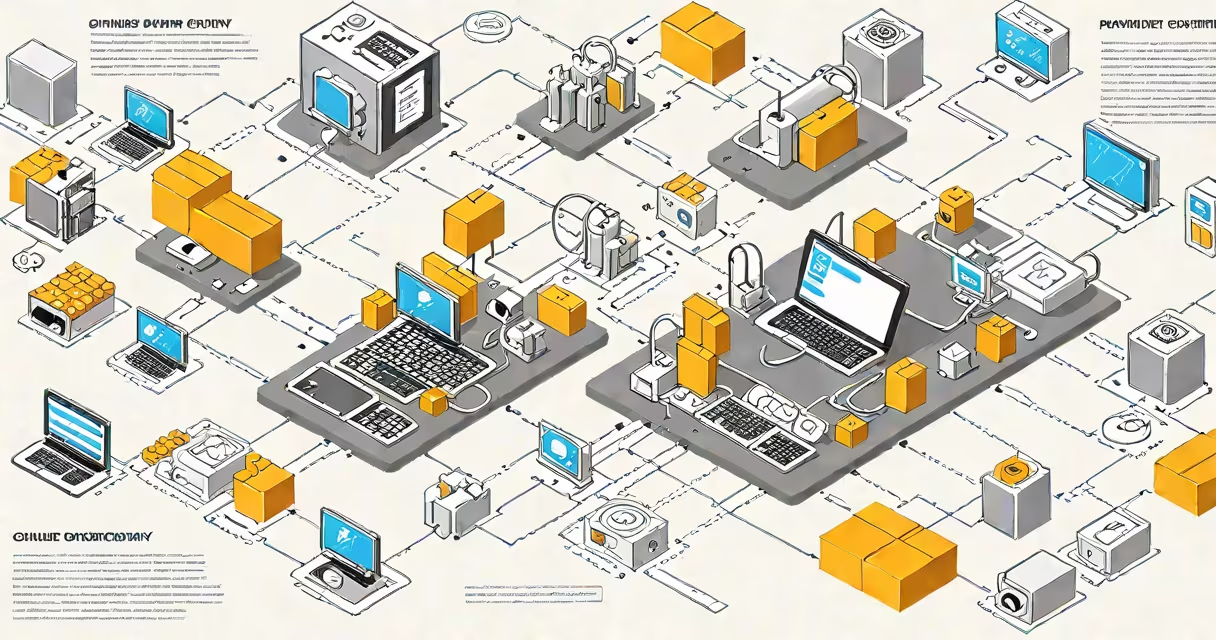
Online payment gateway integration is the technical process of connecting a merchant's website or app to a payment processor to authorize and settle credit or debit card transactions securely. It acts as a bridge between the customer's payment details, the merchant's system, and the bank that holds the customer's funds.
This integration allows businesses to accept digital payments without handling sensitive card data directly. Instead, the gateway encrypts and transmits the transaction data through secure channels to acquiring banks and card networks like Visa or Mastercard. The entire process typically completes in under three seconds.
For example, when a shopper enters their card number on an e-commerce site, the browser sends that data to the payment gateway via HTTPS. The gateway then verifies the card's validity, checks available funds, and returns an approval or decline response-all within milliseconds. This happens behind the scenes, enabling smooth checkout experiences.
Online payment gateway integration begins with the merchant selecting a provider such as Stripe, PayPal, or Adyen. These providers offer APIs (Application Programming Interfaces) that developers use to embed payment functionality into websites or mobile apps.
The integration involves several steps: registering with the provider, obtaining API keys, configuring the checkout form, and writing code to send transaction requests. Once set up, every time a customer submits payment details, the frontend code sends the data to the gateway's server using HTTPS and JSON format.
The gateway validates the card number using Luhn algorithm checks, confirms the card issuer's availability, and routes the request to the appropriate card network. The network then contacts the issuing bank to verify funds. The result-approved or declined-is sent back to the merchant's server, which updates the order status accordingly.
Payment gateways vary based on deployment model and level of control. The most common types include hosted, self-hosted, and API-based gateways.
| Type | How It Works | Use Case |
|---|---|---|
| Hosted Gateway | Redirects customers to the provider's secure payment page (e.g., PayPal Checkout). | Small businesses needing quick setup with minimal coding. |
| Self-Hosted Gateway | Merchant collects card data on their own site but sends it to the gateway for processing. | Businesses with high volume and custom checkout flows. |
| API-Based Gateway | Direct integration using RESTful APIs; full control over UI and logic. | Developers building complex platforms like SaaS or marketplaces. |
Each type affects security posture and compliance burden. Hosted gateways reduce PCI DSS scope because the merchant never touches raw card data. Self-hosted and API-based models require stricter controls, including tokenization and encryption.
A non-obvious distinction: not all gateways support recurring billing or international currencies out of the box. For example, Stripe supports 135+ currencies and automated invoicing, while some regional providers may only handle local payment methods like iDeal in the Netherlands or Alipay in China.
Merchants use online payment gateway integration to enable sales, reduce cart abandonment, and scale operations globally. Without it, accepting card payments online is impossible. A 2023 study by Baymard Institute found that 69% of online shoppers abandon carts due to missing payment options-making integration essential for conversion.
Many assume that integrating a gateway automatically ensures security. That's false. The gateway handles transmission security, but the merchant remains responsible for protecting stored data, managing session timeouts, and preventing client-side injection attacks.
Another misconception is that all gateways are equally compliant. In reality, providers differ in how they enforce PCI DSS standards. For instance, Stripe's platform includes built-in tokenization and automatic compliance reporting, reducing the merchant's audit burden. Others require manual configuration of encryption layers and access logs.
I once integrated a payment gateway for a nonprofit selling event tickets. We chose a hosted solution to avoid PCI certification. After testing, we discovered that the redirect page didn't preserve user session state. Fixing this required adding a hidden field to pass the user ID through the redirect URL-a small change with big impact on usability.
Any business handling card data must comply with the Payment Card Industry Data Security Standard (PCI DSS). This structure, maintained by the PCI Security Standards Council, defines 12 core requirements for securing cardholder information.
Even with a trusted gateway, merchants must ensure their systems meet these standards. For example, storing card numbers in databases-even temporarily-violates Requirement 3.1, which mandates that card data not be stored unless properly encrypted and isolated.
Consider a clothing retailer launching a new Shopify store. To accept payments:
Because the retailer uses Stripe's hosted fields, no raw card data touches their server. This keeps them in PCI DSS Level 1 compliance without needing annual audits.
Without proper integration, the same store might have exposed card data through a poorly secured form. A 2022 report by Verizon found that 40% of breaches involving payment systems stemmed from weak input validation or unencrypted storage.
Online payment gateway integration is not a one-time task. It requires ongoing monitoring for errors, rate limits, and changes in provider APIs. Merchants should test live transactions monthly using sandbox environments provided by gateways.
Understanding how this integration functions-beyond just installing a button-prevents costly failures and strengthens trust with customers.