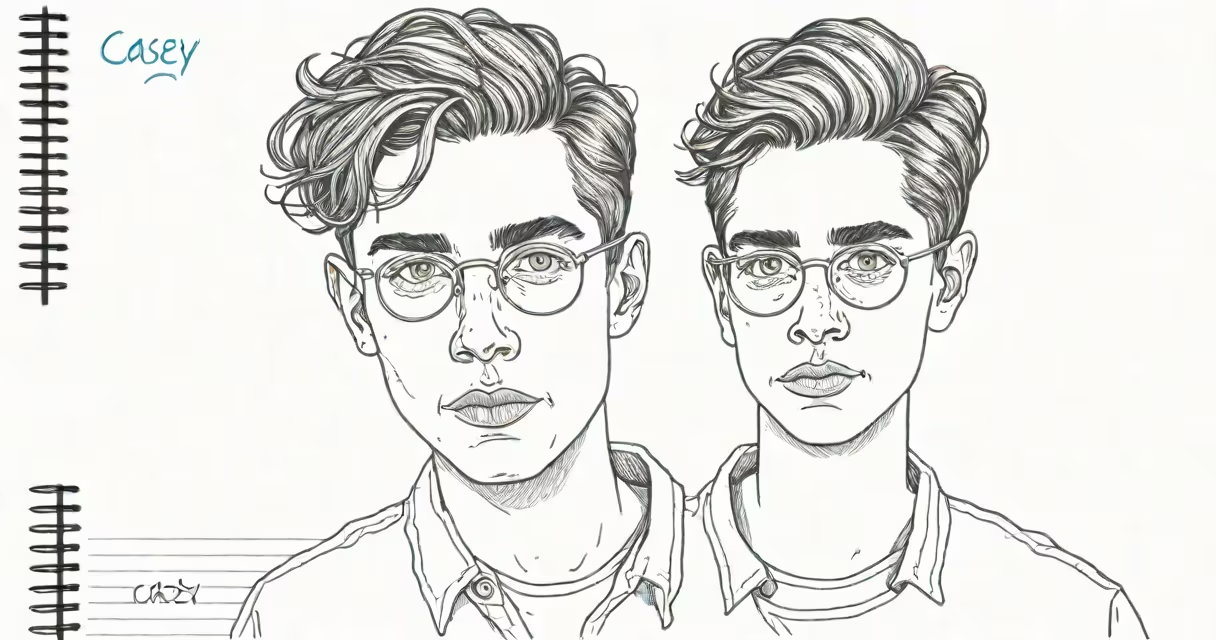
Masc nonbinary names are masculine-sounding names adopted by nonbinary people who do not identify exclusively as male or female. These names often carry traditionally masculine phonetics or associations but are used independently of gendered expectations.
Names like Jordan, Alex, and Jamie have evolved from being seen as unisex or masculine-only to becoming widely recognized as valid choices for nonbinary individuals. They're not inherently male or female-they're identity markers chosen by the person who uses them.
According to the Williams Institute at UCLA, approximately 1.2 million U.S. adults identify as nonbinary. Among them, many select names that feel aligned with their internal sense of self, including masc nonbinary names. These names often reflect personal history, cultural heritage, or aesthetic preference rather than gender assignment.
These names function similarly to any other name: they serve as a label for identity, communication, and legal recognition. A person may use "Casey" as their name in daily life, even if it was historically associated with men, because it resonates with their sense of self.
Names aren't assigned meaning by birth. They gain significance through use. When someone says "Casey," others respond based on context, tone, and prior understanding-not on assumed gender. This allows masc nonbinary names to exist outside rigid categories.
For example, a person named Taylor who uses they/them pronouns may prefer the name "Drew" because it feels grounded and familiar. Drew is phonetically masculine but carries no gendered obligation. The name becomes a tool for self-expression, not a label tied to biology.
Many masc nonbinary names originate from English-speaking traditions but have been reclaimed or repurposed. Others come from global languages, Indigenous naming systems, or invented forms. Here's a breakdown:
| Type | Examples | Origin/Note |
|---|---|---|
| Traditional unisex names | Alex, Jordan, Riley, Quinn | Originally male, now widely used across genders. Per a 2021 Pew Research study, 36% of Americans under 30 associate "Jordan" with nonbinary identity. |
| Phonetic-masculine names | Rowan, Ash, Phoenix | Sound-based: short, sharp syllables. Often chosen for their rhythmic quality and lack of gender cues. |
| Non-Western names | Amari (Swahili), Kaito (Japanese), Sade (Yoruba) | Used globally. Amari means "eternal" in Swahili; Kaito means "ocean child" in Japanese. Not inherently male, though some may be perceived that way. |
| Invented or hybrid names | Emery, Finley, Sloane | Modern coinages. Finley, for instance, began as a Scottish surname but gained popularity as a gender-neutral first name in the 2000s. |
Some names are deliberately chosen for their ambiguity. "Morgan" sounds like a male name in English but is historically Welsh and gender-neutral. Its use among nonbinary people reflects a conscious rejection of binary assumptions.
One non-obvious fact: many masc nonbinary names were originally used by women. For example, "Pat" was popularized by female activists in the 1970s. Today, it's used by nonbinary people across spectrums. Names evolve with identity, not just with time.
People adopt masc nonbinary names in settings ranging from social media profiles to medical records. In healthcare, correct name usage reduces misgendering and improves patient outcomes. A 2022 study in *The Journal of General Internal Medicine* found that transgender and nonbinary patients were 30% less likely to avoid care when providers used their chosen names.
Legal systems are slowly adapting. As of 2023, 15 U.S. states allow nonbinary gender markers on driver's licenses and birth certificates. In those states, individuals can legally change their name to a masc nonbinary option like "Jesse" or "Sam."
Workplaces increasingly support name changes. Companies like Google and Salesforce allow employees to update their display names in email and calendar systems without HR approval. This enables quick, low-barrier adoption of new names.
I once attended a conference where a speaker introduced themselves as "Riley," then paused and said, "I go by they/them, but my name is pronounced 'Ree-lee.'" The room responded with immediate respect. That moment showed how a name-especially one that defies expectation-can build trust instantly.
People often assume masc nonbinary names are "just male names used by nonbinary people." That's incorrect. A name like "Cameron" may sound masculine, but its use by a nonbinary person doesn't make it male-it makes it theirs.
Another misconception: that masc nonbinary names are less valid than feminine or neutral ones. This is false. Validity depends on personal alignment, not phonetic category. A name is valid if it fits the person who uses it.
Some confuse masc nonbinary names with gender-neutral pronouns. But names and pronouns are separate. "They" refers to a person's pronoun. "Casey" is a name. Using "they" with "Casey" is correct, but confusing the two leads to miscommunication.
Also, not all masc nonbinary names are English. Names like "Tariq" (Arabic, meaning "morning star") or "Kwame" (Akan, Ghanaian, meaning "born on a weekend") are used globally by nonbinary people. Their masculinity is culturally contextual, not universal.
When selecting a name, consider sound, spelling, pronunciation, and cultural weight. Avoid names that are heavily tied to specific religions, ethnic groups, or historical figures unless you understand the context.
For example, "Adrian" is a Latin name with Christian roots. While it's used by nonbinary people, it may carry spiritual connotations that affect how others perceive it. Choosing a name requires awareness beyond aesthetics.
Finally, remember that names are not performance. You don't need to justify your choice. If "Jamie" feels right, it is right. Identity isn't validated by consensus-it's affirmed by lived experience.
Understanding masc nonbinary names begins with recognizing that names are tools of belonging. Whether sounding masculine, feminine, or neutral, the power lies in ownership. When someone chooses a name, they claim space. And that's what matters most.