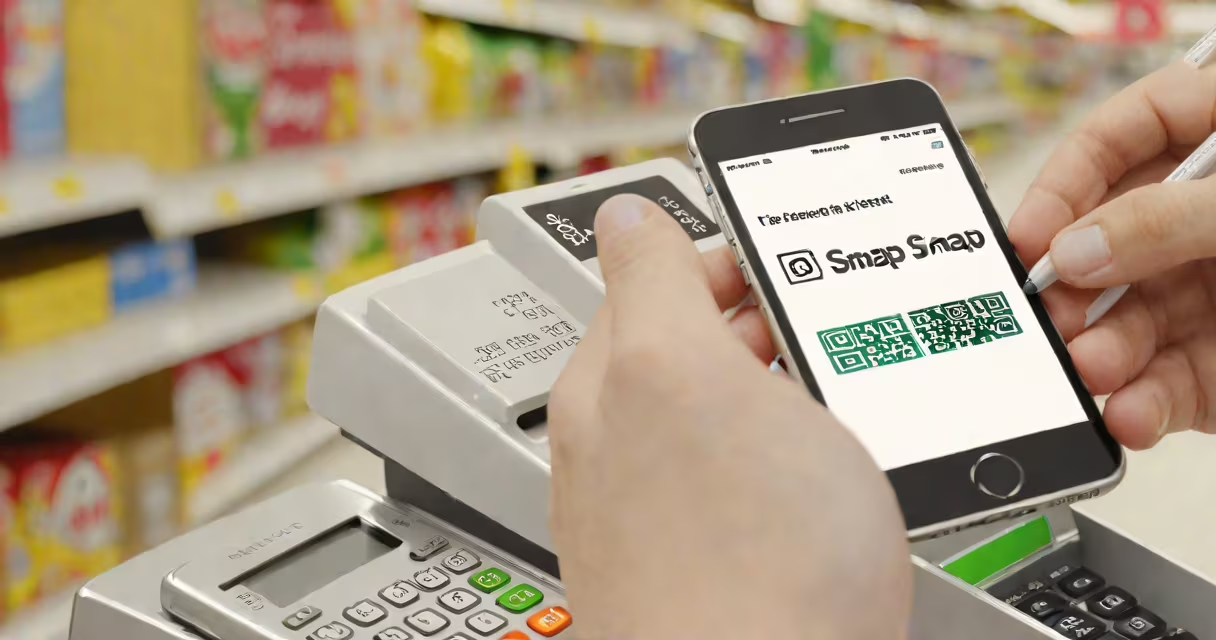
Snap (Supplemental Nutrition Assistance Program) is a federal food assistance program that provides benefits to low-income households. EBT (Electronic Benefits Transfer) is the plastic card and digital system used to access those benefits. They are not interchangeable-Snap is the program, EBT is the delivery method.
SNAP is administered by the U.S. Department of Agriculture (USDA) under the Food and Nutrition Act. It replaced the old paper coupon system in the 1990s. Households qualify based on income, household size, and expenses. Benefits are issued monthly and can be used to buy eligible food items at authorized retailers.
EBT is the infrastructure that delivers SNAP benefits. It functions like a debit card, but for government-issued food benefits. When a recipient uses their EBT card at a store, the transaction is processed through a secure network. The retailer's point-of-sale system verifies eligibility and deducts the amount from the account.
SNAP sets the rules for who qualifies and how much they receive. EBT handles the actual disbursement and redemption. A household receives a SNAP benefit amount based on their application. That amount is loaded onto an EBT card each month via a secure state agency system.
For example, a family of four earning $2,500 monthly may receive $300 in SNAP benefits. This amount appears on their EBT card. At a grocery store, they swipe the card at checkout. The system checks the balance and approves the purchase of eligible items-such as bread, milk, fruits, vegetables, and meat-but not alcohol, tobacco, or hot prepared foods.
Each state manages its own EBT system under federal guidelines. The USDA requires states to use systems that meet security standards and allow for real-time balance updates. The National Association of State Food and Nutrition Program Administrators (NASFPNA) reports that over 95% of SNAP recipients use EBT cards nationwide.
Many people assume SNAP and EBT are the same because both terms appear in news stories and official communications. But confusing them leads to misunderstandings about eligibility, usage, and fraud prevention.
For instance, some believe that losing an EBT card means losing SNAP benefits. That's false. If a card is lost or stolen, the state can issue a replacement within 72 hours. The original benefit balance remains intact. The USDA confirms that EBT cards are replaceable and not tied to a single physical device.
Another error is thinking EBT cards can be used for non-food purchases. They cannot. Only items listed in the USDA's "Eligible Food List" count. This includes seeds and plants for growing food, but not pet food or cleaning supplies-even if they're bought at a grocery store.
| Aspect | Snap (Program) | Ebt (System) |
|---|---|---|
| What it is | Federal nutrition assistance program | Digital payment system for benefits |
| Who administers | U.S. Department of Agriculture (USDA) | State agencies under federal oversight |
| Benefit delivery method | Monthly allotment based on income and household size | Loaded onto a plastic card via secure network |
| Usage restrictions | Benefits apply only to eligible food items | Card cannot be used for cash withdrawals or non-food items |
A non-obvious fact: EBT cards do not have a PIN requirement at every transaction. Some stores allow contactless payments using NFC (Near Field Communication) without entering a PIN. However, the card still requires a PIN for balance inquiries or transfers to a bank account.
I once observed a mother at a farmers market in rural Iowa using her EBT card to buy fresh apples and sweet potatoes. She swiped the card at a mobile terminal, and the transaction completed instantly. The cashier confirmed the balance was sufficient. The system worked flawlessly-proof that EBT is designed for real-world use, not just urban supermarkets.
Confusion often arises during benefit renewals or when applying for services. For example, someone might call a state office asking, "Can I get my SNAP benefits on a new EBT card?" The correct answer is yes-but the question mixes up the program (SNAP) with the tool (EBT).
Another common mix-up: believing that EBT cards can be used for online shopping. While many states now allow online SNAP purchases through approved retailers, the process is not automatic. Users must register their EBT card with platforms like Amazon or Walmart. Even then, only certain items qualify. The USDA mandates that online transactions follow the same rules as in-store ones.
There's also a persistent myth that EBT cards are linked to credit scores or banking history. They are not. EBT accounts are separate from private financial institutions. No credit check is performed when issuing a card. The system protects privacy by design.
Yes, Snap is different from Ebt. Snap is the program that provides food assistance. Ebt is the digital system that delivers those benefits. One cannot exist without the other in practice, but they serve distinct roles.
Always refer to the correct term: SNAP for the program, EBT for the card. Doing so ensures accurate communication with caseworkers, retailers, and government agencies.