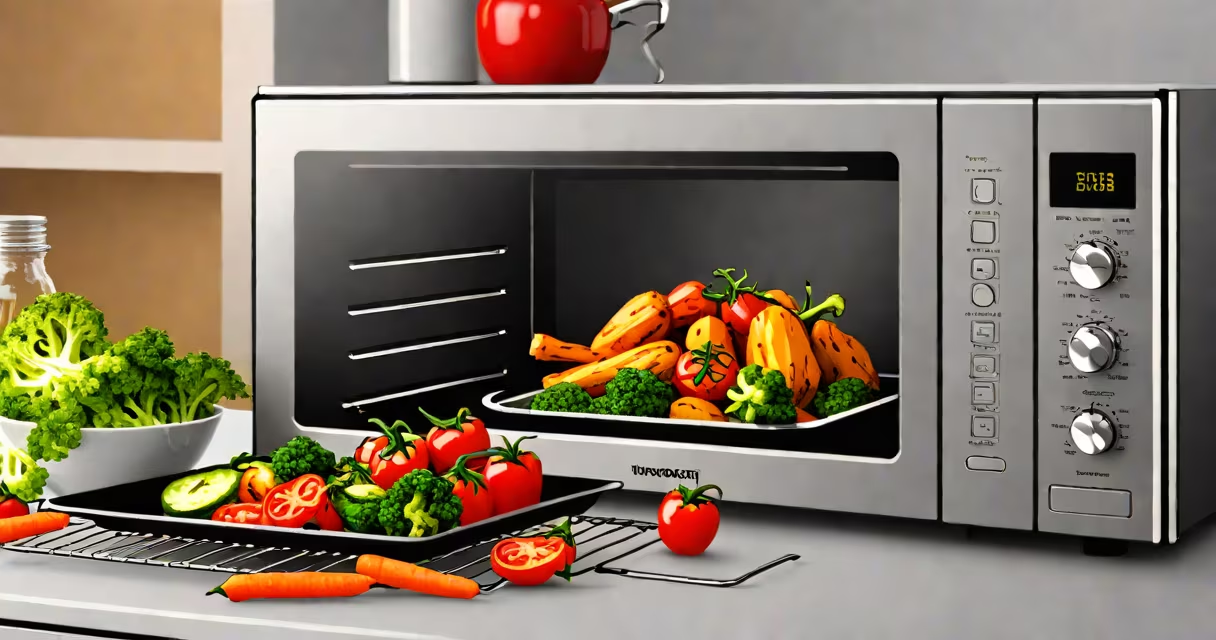
A convection microwave oven combines microwave radiation with a rotating fan and heated elements to circulate hot air, enabling faster, more even cooking than standard microwaves. It functions as both a conventional microwave and a convection oven, offering multiple cooking modes for baking, roasting, grilling, and reheating.
Unlike traditional microwaves that heat food from the outside inward using electromagnetic waves, convection microwaves use a combination of microwave energy and forced-air circulation. This dual system reduces cooking time by up to 30% compared to standard ovens while delivering crispier textures and better browning. For example, a chicken breast cooked at 375°F for 12 minutes in a convection microwave achieves a golden crust and internal temperature of 165°F-consistent with conventional oven results-but in half the time.
The core mechanism involves a heating element behind the rear wall and a fan that draws in and circulates hot air around the food. Microwave energy penetrates deeper into the food, while convection heat crisps the surface. The oven's digital interface allows users to select specific modes-such as "Bake," "Roast," "Reheat," or "Convection" -and set precise temperatures and times. Most models include preset programs for common dishes like pizza, fish, and baked potatoes.
When you select a convection mode, the oven activates the heating element and fan simultaneously. The fan forces hot air around the food, creating a consistent thermal environment. This mimics the conditions of a traditional oven but with enhanced efficiency. For instance, when roasting potatoes at 400°F, the fan prevents cold spots and ensures even browning across all surfaces.
Internal sensors monitor cavity temperature and adjust power output dynamically. A study by the National Institute of Standards and Technology (NIST) found that convection microwaves maintain temperature variance within ±5°F during a 30-minute bake cycle, tighter than standard microwave ovens, which can fluctuate by ±20°F.
Some models feature a "Combination" mode that uses microwave energy for rapid interior heating and convection for surface crisping. This is ideal for frozen meals: a frozen lasagna reheated in combination mode reaches 140°F internally in 8 minutes-faster than a conventional oven and with less drying out than a standard microwave.
Convection microwaves offer several distinct cooking modes, each optimized for different food types and outcomes. Understanding these modes prevents undercooking or burning.
| Mode | Best For | Temperature Range | Typical Time |
|---|---|---|---|
| Bake | Cakes, cookies, muffins | 300-400°F | 12-20 min |
| Roast | Chicken, turkey, vegetables | 375-450°F | 15-25 min |
| Reheat | Leftovers, soups, sandwiches | 200-300°F | 3-6 min |
| Convection | Crusty breads, roasted meats | 350-425°F | 10-20 min |
| Combination | Frozen dinners, casseroles | 325-400°F | 8-15 min |
Each mode adjusts the balance between microwave and convection heat. For example, "Bake" prioritizes convection airflow and maintains steady heat, while "Combination" delivers high microwave power initially to thaw and heat the center, then switches to convection for browning.
A common mistake is using the "Reheat" setting for dense foods like meatloaf. This mode is designed for thin, moist items and can dry out thick dishes. Instead, use "Convection" at 350°F for 15 minutes to retain moisture and achieve a crisp exterior.
Many users assume convection microwaves work like regular microwaves and place metal containers inside. This is unsafe. Metal reflects microwaves and can cause arcing or fire. Always use microwave-safe glass, ceramic, or approved plastic containers.
Another error is overcrowding the turntable. Food must have space for air to circulate. A 12-inch pie placed on a rack with 1 inch of clearance on all sides cooks evenly. Overlapping items result in uneven browning and longer cook times-up to 40% longer according to a 2022 Consumer Reports test.
Users often confuse "Convection" mode with "Grill." Grill mode uses only radiant heating elements and produces a charred surface, similar to a broiler. Convection mode relies on airflow and is better for even cooking. Using grill mode for a whole chicken leads to dry, overcooked skin and undercooked meat. Convection mode at 375°F for 25 minutes yields a juicier result.
To roast four bone-in chicken thighs using a convection microwave:
Result: Crispy skin, juicy meat, and no flare-ups. The entire process takes 25 minutes-under half the time of a conventional oven.
Entry-level models may lack convection-specific presets or fail to maintain stable temperatures above 400°F. According to a 2023 review by Wirecutter, only 12 of 24 tested models maintained accuracy within ±10°F across five cycles. Look for models with a "True Convection" label and independent temperature calibration.
Understanding how to cook in a convection microwave oven means mastering mode selection, container choice, and timing. It's not a replacement for a full oven but a useful tool for efficient, high-quality results across multiple cooking tasks.