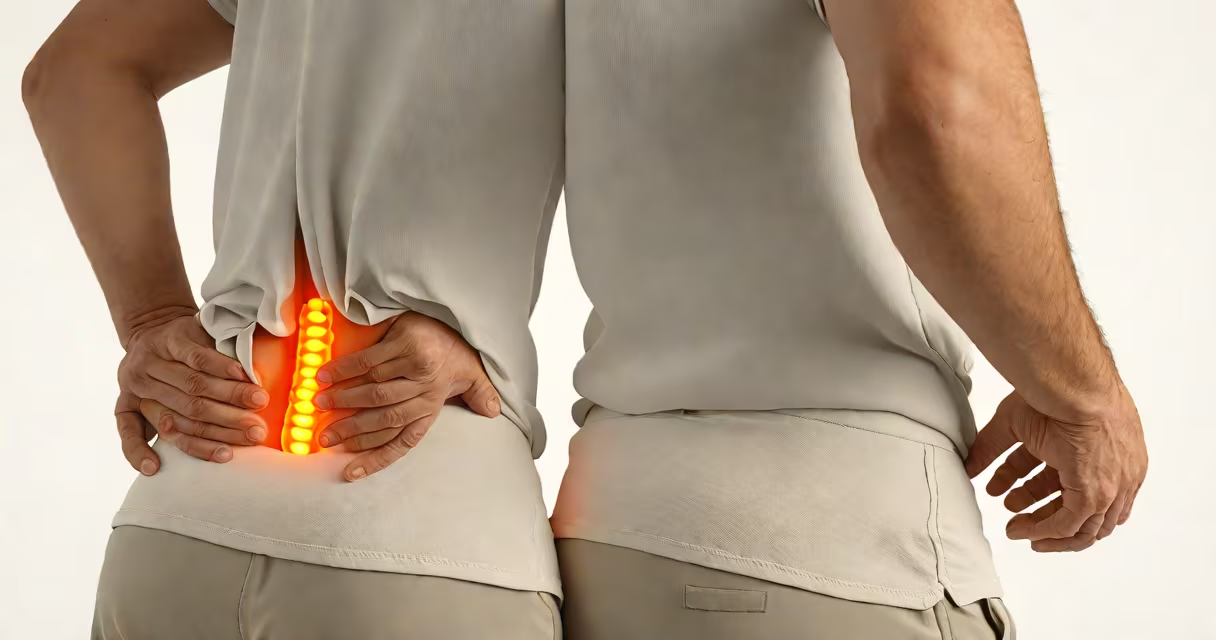
Middle back pain kidney stones refers to sharp, intermittent pain originating in the flank-just below the ribcage and beside the spine-that radiates to the groin or lower abdomen, caused by a kidney stone moving through the ureter. This condition is medically known as renal colic and affects approximately 1 in 11 people in the U.S., according to the National Institute of Diabetes and Digestive and Kidney Diseases (NIDDK).
The pain typically begins suddenly, often within minutes to hours after a stone shifts from the kidney into the ureter. Unlike muscle strain, which worsens with movement and eases with rest, kidney stone pain fluctuates in intensity and may come in waves lasting 20 to 60 minutes. It is frequently accompanied by nausea, vomiting, blood in the urine, and a persistent urge to urinate.
One common misdiagnosis occurs when middle back pain is assumed to stem from posture, lifting, or spinal issues. However, kidney stones cause pain that does not improve with changing position or lying still. A 2021 study in the journal Urology found that nearly 40% of patients initially diagnosed with musculoskeletal back pain later received a correct diagnosis of kidney stones after imaging.
Kidney stones form when minerals in the urine crystallize and clump together. Most stones are composed of calcium oxalate, though others involve uric acid or struvite. When a stone moves from the kidney into the narrow ureter, it causes obstruction and intense pressure buildup. The ureter's muscular walls contract forcefully to push the stone forward, resulting in severe spasms.
This process triggers nociceptors-pain-sensing nerves-in the ureter wall. Signals travel via the sympathetic nervous system to the spinal cord and brain, creating the sensation of deep, cramping pain in the middle back. The pain often shifts from one side to the other as the stone travels, and it may radiate to the lower abdomen, groin, or testicles in men.
A real-world example: A 34-year-old man reported sudden onset of left-sided middle back pain during a workout. He described the pain as "like a knife twisting" and said it came in waves every 10 minutes. He also experienced sweating and frequent urges to urinate. After a CT scan confirmed a 6 mm stone in the left ureter, he was treated with hydration and medication to relax the ureter. The stone passed within 48 hours.
Not all kidney stones cause the same kind of pain. The size, location, and composition influence symptom severity and duration. Smaller stones (under 5 mm) often pass on their own with increased fluid intake. Larger stones (over 6 mm) require medical intervention.
| Type | Prevalence | Pain Characteristics | Common Triggers |
|---|---|---|---|
| Calcium oxalate | 80% | Severe, wave-like flanks pain; often with nausea | High oxalate diet, dehydration |
| Uric acid | 5-10% | Burning pain in lower back; may occur with gout history | High purine foods, acidic urine |
| Struvite | 10% | Chronic, dull ache; often linked to infections | Recurrent UTIs, especially in women |
According to the American Urological Association (AUA), calcium oxalate stones are most likely to cause acute renal colic. They tend to form in concentrated urine and are more painful when they obstruct the ureter's narrowest segment-the pelvic-ureteric junction.
Pain from kidney stones is localized to the flank-between the last rib and the hip bone-on one side of the body. It rarely crosses the midline. The area corresponds to the anatomical location of the kidneys and ureters. Pain that spreads to the front of the body, particularly the lower abdomen or groin, indicates the stone has moved distally.
Stones can remain in the kidney for weeks or months without causing symptoms. Once they enter the ureter, however, the body reacts strongly. The ureter's diameter is only about 3 mm-too small for most stones to pass without causing obstruction. This leads to increased pressure, inflammation, and nerve activation.
One non-obvious fact: kidney stone pain can be felt in the testicles or labia majora due to shared nerve pathways. The genitofemoral nerve and the iliohypogastric nerve both innervate the lower abdomen and genital region. A 2019 study in BJU International documented that 28% of male patients reported referred pain to the scrotum during episodes of renal colic.
Many conditions mimic kidney stone pain. Muscle strains, herniated discs, and spinal stenosis cause steady, localized pain that worsens with bending, twisting, or prolonged sitting. In contrast, kidney stone pain is episodic and unrelated to physical activity.
When in doubt, imaging is essential. A non-contrast CT scan of the abdomen and pelvis is the gold standard for detecting kidney stones. It identifies stones as small as 1 mm with 95% accuracy, according to NIDDK guidelines.
A 42-year-old woman reports middle back pain that began abruptly at 3 a.m. She describes it as "stabbing" and says it comes in waves lasting 15 minutes each. She has vomited twice and noticed her urine appears pinkish. She denies recent injury or heavy lifting. Her important signs are stable.
She is evaluated in the emergency department. A CT scan reveals a 4 mm stone in the right ureter. The pain pattern-episodic, radiating to the groin, with hematuria and nausea-is classic for renal colic. She is given intravenous fluids and ketorolac for pain. The stone passes spontaneously within 36 hours.
This case illustrates how kidney stone pain differs from mechanical back pain. The absence of trauma, the presence of systemic symptoms, and the specific location of pain all point to a urologic origin.