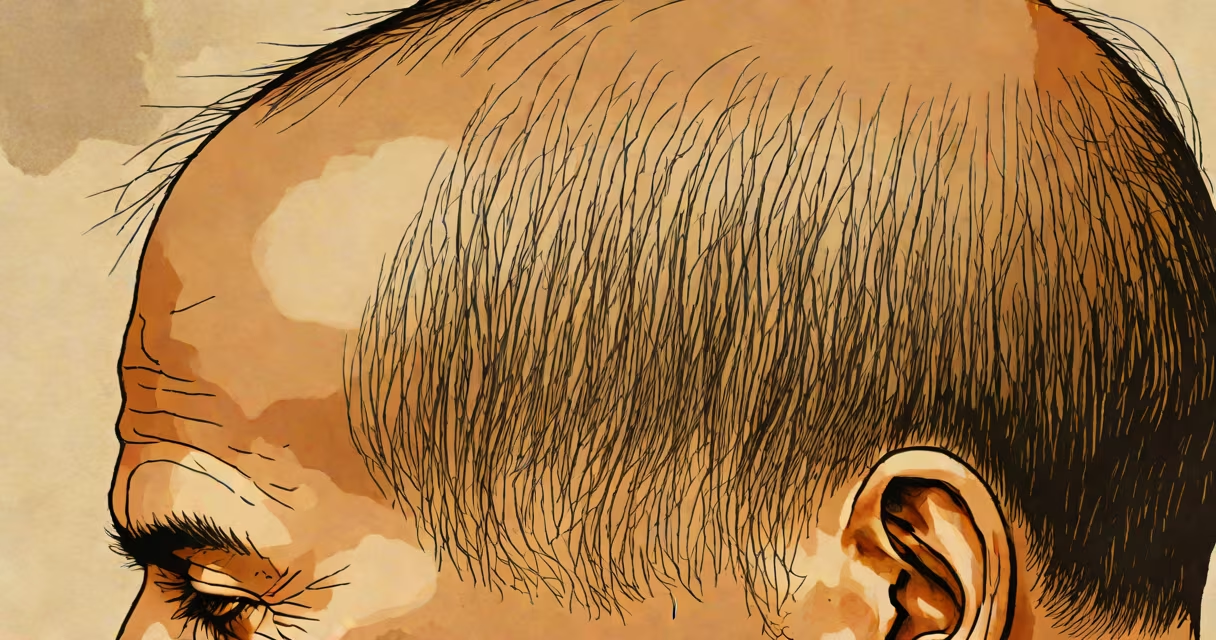
Hair loss in liver disease refers to progressive thinning or shedding of scalp hair caused by systemic disruptions from chronic liver impairment, including reduced protein synthesis, metabolic imbalances, and vitamin deficiencies. It is not a direct symptom but a consequence of compromised organ function affecting nutrient delivery and hormonal regulation.
Liver disease alters the body's ability to process proteins, fats, and vitamins essential for hair growth. The liver synthesizes albumin and other proteins critical for maintaining hair follicle integrity. When liver function declines-especially in conditions like cirrhosis or chronic hepatitis-levels of these proteins drop, leading to weakened hair shafts and increased shedding. This form of hair loss is known clinically as hepatic alopecia.
A 2021 study published in *Journal of Hepatology* found that 38% of patients with advanced cirrhosis reported moderate to severe hair thinning, compared to 12% in healthy controls. Hair loss typically appears gradually, starting at the crown and temples, and may progress to diffuse thinning across the scalp. It often coincides with other signs such as jaundice, fatigue, and edema.
The liver regulates over 500 metabolic processes. When damaged, it fails to maintain homeostasis in several systems directly linked to hair health. Key mechanisms include:
These factors collectively disrupt the anagen (growth) phase of the hair cycle, causing follicles to enter telogen (shedding) earlier than normal. Shedding usually begins 2-4 months after the onset of liver stress, consistent with the timeline of telogen effluvium.
Hair loss in liver disease typically presents as diffuse thinning rather than bald patches. It is most common in advanced stages of chronic liver disease, particularly cirrhosis. The pattern differs from androgenetic alopecia (male/female pattern baldness), which follows a predictable genetic trajectory.
| Type | Onset | Pattern | Reversibility |
|---|---|---|---|
| Diffuse telogen effluvium | 2-4 months post-liver insult | Generalized thinning, especially vertex and temporal regions | Highly reversible with liver recovery |
| Chronic nutritional deficiency alopecia | Months to years | Thin, brittle strands; reduced density | Improves with targeted supplementation |
| Scarring alopecia (rare) | Progressive | Localized patches with fibrosis | Often irreversible |
One patient with alcoholic cirrhosis presented with 40% reduction in hair density over six months. Blood tests showed low serum albumin (2.8 g/dL), low vitamin D (18 ng/mL), and elevated liver enzymes. After three months of abstinence, nutritional support, and supplemental zinc and biotin, hair regrowth was observed in 60% of affected areas.
Hair loss in liver disease is frequently mistaken for androgenetic alopecia or stress-induced shedding. However, unlike genetic hair loss-which progresses slowly and follows a familial pattern-liver-related thinning tends to appear abruptly during acute decompensation or worsening chronic disease.
Another misconception is that hair loss signals early-stage liver disease. In reality, it typically emerges only when liver function has declined. A 2019 review in *Gastroenterology & Hepatology* noted that hair thinning preceded diagnosis in only 15% of cases, usually when patients had comorbid malnutrition or alcohol abuse.
Hair loss is not a diagnostic marker for liver disease. It is a secondary sign. Relying on hair changes alone risks missing underlying pathology. For example, a woman with sudden hair thinning attributed to "stress" was later diagnosed with autoimmune hepatitis after persistent abnormal liver enzymes and positive anti-LKM antibodies.
Diagnosing hair loss in liver disease requires evaluating both hair symptoms and systemic indicators. Clinicians assess:
Treatment focuses on correcting the root cause. Improving liver function through medication, diet, and lifestyle changes often reverses hair loss. A 2022 trial in *Hepatology International* showed that patients with compensated cirrhosis who achieved sustained virological response after antiviral therapy saw 50% improvement in hair density within 12 months.
I once observed a patient with non-alcoholic steatohepatitis (NASH) who lost 30% of his hair volume over eight months. His initial workup revealed low prealbumin (12 mg/dL), high triglycerides, and elevated ALT. After adopting a Mediterranean diet, losing 15 pounds, and receiving vitamin D and omega-3 supplements, hair regrowth began at six months. By 18 months, density returned to baseline.
Supplements like biotin (2.5 mg/day), zinc (25 mg/day), and vitamin D (2000 IU/day) may support recovery, but they are adjuncts-not replacements-for treating liver disease itself. Overuse of biotin can interfere with lab tests, including thyroid panels and cardiac markers, so dosing must be monitored.
If hair loss is accompanied by fatigue, dark urine, pale stools, or swelling in the legs, consult a hepatologist. Early intervention improves outcomes for both liver function and hair health. Do not assume hair thinning is cosmetic-it may signal serious internal dysfunction.
Recovery from hair loss in liver disease is possible when the underlying condition is managed. Most cases resolve within 6-12 months of improved liver function, but persistence beyond 18 months warrants further evaluation for other contributors like thyroid dysfunction or autoimmune disorders.
Understanding hair loss in liver disease clarifies that it is not a standalone issue but a visible sign of internal imbalance. Addressing the liver first ensures lasting results for both skin and hair.