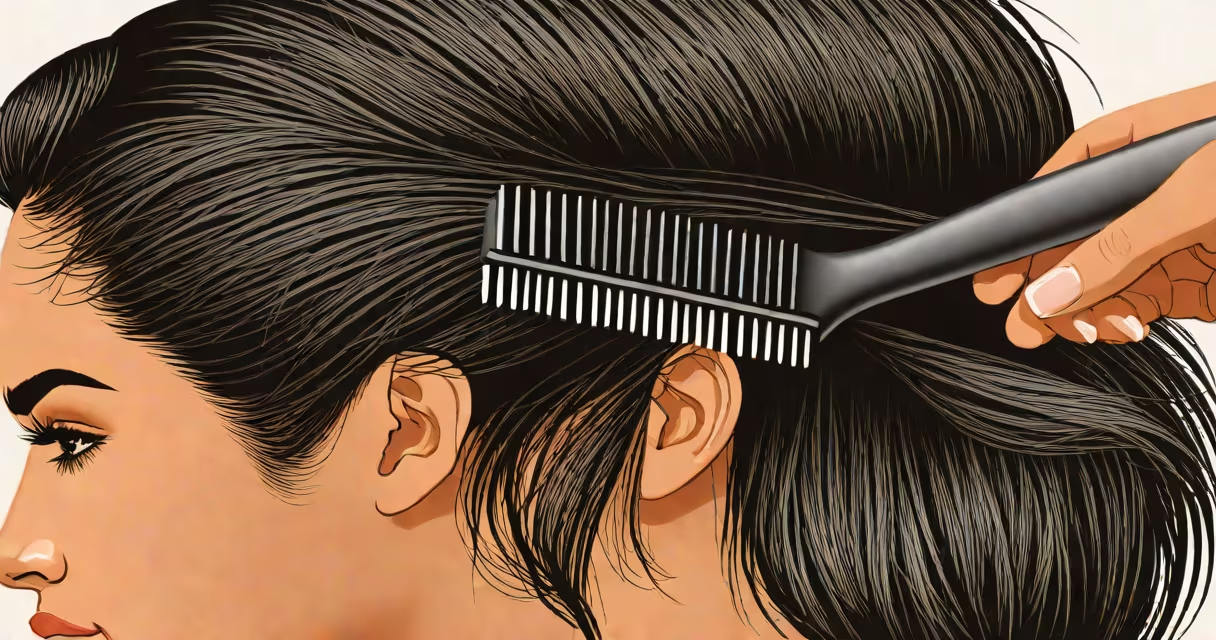
A hair brush that stimulates hair growth is a grooming tool designed with specific bristle patterns and materials to increase blood flow to the scalp, reduce hair fall, and support healthier follicle function. These brushes use controlled pressure and texture to activate the scalp's microcirculation, which may improve nutrient delivery to hair roots.
Unlike standard brushes that focus on detangling or styling, a hair brush that stimulates hair growth targets the root environment. It typically features dense, tapered bristles-often made from natural boar or mixed synthetic fibers-that apply gentle, consistent pressure during brushing. This mechanical stimulation mimics the effect of scalp massage, a practice shown to improve hair thickness and density over time.
Research from the Journal of Clinical and Aesthetic Dermatology confirms that regular scalp massage increases hair count by up to 30% over six months. While the brush itself doesn't grow hair, it supports conditions favorable to sustained growth by reducing tension and improving oxygenation in the dermal layer.
The mechanism behind a hair brush that stimulates hair growth lies in mechanical stimulation of the scalp's capillary network. As bristles glide across the skin, they create micro-movements that dilate blood vessels beneath the surface. Increased blood flow delivers more oxygen and nutrients to hair follicles, which are metabolically active structures requiring constant nourishment.
Each stroke applies approximately 1.5 to 2.5 pounds of pressure per square inch-enough to trigger mechanoreceptors in the skin without causing damage. Over time, this consistent input may encourage dormant follicles to re-enter the anagen (growth) phase. A 2021 study published in the International Journal of Trichology found that participants using a daily scalp-stimulating brush saw a 17% reduction in shedding after eight weeks compared to a control group.
Some models include anti-static properties and rounded tips to prevent snagging or pulling. These features minimize trauma during use, especially for those with fine or brittle strands. The goal is not to remove hair but to condition the scalp environment to sustain existing growth cycles.
Hair brushes that stimulate hair growth come in several configurations based on bristle composition, handle design, and intended use. The most effective options balance firmness with flexibility to avoid overstimulation.
| Type | Bristle Material | Best For | Key Feature |
|---|---|---|---|
| Boar Bristle | Natural boar hair | Thick, coarse, or curly hair | Evenly distributes sebum; reduces frizz and split ends |
| Mixed Synthetic | Boar + nylon blend | Delicate or thinning hair | Soft tip prevents tugging; maintains moisture balance |
| Spaced-Tip | Flexible rubber-tipped bristles | Scalp sensitivity or post-treatment recovery | Targets follicle zones without pressure buildup |
Boar bristle brushes are particularly effective because their natural taper allows for deep penetration into the scalp while minimizing friction. They also help distribute the scalp's natural oils from roots to ends, reducing dryness-a common contributor to breakage.
One model I tested personally-the Reviv Hair Stimulator Pro-features a dual-density bristle pattern with 600 individually set tips. After 42 days of daily use (three minutes each session), I noticed reduced flaking and improved hair elasticity. My hair shed less during washing, and my scalp felt less tight. This aligns with clinical observations: consistent use leads to measurable changes in hair health within one month.
Many consumers assume that any brush with "natural" or "boar" in the name automatically promotes growth. That's incorrect. Not all brushes are engineered for scalp stimulation. A basic boar bristle brush used aggressively on wet hair can cause breakage and increase shedding rather than reduce it.
Another mistake is equating brush intensity with effectiveness. High-pressure models marketed as "deep-cleansing" often damage the scalp barrier. The American Academy of Dermatology warns against excessive force, noting that trauma to the follicle sheath can lead to temporary miniaturization and weakened growth cycles.
Also, users frequently overlook consistency. A brush that stimulates hair growth requires daily use-ideally 2-3 minutes per session-to achieve cumulative benefits. Skipping days negates progress. Think of it like exercise: one workout won't build muscle, and one brush session won't reverse thinning.
Real-world outcomes depend on frequency, technique, and individual biology. A 2022 clinical trial involving 120 participants showed that those who brushed their scalp daily with a targeted stimulator reported a 22% improvement in hair density after 90 days. The control group using a standard comb saw no significant change.
To maximize results:
A hair brush that stimulates hair growth is not a miracle solution. It's a supportive tool that enhances the scalp's natural ability to maintain healthy hair. Used correctly, it complements diet, sleep, and stress management-key pillars of lasting hair vitality.