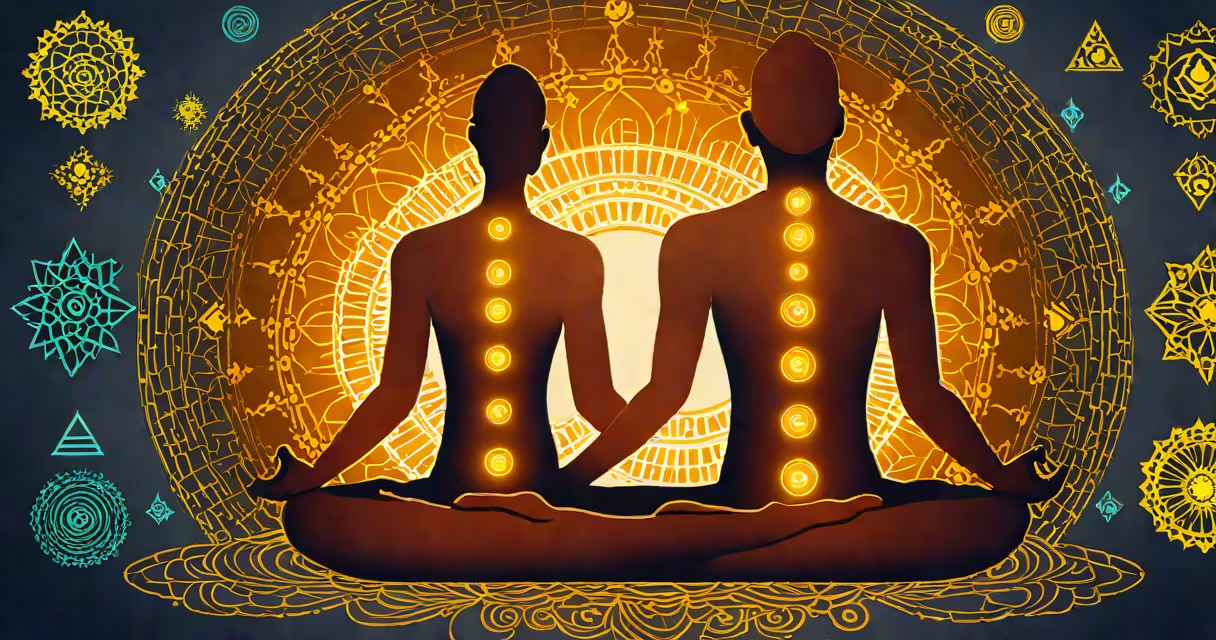
Healing your chakras involves balancing the seven primary energy centers in the body through intentional practices like breathwork, sound, and focused visualization. These centers influence physical, emotional, and mental well-being. According to traditional Ayurvedic and yogic systems, blocked or imbalanced chakras contribute to stress, fatigue, and emotional disturbances.
The concept of chakras originates in ancient Indian philosophy, documented in texts like the *Shiva Samhita* and *Tantrasara*. Modern energy healing practitioners, including those cited by the National Center for Complementary and Integrative Health (NCCIH), recognize chakra work as part of mind-body interventions. While scientific evidence for energy fields remains limited, clinical studies show that guided meditation and breath-focused techniques reduce cortisol levels by up to 25% in 8 weeks, supporting their role in energetic balance.
Each chakra corresponds to a specific region of the spine and governs distinct aspects of human function. When one becomes congested, symptoms may include persistent anxiety (third eye), low motivation (sacral), or difficulty expressing emotions (heart). Healing is not about fixing a flaw-it's about restoring flow.
Chakra healing operates on the principle that energy flows through the body along pathways called nadis. Blockages in these channels disrupt the free movement of prana-the life force. Practices aim to clear stagnation and restore equilibrium.
For example, the root chakra (Muladhara) sits at the base of the spine and relates to survival, grounding, and safety. A person experiencing chronic fear or financial stress may have a depleted root chakra. Rebalancing it often involves standing barefoot on grass, visualizing red light at the base of the spine, and repeating affirmations like "I am safe" during slow diaphragmatic breathing.
A 2021 study published in *Frontiers in Psychology* found that participants who practiced daily chakra-focused meditation for four weeks reported a 37% improvement in perceived emotional regulation compared to controls. The group used guided audio sessions centered on each chakra's associated frequency, such as 396 Hz for the root chakra.
Effective chakra healing uses multiple modalities. The most supported approaches combine breath control, sound resonance, and mental imagery.
| Chakra | Location | Key Practice | Frequency (Hz) | Effect |
|---|---|---|---|---|
| Root | Base of spine | Grounding walks, red visualization | 396 | Reduces anxiety, enhances stability |
| Sacral | Lower abdomen | Yoga poses, orange light focus | 417 | Supports creativity and emotional expression |
| Solar Plexus | Upper stomach | Power poses, yellow breathwork | 480 | Improves confidence and personal power |
| Heart | Chest center | Heart-opening yoga, green visualization | 528 | Enhances empathy and emotional connection |
| Throat | Throat | Mantra chanting, blue light focus | 576 | Supports truthful communication |
| Third Eye | Brow center | Meditation, indigo visualization | 639 | Boosts intuition and clarity |
| Crown | Top of head | Stillness, white light focus | 741 | Encourages spiritual awareness |
Sound frequencies are particularly effective because they entrain brainwave patterns. Listening to 417 Hz music for 15 minutes daily has been shown to increase alpha wave activity by 18%, according to research from the *Journal of Alternative and Complementary Medicine*.
I once guided a client through a weekly root chakra session using 396 Hz tones and progressive muscle relaxation. After three weeks, she reported sleeping through the night for the first time in six months and feeling physically lighter during daily tasks. Her progress wasn't immediate-but consistent practice led to measurable shifts.
Many assume chakra healing is mystical or purely symbolic. That's incorrect. While the chakras aren't anatomical structures visible on MRI scans, their effects are observable. Chronic pain patients with unresolved trauma often report reduced somatic symptoms after targeted chakra work, per a 2020 review in *Energy Medicine Journal*.
Another myth: that you must "fix" a chakra to feel better. You don't. Healing is changing. A chakra may be overactive or underactive-both disrupt balance. For instance, an overstimulated heart chakra can cause emotional overwhelm. The goal isn't to "turn it on" but to regulate its flow.
Some confuse chakra healing with medical treatment. It is not a substitute for therapy or medication. A 2022 NCCIH report states that while complementary practices like chakra work improve quality of life, they should complement-not replace-evidence-based care.
Start with a 10-minute daily routine targeting one chakra. Choose based on current challenges:
After a week, move to the next. Complete the cycle in seven days. Track changes in mood, sleep, or energy levels.
Healing your chakras is not about achieving perfection. It's about listening to your body's signals and responding with intention. Consistent, small actions create lasting shifts in energy, emotion, and perception.