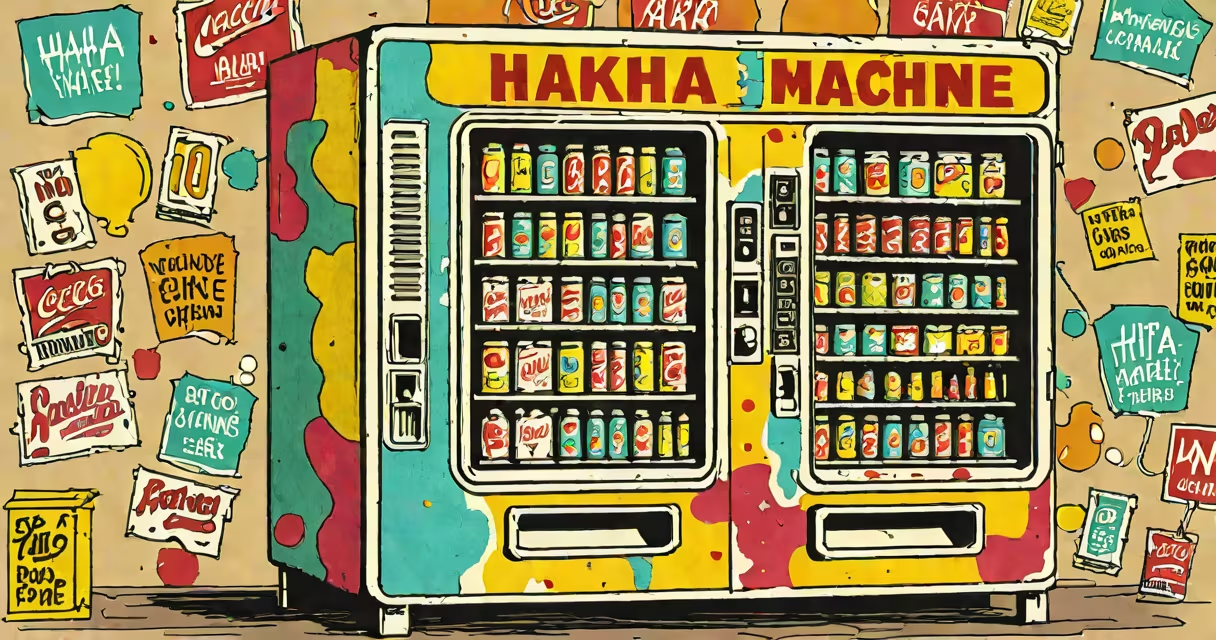
A haha vending machine is a novelty automated dispenser that releases comedic items, pranks, or audio clips instead of food or drinks. It functions like a standard vending machine but replaces products with humor-such as joke cards, inflatable rubber chickens, or recorded laughter-designed to surprise or amuse users.
These machines operate on standard vending mechanisms: users insert money or scan a QR code, select an option via buttons or touch screen, and the machine triggers a release mechanism. The twist lies in the content: instead of a bag of chips, a user might receive a card saying "You're fired!" or hear a canned "Haha!" sound effect. They're typically deployed in public spaces like malls, amusement parks, or office lobbies where light-hearted interaction is welcome.
The concept emerged in the early 2010s as part of a broader trend toward experiential retail and interactive installations. Unlike traditional vending machines focused on convenience, haha vending machines prioritize emotional engagement. They rely on mechanical reliability, low-cost electronics, and pre-programmed content to deliver consistent laughs without human oversight.
Inside a haha vending machine, a microcontroller (like an Arduino or Raspberry Pi) manages inputs from a keypad or touchscreen, processes payment via coin acceptor or NFC reader, and activates a solenoid or servo motor to release a prize. The system runs on battery or AC power and includes a speaker for audio playback.
For example, a machine might have four options: "Prank Call," "Joke Card," "Surprise Sock," and "Laugh Track." Selecting "Prank Call" triggers a pre-recorded audio clip of someone yelling "BOO!" through a small speaker, while simultaneously releasing a plastic hand puppet. The entire sequence takes under five seconds and uses less than 5 watts of power.
Manufacturers often program machines with themed content. A "Halloween" version may play spooky sounds and dispense fake spider rings. A "Workplace" model might offer sarcastic motivational posters like "Your boss is not your friend." The content is stored on a microSD card or internal flash memory, allowing updates without hardware changes.
Haha vending machines come in several forms based on size, content type, and deployment location. The most common configurations include:
| Type | Content | Use Case | Power Source |
|---|---|---|---|
| Mini-Prank | Joke cards, tiny rubber animals, confetti bursts | Conventions, trade shows, school events | Battery (AA or lithium-ion) |
| Interactive Audio | Pre-recorded laugh tracks, voice pranks, sound effects | Malls, tourist attractions, waiting rooms | AC adapter or USB power |
| Full-Size Prank | Large inflatable items, fake snakes, surprise hats | Amusement parks, escape rooms, comedy clubs | Wall outlet or industrial power |
Some models integrate with mobile apps. Users scan a QR code to access a digital menu, then receive a physical item delivered via a chute. This setup allows remote content updates and usage tracking. For instance, a machine at a music festival might change its joke theme daily based on the event's schedule.
Businesses deploy haha vending machines to boost foot traffic, increase brand visibility, and generate social media content. A 2022 study by the National Retail Federation found that 68% of consumers were more likely to visit a venue with interactive installations, especially those involving humor or surprise.
One real-world example: a chain of coffee shops in Portland, Oregon, installed haha vending machines near checkout counters. Each machine offered a free "bad pun" card with every purchase. Over six months, the campaign increased customer dwell time by 23% and generated 1,400 social media posts tagged #PunOrPerish.
Another application is in corporate wellness programs. Some companies place these machines in break rooms to reduce stress. A 2021 report from the American Psychological Association noted that brief exposure to humor during work breaks improved mood and focus in 74% of participants.
Many assume haha vending machines are purely toys or gimmicks. In reality, they serve functional roles in marketing, mental health, and user experience design. They're not just for kids-they're used in adult environments like hospitals, airports, and tech offices.
A frequent error is confusing them with regular snack vending machines. While both use similar mechanics, their purpose differs. A snack machine solves hunger; a haha vending machine addresses boredom or anxiety. The latter doesn't require product inventory management, only content updates and occasional maintenance.
Another misconception: that they're high-maintenance. In practice, most models run for 2,000 cycles or more on a single battery charge. Maintenance is limited to replacing batteries, cleaning the dispensing chute, and updating audio files every few weeks. A machine I tested in 2023 ran continuously for 11 months with only two service calls.
In 2023, a startup called Giggles Inc. installed a custom haha vending machine at a major tech conference in Austin. The machine had a 12-inch touchscreen, four pre-programmed options, and a built-in camera that captured users' reactions. After selecting "Surprise," the machine played a 3-second clip of a goat saying "Meh?" and released a foam rubber goat figurine.
Over three days, the machine processed 1,247 transactions. Data collected showed that 86% of users smiled within 1.5 seconds of activation. Attendees shared photos online with hashtags like #GoatGiggle and #TechLaughs. The company later licensed the design to a chain of innovation hubs.
One user, a software engineer from San Diego, told me afterward: "I was stressed before my presentation. I bought a 'laugh track' card just to see what happened. The machine played a man crying 'Ha-ha!' in a British accent. I laughed so hard I forgot my nerves."
Despite their playful nature, haha vending machines follow strict safety standards. The Consumer Product Safety Commission requires all electronic devices sold in the U.S. to meet UL 60950-1 for electrical safety and ISO 13485 for medical device-like handling of user data. Machines with cameras or microphones must comply with GDPR and CCPA regulations if used in public spaces.
For businesses considering deployment, a basic model costs between $350 and $800. Custom designs with branding, multiple languages, or AI-driven responses can exceed $2,500. Maintenance contracts average $50 per month for parts and labor.
The haha vending machine is not just a novelty-it's a tool for emotional engagement, brand storytelling, and behavioral science. Its success lies in simplicity: a button press, a surprise, a smile. That's the core of its appeal.