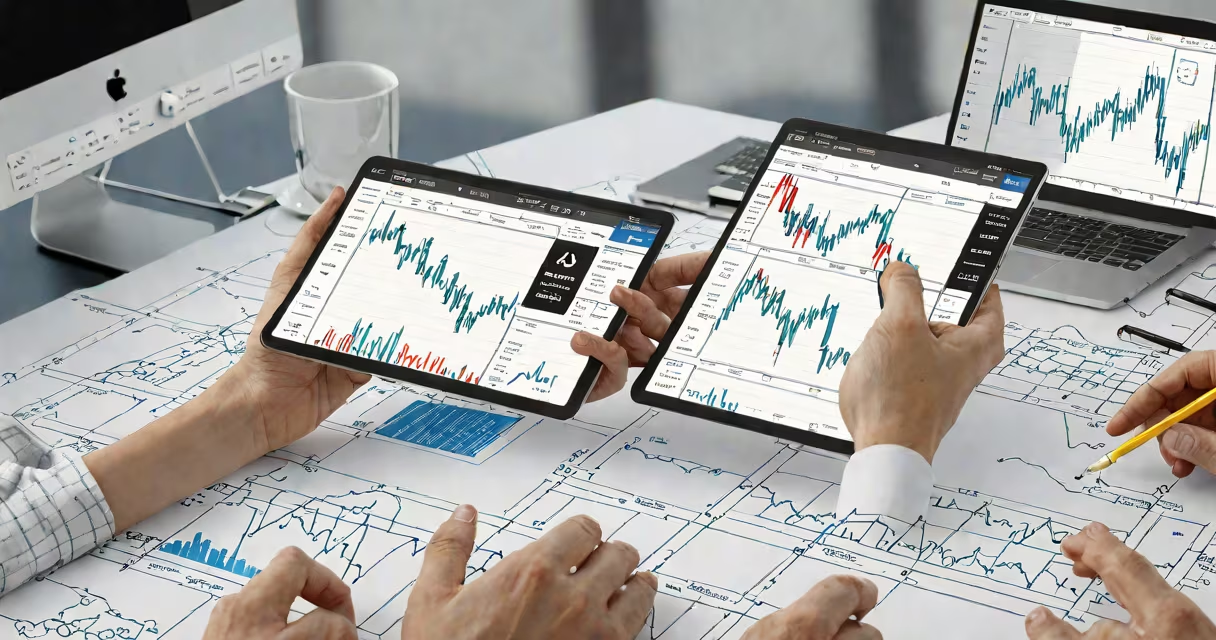
Free online share trading is a method of buying and selling stocks, ETFs, and other securities through web or mobile platforms that charge no commission for trades. Investors execute transactions electronically without paying fees per trade, though some platforms may impose other costs.
This model emerged in the early 2010s as competition among brokers intensified. Traditional brokers charged $5 to $10 per trade, making frequent trading expensive. Free online share trading removed that barrier, enabling retail investors to enter the market with lower entry costs. Today, major platforms like Robinhood, Webull, and SoFi Invest offer commission-free trades on U.S. exchange-listed stocks and ETFs.
The core mechanism relies on revenue models that don't depend on per-trade fees. Instead, platforms earn income through interest on uninvested cash, payment for order flow (PFOF), and premium subscription services. PFOF involves routing customer orders to market makers who pay the broker for the right to execute trades. This practice is controversial because it may influence order routing decisions, potentially affecting trade execution quality.
When you place a trade via a free online platform, your order goes to a market center such as Nasdaq or NYSE. The platform routes the order based on agreements with exchanges and liquidity providers. Execution speed and price depend on market conditions and the platform's infrastructure.
For example, if you buy 10 shares of Apple at $190 per share using a free platform, the transaction settles in two business days (T+2). The platform deducts the $1,900 from your account balance. No fee appears on your statement. However, if you hold the position overnight, you may incur financing charges if you're using margin, though most free platforms limit margin access to reduce risk.
Platforms often include tools like real-time quotes, charting software, and news feeds. These features support decision-making but do not guarantee profitable outcomes. A 2022 study by the Securities and Exchange Commission (SEC) found that 70% of retail traders who used free platforms lost money over a 12-month period, highlighting that low cost doesn't equate to high returns.
Not all free trading platforms are equal. They differ in features, supported assets, and hidden costs. The following table compares common options:
| Platform | Commission-Free Stocks/ETFs | Payment for Order Flow? | Minimum Deposit | Advanced Tools |
|---|---|---|---|---|
| Robinhood | Yes (U.S. listed) | Yes | $0 | Basic charting, alerts |
| Webull | Yes (U.S. listed) | Yes | $0 | Advanced charting, paper trading |
| SoFi Invest | Yes (U.S. listed) | No | $0 | Portfolio rebalancing, financial planning tools |
| E*TRADE | Yes (U.S. listed) | Yes | $0 | Full research, options trading |
Robinhood and Webull route most orders to market makers that pay for order flow. SoFi Invest does not engage in PFOF, relying instead on investment advisory fees and interest income. E*TRADE offers both free trades and advanced tools, including options trading and research reports, but requires a higher level of investor experience.
A lesser-known fact: Some platforms charge fees for after-hours trading, crypto purchases, or international stocks-even when regular trades are free. For example, Webull charges $0.005 per share for trades outside regular hours. Always review the fee schedule before executing a trade.
Many assume that "free" means no cost at all. But free online share trading often includes opportunity costs. For example, a platform may offer free trades but charge higher spreads-the difference between bid and ask prices-on certain instruments. Spreads can erode returns, especially for frequent traders.
Another misconception is that free trading leads to better performance. A 2021 report by the Financial Industry Regulatory Authority (FINRA) showed that users of commission-free platforms traded 30% more frequently than those using traditional brokers. High turnover increases the chance of losses due to timing errors and emotional decisions.
I once tested a free trading platform during a market rally. I bought five stocks based on social media buzz. Within six weeks, three had declined by over 20%. The platform didn't warn me about volatility or lack of fundamentals. The absence of fees made the mistake feel less costly, but the loss was real. That experience taught me that low cost doesn't replace due diligence.
Beginners with small accounts can benefit from low-cost entry. A person with $500 can start investing without fear of losing a large percentage to fees. Long-term investors focused on index funds or ETFs also gain from compounding returns without drag from transaction costs.
However, active traders, especially those using options or futures, should assess whether free platforms meet their needs. Many free platforms restrict access to advanced order types, real-time data, or margin lending. For example, Robinhood limits options trading to users who pass a quiz and have sufficient capital.
For those who want to explore investing further, a free online book on personal finance covers asset allocation, diversification, and long-term strategies. Knowledge reduces reliance on hype and improves decision-making.
Free online share trading lowers the barrier to entry into investing. It allows individuals to build portfolios without paying per-trade fees. But success depends on understanding how platforms generate revenue, managing behavior, and avoiding overtrading. The absence of a fee doesn't eliminate risk-it simply changes where the cost appears.