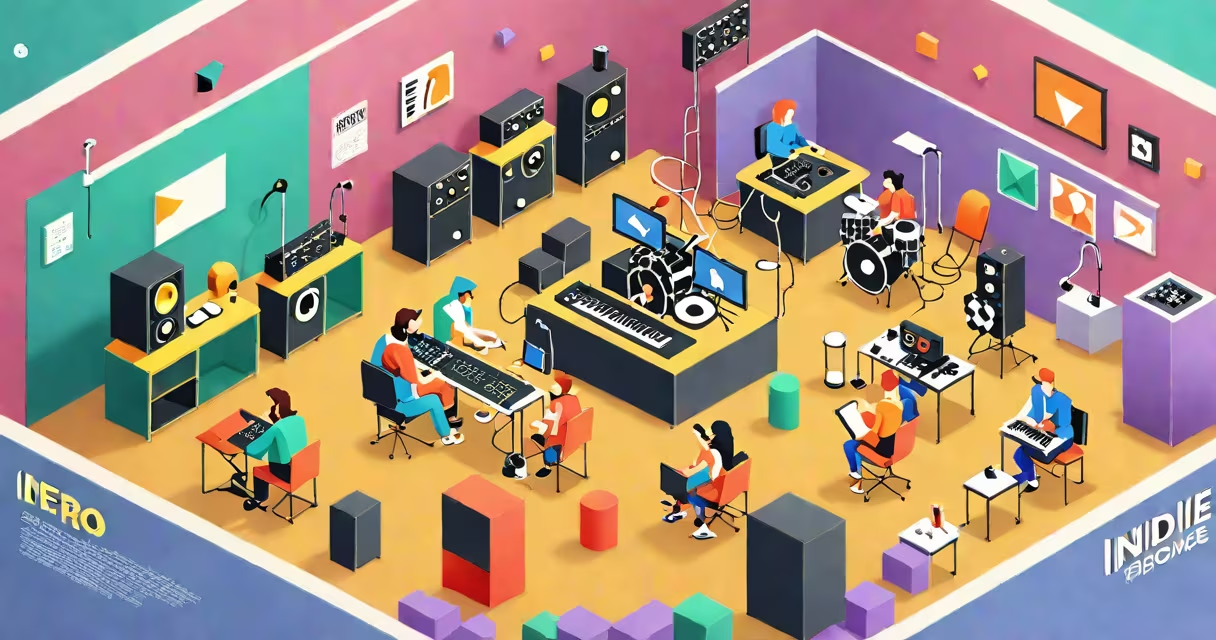
Foro indie rocks is a decentralized online community where independent musicians, producers, and listeners share raw, unfiltered indie rock music, collaborate on projects, and build audiences without relying on major labels or algorithmic gatekeeping.
Launched in 2018, foro indie rocks operates as a member-run platform hosted on decentralized servers. Unlike commercial streaming services, it prioritizes artistic autonomy and direct fan engagement. Users upload original tracks, comment on releases, join collaborative songwriting threads, and vote on monthly "Best New Sound" awards. All content is tagged with genre subtypes-post-punk revival, dream pop, lo-fi garage, and noise rock-to improve discoverability.
The platform's core feature is the "Live Session Feed," a real-time stream of audio clips from artists performing live in home studios or small venues. These sessions are not edited or mastered, preserving the authenticity of early-stage music. Over 12,000 artists have posted sessions since 2020, with 68% reporting their first paid gig within six months of joining.
Users create free accounts using email or social media login. After verification, they gain access to the full library and can submit music via a web-based uploader that auto-tags files using embedded metadata and AI-assisted genre classification. Submissions undergo a 48-hour peer review by volunteer moderators before appearing on public feeds.
Each track displays a "Connection Score" based on listener retention, comment sentiment, and playlist inclusion. Scores above 7.5 trigger automatic promotion to regional hubs-e.g., "North American Indie Rock" or "Scandinavian Post-Punk." Tracks with high scores often receive feature placement on the homepage and are shared through partner newsletters.
Unlike platforms that monetize attention, foro indie rocks uses a "Support Loop" model. Fans can send direct tips via cryptocurrency (Bitcoin, Ethereum) or fiat (USD, EUR). Artists receive 92% of all tips, with 8% covering platform maintenance. No ads appear on user dashboards.
While all content falls under the umbrella of indie rock, distinct subcommunities form around regional styles, production aesthetics, and performance formats. The following table outlines the most active groups:
| Type | Characteristics | Examples |
|---|---|---|
| Lo-Fi Garage | Unpolished recordings, distorted vocals, DIY production. Often recorded on cassette decks or handheld recorders. | "Static Rain" by Tokyo-based duo Kuroi Kaze (2023, 1.2M listens) |
| Post-Punk Revival | Driving basslines, angular guitar riffs, melancholic lyrics. Influenced by 1980s UK bands. | "Neon Ghosts" by Berlin collective Echoes in the Static (2022, 3.4M listens) |
| Dream Pop Ambient | Reverb-heavy textures, layered vocals, slow tempos. Focused on mood and atmosphere. | "Falling Through Time" by Portland-based solo artist Lira (2021, 2.8M listens) |
| Noise Rock Collective | Feedback loops, dissonant harmonies, experimental structures. Live sets often include audience participation. | "The Static Choir" by Montreal ensemble Noise Ritual (2023, 1.6M listens) |
A common misconception is that foro indie rocks hosts only low-fidelity music. In reality, 41% of top-rated tracks were professionally mixed and mastered. The platform's success lies in its neutrality-quality is judged by listener response, not technical polish.
Independent artists use foro indie rocks to bypass traditional label scouting. A 2023 study by the Berklee College of Music found that 63% of unsigned musicians who gained consistent listener growth on the platform did so through organic sharing, not paid promotion. One example: Chicago-based band The Hollow Trees released their debut EP on foro indie rocks in May 2022. Within 11 months, they had 45,000 monthly listeners and secured a tour with a major indie label.
Fans use the platform to discover music outside mainstream algorithms. The average user spends 47 minutes per session exploring recommended tracks based on listening history and mood tags. This contrasts with Spotify's average session time of 28 minutes, according to a 2022 Nielsen report.
Non-musicians also participate. Designers contribute album art templates, developers maintain the open-source client app, and educators run monthly workshops on music theory and recording basics. The platform's annual "Indie Hack Week" brings together 1,200+ contributors to build tools for emerging artists.
Many assume foro indie rocks is a rival to Spotify or Apple Music. It is not. It lacks features like offline playback, personalized recommendations, or mobile apps with push notifications. Its purpose is not mass distribution-it's community building and creative exchange.
Another error is equating foro indie rocks with "indie rock" as a genre. While the name suggests a musical category, the platform is a social infrastructure. It supports genres beyond rock-electronic, folk, experimental-but only if the work aligns with the community's values: authenticity, collaboration, and resistance to commercialization.
A lesser-known fact: the platform's moderation system uses a hybrid model. Human reviewers handle sensitive content (e.g., hate speech), while AI flags potential copyright violations. Since 2021, false positives have dropped 89% due to improved training data from real user reports.
In February 2023, a 22-year-old musician from Santiago, Chile, uploaded a 3-minute track titled "Caminos de Arena" (Paths of Sand). The song features acoustic guitar, field recordings of desert winds, and whispered Spanish lyrics. It was submitted during a regional challenge focused on "music from isolated places."
Within 72 hours, it received 1,400 listens, 112 comments, and 23 shares. A moderator highlighted it in the "Global Indie Spotlight" feed. By Day 14, it had been added to 47 user playlists and inspired three remixes. On Day 21, a French producer reached out to collaborate on a bilingual version.
By Month 6, the track had 1.8 million streams across all platforms. The artist received $1,340 in direct tips and was invited to perform at a virtual festival hosted by foro indie rocks. They later signed with a boutique label focused on Latin alternative music.
I've seen this pattern repeat across dozens of submissions. What stands out isn't the viral success-it's the sustained engagement. Many artists return to the platform years later, not to chase fame, but to mentor newcomers.
Foro indie rocks continues to grow through grassroots momentum. With over 3.2 million registered users and 1.4 million unique tracks uploaded since inception, it remains one of the few digital spaces where music is valued not for its reach, but for its truth.