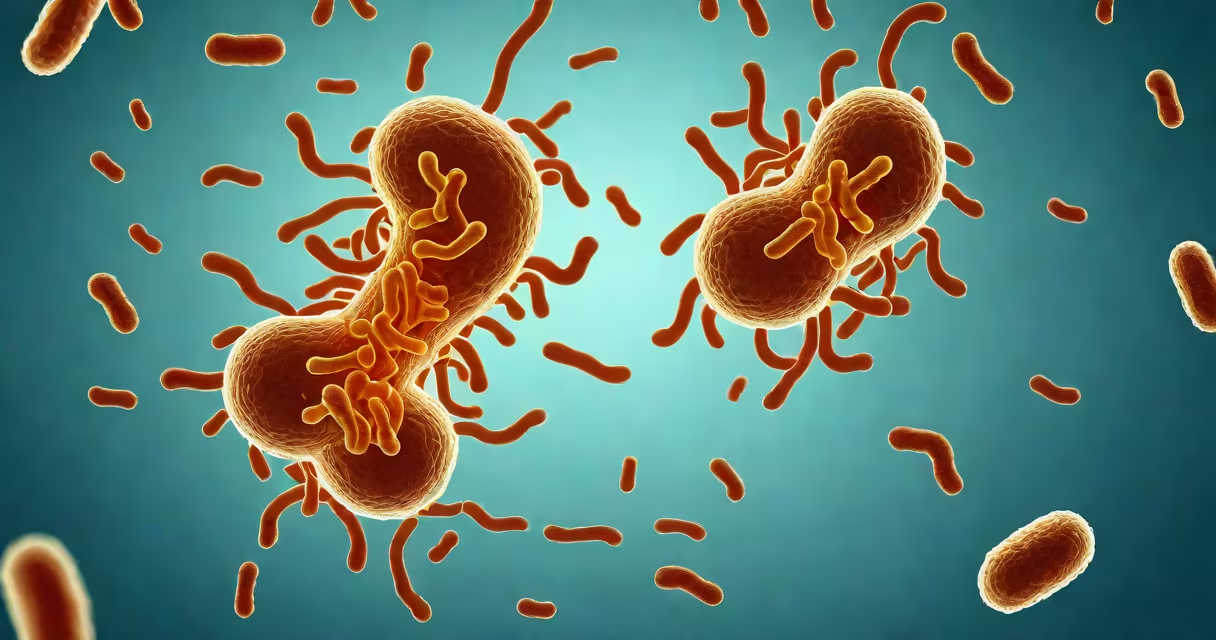
Escherichia coli pyelonephritis is a bacterial infection of the kidneys caused by E. coli, typically ascending from the lower urinary tract. It presents as acute flank pain, fever, and systemic signs of infection, requiring prompt antibiotic therapy to prevent complications like sepsis or renal scarring.
Pyelonephritis occurs when bacteria breach the bladder barrier and travel up the ureters into the renal parenchyma. E. coli accounts for 75-90% of community-acquired cases, primarily due to its ability to adhere to uroepithelial cells via P fimbriae and survive intracellularly. The infection triggers intense inflammation, leading to neutrophil infiltration, tubular necrosis, and potential abscess formation in severe cases.
Diagnosis relies on clinical presentation, urinalysis showing pyuria and bacteriuria, and blood cultures in febrile patients. Imaging, such as ultrasound or CT scan, may reveal cortical swelling, loss of corticomedullary differentiation, or perinephric fluid. A positive urine culture with ≥10⁵ CFU/mL of E. coli confirms the diagnosis.
E. coli enters the urinary tract through the urethra, often during sexual activity or poor hygiene. Once in the bladder, it can persist in biofilms or invade transitional epithelial cells. From there, it ascends via retrograde flow through the ureters, especially if there's obstruction or vesicoureteral reflux. The ascending route explains why most cases originate in the lower urinary tract.
Virulence factors like P fimbriae bind to Galα(1-4)Galβ receptors on renal tubular cells, enabling colonization. Flagella help motility through the urinary tract. Hemolysin and cytotoxic necrotizing factor (CNF) damage host cells, promoting tissue invasion and immune evasion. These mechanisms allow E. coli to establish infection despite host defenses.
Once established in the kidney, the inflammatory response causes edema, reduced perfusion, and impaired filtration. This leads to decreased glomerular filtration rate (GFR), which can progress to acute kidney injury if untreated. Persistent infection may result in chronic pyelonephritis with fibrosis and loss of renal function.
Pyelonephritis is classified as either community-acquired or hospital-acquired. Community-acquired cases are usually caused by typical E. coli strains with known virulence factors. Hospital-acquired infections often involve multidrug-resistant (MDR) E. coli, including ESBL-producing or carbapenemase-producing strains, which pose higher treatment challenges.
| Type | Common Pathogens | Risk Factors | Treatment Considerations |
|---|---|---|---|
| Community-acquired | E. coli (K1, O1, O2, O6) | Female gender, sexual activity, diabetes, pregnancy | First-line: ceftriaxone, ciprofloxacin, nitrofurantoin |
| Hospital-acquired | ESBL-producing E. coli, carbapenem-resistant E. coli | Catheter use, prior antibiotics, ICU stay | Requires broad-spectrum agents: piperacillin-tazobactam, meropenem |
High-risk groups include pregnant women, individuals with diabetes mellitus, those with structural abnormalities (e.g., posterior urethral valves), and patients with indwelling catheters. Obstruction increases pressure in the collecting system, impairing clearance and favoring bacterial growth. In children, vesicoureteral reflux is a common underlying cause.
A non-obvious distinction: E. coli pyelonephritis can mimic other conditions. Acute abdomen presentations with flank pain and fever may be misdiagnosed as appendicitis or cholecystitis. Renal colic from stones can resemble pyelonephritis clinically. Differentiation requires imaging and laboratory confirmation.
Some assume that all E. coli infections are foodborne or gastrointestinal. While E. coli O157:H7 causes hemorrhagic colitis and hemolytic uremic syndrome (HUS), E. coli pyelonephritis involves uropathogenic E. coli (UPEC) strains adapted to the urinary tract. These strains lack Shiga toxin and do not cause diarrhea.
Another misconception is that pyelonephritis only affects older adults. In reality, it is most common in young to middle-aged women, particularly those with recurrent UTIs. The female anatomy-with a shorter urethra and proximity to the anus-increases susceptibility. About 20% of women will have at least one episode of pyelonephritis in their lifetime.
There is also confusion between pyelonephritis and cystitis. Cystitis involves the bladder only and presents with dysuria, frequency, and suprapubic pain. Pyelonephritis includes systemic symptoms like fever (>38°C), chills, and nausea. A patient with only dysuria and urgency likely has cystitis, not pyelonephritis.
A 32-year-old woman presented with 48 hours of left flank pain, fever (39.1°C), and vomiting. She had no history of UTIs but reported recent sexual intercourse. Urinalysis showed 30-50 WBC/hpf and 3+ leukocyte esterase. Blood cultures were drawn. A CT scan revealed left-sided renal enlargement with loss of corticomedullary differentiation and perinephric fat stranding.
Urine culture grew E. coli sensitive to ceftriaxone and ciprofloxacin. She was admitted and started on IV ceftriaxone. After 48 hours of clinical improvement, she transitioned to oral ciprofloxacin for a total of 14 days. Follow-up renal ultrasound at six weeks showed resolution of findings with normal kidney size and echogenicity.
This case illustrates the importance of early recognition. Delayed treatment increases risk of complications, including papillary necrosis, abscess formation, and progression to sepsis. Mortality rates in untreated pyelonephritis exceed 10%, rising to 25% in elderly or immunocompromised patients.
Patients should seek medical attention if they develop fever with flank pain, especially if accompanied by nausea, vomiting, or altered mental status. Emergency evaluation is needed for sepsis signs: hypotension, tachycardia, confusion, or oliguria.
Prevention strategies include adequate hydration (2-3 liters/day), voiding after intercourse, avoiding spermicides, and proper wiping technique (front to back). Women with recurrent pyelonephritis may benefit from low-dose prophylactic antibiotics, such as nitrofurantoin 100 mg nightly.
For individuals with complex anatomy or neurological conditions affecting bladder emptying, intermittent catheterization may reduce infection risk. Routine screening for asymptomatic bacteriuria is not recommended in non-pregnant adults, as treatment does not improve outcomes and may promote resistance.
After recovery, follow-up testing ensures eradication. Repeat urine culture within one week of completing therapy confirms resolution. Persistent bacteriuria suggests inadequate treatment, resistant organisms, or underlying anatomical issues.
Escherichia coli pyelonephritis remains a significant health concern due to rising antimicrobial resistance and increasing prevalence in outpatient settings. Prompt intervention based on microbiological evidence prevents long-term renal damage and systemic complications.