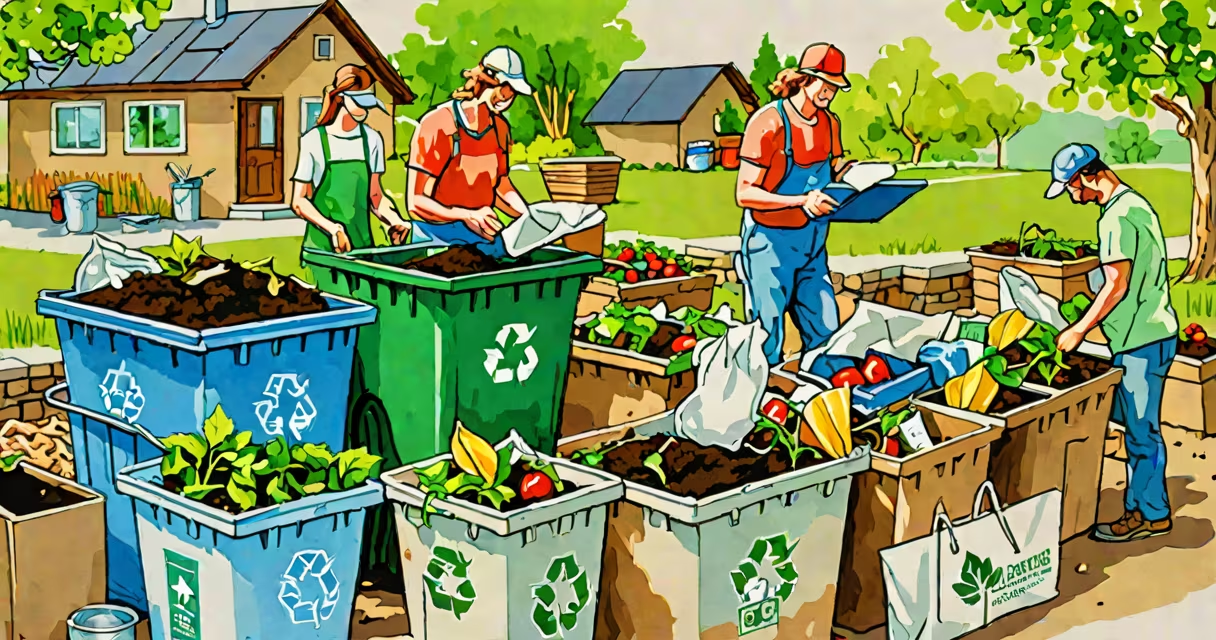
Environmentally friendly living is a daily practice of making choices that reduce environmental harm, conserve resources, and support ecological balance. It involves intentional decisions about consumption, waste, energy use, and transportation to minimize negative impact on the planet.
This approach isn't limited to extreme measures like off-grid living. It includes consistent, measurable actions such as reducing single-use plastics, choosing plant-based meals, using public transit, and supporting local, organic agriculture. The goal is long-term sustainability through small, repeatable behaviors.
According to the United Nations Environment Programme (UNEP), individual actions collectively account for up to 30% of global greenhouse gas emissions. Shifting toward environmentally friendly living can lower personal carbon footprints. For example, switching from car commutes to biking or walking cuts average urban transport emissions by 15-20% per household annually.
Every decision in daily life affects the environment. Choosing a reusable water bottle over disposable plastic reduces plastic waste by approximately 150 bottles per year per person. Over time, this scales to millions of bottles saved globally each year.
Energy use is another major factor. Replacing incandescent bulbs with LED lighting cuts household electricity use by 75%. A typical U.S. household using 10 LEDs instead of 10 incandescents saves about 1,000 kWh annually-equivalent to avoiding 700 pounds of CO₂ emissions.
Food systems contribute roughly 26% of global emissions. Adopting a plant-forward diet-one that prioritizes vegetables, legumes, and whole grains-can reduce food-related emissions by up to 50% compared to diets high in red meat and processed foods. The EAT-Lancet Commission reports that shifting to such diets could prevent 11 million premature deaths annually while preserving biodiversity.
Environmentally friendly living centers on five key areas: waste reduction, energy efficiency, sustainable food choices, responsible transportation, and mindful consumption.
| Area | Common Practice | Environmental Impact (per household/year) |
|---|---|---|
| Waste Reduction | Composting food scraps | Saves 300-500 lbs of organic waste from landfills; reduces methane emissions |
| Energy Efficiency | Switching to LED lighting | Cuts electricity use by 75%; avoids ~700 lbs CO₂ |
| Sustainable Food | Reducing beef intake by half | Lowers carbon footprint by ~1,000 lbs CO₂ equivalent |
| Transportation | Using public transit 3 days/week | Reduces vehicle miles traveled by 1,500; cuts emissions by ~1,200 lbs CO₂ |
| Consumption | Buying secondhand clothing | Saves ~37 lbs of CO₂ per garment; reduces textile waste |
These numbers show that change isn't theoretical-it's quantifiable. A family of four adopting all five practices can reduce their annual carbon footprint by nearly 10 tons, which equals removing two cars from the road.
Many assume environmentally friendly living requires high costs or major lifestyle changes. That's incorrect. Studies from the University of Michigan's Center for Sustainable Systems show that most sustainable habits cost less over time. For example, switching to a plant-based diet lowers grocery bills by 15-20% due to cheaper protein sources like beans and lentils.
Another myth is that individual actions don't matter at scale. This is false. Research published in *Nature Climate Change* confirms that widespread adoption of low-impact behaviors can drive systemic shifts. When 10% of households in a city adopt composting, municipal waste processing costs drop by 12%, and landfill usage declines by 18%.
A third misconception is equating environmentally friendly living with "zero waste." While zero waste is a valid goal, it's not required for meaningful impact. The U.S. Environmental Protection Agency (EPA) states that reducing waste by 50% through reuse and recycling still delivers significant environmental benefits-especially in reducing pollution and conserving raw materials.
In 2022, a family in Portland, Oregon, decided to adopt environmentally friendly living. They began with simple changes: replacing plastic wrap with beeswax wraps, installing a rain barrel for garden watering, and switching to a biodegradable laundry detergent.
They tracked results over 12 months. Their trash volume dropped from 120 gallons to 45 gallons. They reduced water usage by 30% through shorter showers and efficient fixtures. Electricity use fell 22% after upgrading to ENERGY STAR-rated appliances and adding window insulation.
By year-end, they calculated a 40% reduction in their household carbon footprint. They avoided 3.2 tons of CO₂-equivalent to planting 75 trees. Their monthly utility bills decreased by $87, proving that sustainability often aligns with financial savings.
Environmentally friendly living is not synonymous with "greenwashing." Some companies market products as eco-friendly without substantiating claims. The Federal Trade Commission (FTC) warns against misleading environmental advertising. Look for third-party certifications like USDA Organic, Fair Trade, or Cradle to Cradle when evaluating products.
It's also not limited to activists or those living in rural areas. Urban dwellers can lead sustainable lives. A study from the University of California, Berkeley, found that city residents who used bike-sharing programs and participated in community gardens reduced their per capita emissions by 28% compared to non-participants.
Finally, it's not about perfection. The goal is progress, not flawlessness. The EPA emphasizes that small, consistent actions matter more than occasional large efforts. A person who chooses reusable containers weekly achieves greater impact than someone who buys a solar panel but still discards 80% of their waste.
When I helped organize a neighborhood sustainability fair in 2021, we saw families bring in jars to refill with cleaning supplies. One woman brought her own container to buy bulk oatmeal. She said, "I didn't start with a plan. I just stopped buying the plastic bag version." Her story reflects how change begins with a single choice-not a grand overhaul.
Environmentally friendly living is a continuous, evolving practice rooted in awareness and responsibility. It's not about being perfect-it's about being intentional. By focusing on measurable actions, individuals can create lasting environmental benefits and inspire others to follow.
For more on personal planning that supports long-term well-being, see here.