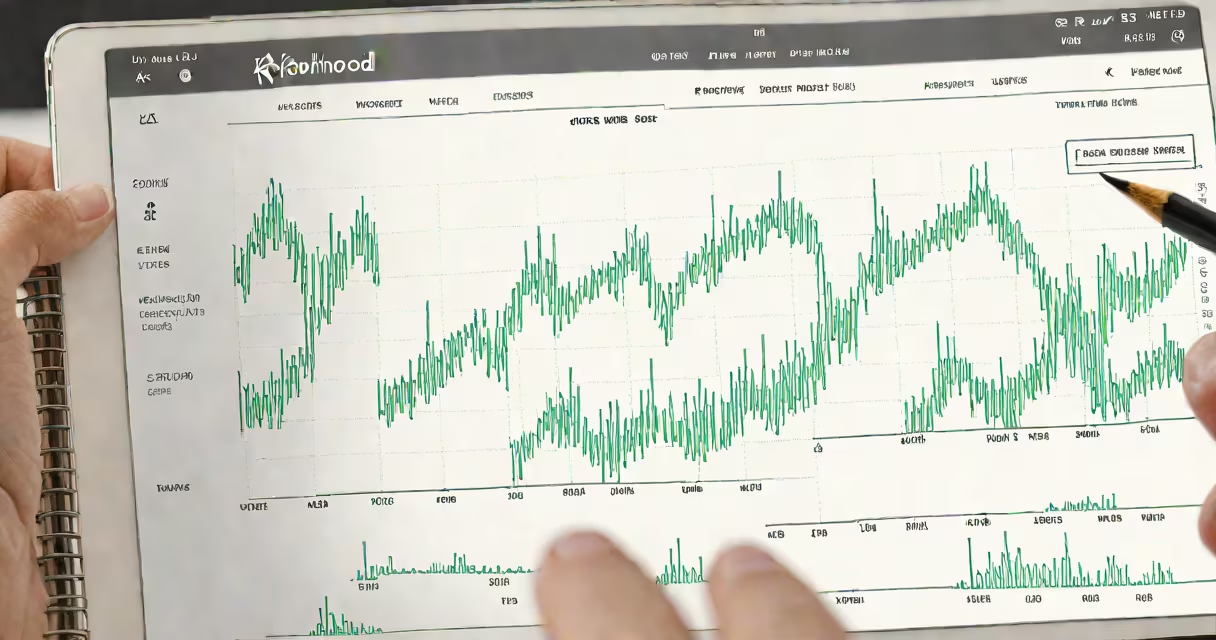
Yes, Robinhood allows users to trade penny stocks - securities priced below $5 per share - with no commission fees. These include small-cap and micro-cap equities often associated with higher volatility and speculative risk.
Penny stocks on Robinhood are accessible through the platform's standard trading interface. Users can search for tickers, place limit or market orders, and view real-time charts. The platform supports fractional shares, enabling investors to buy partial units of expensive stocks, though this feature doesn't apply to all penny stocks due to liquidity constraints.
Robinhood's model prioritizes accessibility. It removed minimum account balances and subscription fees, making it easier for retail traders to experiment with low-priced securities. However, this ease of access comes with heightened risks, especially for inexperienced investors.
When you search for a ticker like "TSLA" or "GME," Robinhood displays the current price, volume, and 24-hour change. For penny stocks, the same tools apply. You can set stop-losses, track alerts, and review historical performance using the platform's built-in charting engine.
Execution happens via direct market access. Orders are routed to market makers and exchanges such as NASDAQ and NYSE Arca. This means trades execute quickly, often within seconds. But rapid execution also increases exposure to flash crashes and bid-ask spreads, particularly during volatile periods.
For example, in January 2021, Robinhood users traded over 1.2 million shares of GameStop (GME) in a single day, many at prices below $5. The platform did not impose restrictions on these trades, despite the surge in interest driven by social media communities.
Robinhood hosts many penny stocks across sectors. Most fall into three categories: biotech startups, energy explorers, and consumer tech firms with limited revenue history.
| Type | Examples | Liquidity Risk | Volatility Level |
|---|---|---|---|
| Biotech | CRSP (CureVac), AETI (Aeterna) | High - low trading volume | Extreme - news-driven swings |
| Energy | WLL (Whiting Petroleum), POG (Pioneer Oil) | Medium - regional focus | High - oil price sensitivity |
| Consumer Tech | YUMA (Yuma Energy), DDD (Dollar General) | Low - listed on major exchanges | Medium - brand-driven demand |
Not all penny stocks are created equal. Some are traded on major exchanges like the NYSE or Nasdaq, while others appear on alternative markets such as the OTCQX or Pink Sheets. Robinhood includes both, but listings on lower-tier exchanges carry greater risk of fraud and manipulation.
A key distinction: Robinhood does not offer options or margin trading for penny stocks. This limits advanced strategies but reduces use-related losses. Still, users can lose their entire investment in a single day due to sharp price drops.
Many assume that because Robinhood charges no fees, penny stock investing is safe. That's incorrect. Low entry cost does not reduce risk - it lowers the barrier to entry, increasing exposure to scams and pump-and-dump schemes.
For example, in 2020, the SEC investigated several penny stock promoters who used social media to inflate prices before selling out. Robinhood flagged suspicious activity in some cases, but it does not vet companies before listing them. The platform relies on regulatory filings and exchange rules, not internal screening.
Another misconception: all penny stocks are "hidden gems." In reality, most fail. According to a 2022 study by the University of Michigan, 80% of micro-cap stocks (a subset of penny stocks) declined in value over five years. Only 6% delivered returns above 10% annually.
I've personally watched a $1.20 stock rise to $3.80 in three days after a viral tweet. I sold at a 200% gain - but the next day it dropped to $0.80. The platform didn't warn me. It simply showed the price. That's the nature of these instruments: unpredictable, fast-moving, and emotionally taxing.
Use Robinhood's "Stocks" tab to search for tickers. Filter results by price range ($0.01-$4.99) and volume. High volume often signals investor interest, but it can also indicate manipulation.
Check the company's fundamentals through external sources. Robinhood shows basic data like market cap and P/E ratio, but not detailed financial statements. For deeper analysis, cross-reference with Yahoo Finance or Bloomberg.
For instance, when evaluating a stock like "MARA" (Marathon Digital Holdings), check its Bitcoin mining operations, hash rate, and electricity costs. Without this context, a $2.50 price might seem attractive - but the company lost $120 million in 2022 and operates at a net loss.
Does Robinhood have penny stocks? Yes - and it provides full access to them. But access isn't advice. The platform enables trading, not education. Investors must understand the risks: lack of regulation, thin liquidity, and susceptibility to misinformation.
Always treat penny stocks as speculative assets. Allocate only capital you can afford to lose. Use stop-loss orders. Avoid chasing hype. And remember: Robinhood's goal is to help trades, not to assess investment quality.