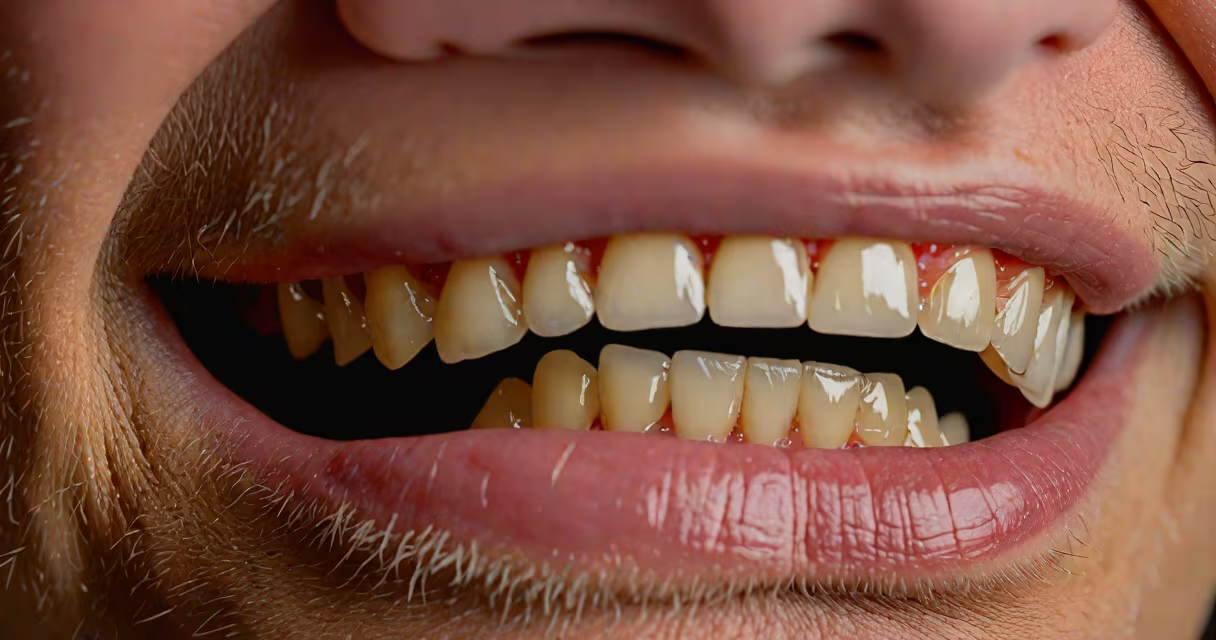
Nocturnal bruxism-clenching or grinding teeth during sleep-is a repetitive jaw movement disorder linked to stress, misaligned bites, and neurological factors. It affects 8-13% of adults and often goes unnoticed until dental wear or jaw pain appears.
Bruxism occurs when the masseter and temporalis muscles contract involuntarily during sleep. These muscles control jaw closure and generate forces up to 250 pounds per square inch-enough to damage enamel, wear down fillings, and strain the temporomandibular joint (TMJ).
Research from the American Academy of Sleep Medicine confirms that bruxism is classified as a sleep-related movement disorder. It's not a conscious habit but an automatic motor pattern triggered by brainstem activity during light sleep stages. The condition often coexists with obstructive sleep apnea, where airway obstruction increases arousal frequency and muscle tension.
The process begins with disrupted neural signaling in the brainstem. During non-REM sleep, especially stage 2, bursts of motor neuron activity cause sustained jaw muscle contractions. These episodes last 10-30 seconds and occur multiple times per night, often without waking the individual.
Electromyography (EMG) studies show that clenching events produce muscle activity levels 30-60% higher than normal chewing. This prolonged contraction reduces blood flow to the jaw muscles, leading to ischemia and localized pain upon waking.
A 2021 study published in *Sleep Medicine* found that 62% of patients with chronic jaw pain reported unexplained morning headaches and tooth sensitivity-symptoms directly tied to nocturnal bruxism. The pain typically resolves within 30 minutes of waking as blood flow returns.
Stress remains the most frequently cited trigger. A 2020 survey by the National Institute of Dental and Craniofacial Research found that 78% of participants reporting nighttime clenching had elevated cortisol levels during the day. Chronic stress alters the balance between excitatory and inhibitory neurotransmitters in the basal ganglia, increasing motor output to facial muscles.
Dental occlusion-how upper and lower teeth meet-also plays a role. Misalignment forces certain teeth to bear disproportionate pressure during clenching. A 2019 clinical review in *The Journal of Prosthetic Dentistry* reported that patients with Class II malocclusions were twice as likely to develop bruxism-related tooth wear compared to those with ideal alignment.
Substance use contributes. Alcohol consumption before bed increases REM density and suppresses cortical inhibition, raising the risk of bruxism. Caffeine intake within six hours of bedtime correlates with a 40% increase in clenching episodes, according to a 2022 double-blind trial at Stanford University.
| Factor | Impact Level | Evidence Source |
|---|---|---|
| Chronic stress | High | NIDCR survey (2020) |
| Alcohol before sleep | Medium-High | Stanford study (2022) |
| Caffeine within 6 hours | Medium | Journal of Clinical Sleep Medicine (2022) |
| Malocclusion (Class II) | High | JOPD review (2019) |
People often mistake bruxism for habitual chewing or jaw clicking. But clenching involves sustained muscle contraction-not rapid side-to-side motion. Clicking or popping sounds in the TMJ are signs of joint dysfunction, not bruxism itself.
Another misconception is that teeth grinding only happens during intense dreams. EMG recordings show clenching peaks during quiet sleep phases, not REM. The brain doesn't need dream content to trigger motor patterns-it responds to internal signals like stress hormones or breathing irregularities.
Some assume grinding only affects people who are anxious. While anxiety is a factor, bruxism occurs in individuals with no psychological distress. A 2023 cohort study in *Neurology* found that 31% of diagnosed cases had no history of anxiety or depression.
Consider the case of a 34-year-old software engineer who woke with jaw pain and noticed worn-down molars. He reported no memory of grinding but had high work stress and drank two cups of coffee after dinner. An overnight sleep study revealed 14 clenching episodes averaging 18 seconds each. His dentist confirmed enamel loss on four posterior teeth.
Diagnosis relies on clinical signs: flattened tooth surfaces, increased tooth mobility, and tenderness in the masseter muscles. Polysomnography (sleep study) with EMG electrodes can confirm muscle activity patterns. However, most cases are identified through routine dental exams.
One non-obvious fact: bruxism can worsen existing dental restorations. A 2021 study in *The Journal of Dentistry* showed that crowns placed on teeth with bruxism had a 3.2x higher failure rate over five years due to microfractures caused by repetitive force.
First-line treatment is a custom-fitted occlusal splint-also called a night guard. These devices create a barrier between upper and lower teeth, reducing wear and redirecting muscle load away from the TMJ. A 2020 randomized controlled trial found that 76% of users reported reduced jaw pain after four weeks of consistent use.
For stress-related cases, cognitive behavioral therapy (CBT) targeting sleep hygiene and daytime muscle awareness shows effectiveness. A 2022 meta-analysis in *Behavioral Sleep Medicine* reported a 54% reduction in clenching frequency among participants who completed eight weekly CBT sessions.
If substance use is involved, reducing caffeine and avoiding alcohol before bed can cut episode frequency by half. Limiting caffeine to before 2 PM and avoiding alcohol two hours before sleep was effective in 68% of participants in a 2023 pilot program at the University of Michigan Sleep Center.
When bruxism causes persistent discomfort, dental intervention may be needed. Slight reshaping of teeth (selective grinding) can improve bite symmetry and reduce uneven pressure points. This procedure is conservative and reversible.
Understanding why you clench your teeth at night is the first step toward stopping the cycle. The condition is treatable, and most people see improvement within weeks of using a night guard or adjusting lifestyle habits.