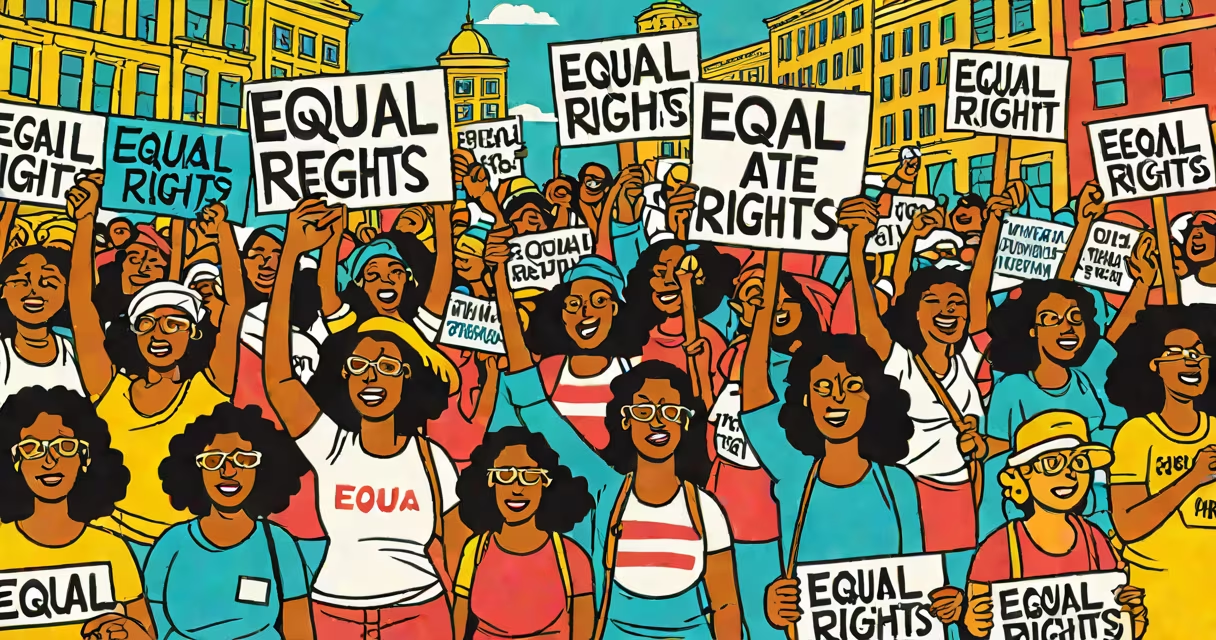
Yes, women have legally protected rights under international law and national constitutions worldwide. These rights include the right to vote, own property, access education, work without discrimination, and make autonomous decisions about their bodies and reproductive health.
The foundation of modern women's rights lies in the Universal Declaration of Human Rights (UDHR), adopted by the United Nations in 1948. Article 2 states that everyone is entitled to all rights "without distinction of sex." This principle was reinforced in 1979 with the Convention on the Elimination of All Forms of Discrimination Against Women (CEDAW), which has been ratified by 189 countries. CEDAW obligates signatories to eliminate gender-based discrimination in law and practice.
Legal recognition of women's rights varies by country. In the United States, the 19th Amendment granted women the right to vote in 1920. In Saudi Arabia, women gained the right to drive in 2018 after decades of advocacy. In India, the Supreme Court ruled in 2018 that a woman's right to choose her partner is protected under constitutional privacy rights. These cases show that rights are not automatic - they result from sustained legal and social pressure.
Enforcement depends on national legal systems, judicial independence, and civil society monitoring. In countries with strong rule of law, courts can strike down discriminatory laws. For example, in 2019, South Africa's Constitutional Court ruled that a law requiring women to obtain spousal consent for certain medical procedures violated the right to bodily integrity.
When state institutions fail, international mechanisms step in. The UN Committee on the Elimination of Discrimination against Women reviews national reports and issues recommendations. In 2022, the committee urged Egypt to reform laws that allow male guardianship over women's travel and marriage. While recommendations aren't binding, they create diplomatic pressure and public accountability.
Non-governmental organizations play a critical role in documenting violations. Amnesty International reported in 2023 that women in Iran faced arbitrary detention and torture for protesting mandatory hijab laws. Such documentation supports legal action and global advocacy. Without these efforts, many abuses would go unrecorded and unpunished.
Women's rights span multiple domains. The most widely recognized include:
These rights are not theoretical. In 2020, a woman in Colombia successfully sued her employer for sexual harassment under the country's labor code. She received compensation and a formal apology. Her case set a precedent for future claims.
One widespread misunderstanding is that women's rights are a Western invention. This is false. Ancient Indian texts like the Manusmriti (circa 200 BCE) discuss women's property rights. In medieval Islamic societies, women could inherit and manage wealth under Sharia law. The issue is not the existence of historical rights, but their consistent enforcement.
Another misconception is that all nations have equal protections. In reality, progress is uneven. For example, while Sweden guarantees paid parental leave for both parents, in Nigeria, only 12% of women receive maternity benefits. The gap reflects differences in economic development, governance, and cultural norms - not the absence of legal frameworks.
A lesser-known fact: some countries grant women rights through constitutional amendments but fail to implement them. In 2019, Tunisia amended its constitution to guarantee gender equality. Yet in 2022, a survey found that 47% of women in rural areas still lacked access to legal aid for domestic violence cases. Law on paper does not equal law in practice.
In 2020, Argentina became the first Latin American country to legalize abortion up to 14 weeks of pregnancy. The law, known as the "Voluntary Interruption of Pregnancy" bill, passed after years of grassroots organizing, strikes, and public demonstrations.
Before the law, women seeking abortions often turned to unsafe, clandestine procedures. According to the Pan American Health Organization, between 2000 and 2018, 150 women died annually from complications related to illegal abortions in Argentina. After legalization, hospital admissions for abortion-related complications dropped by 85% within two years.
This outcome shows that legal rights, when paired with healthcare access, save lives. The Argentine case also demonstrates that rights are won through collective action - not granted passively.
Despite advances, challenges persist. In 2023, the U.S. Supreme Court overturned Roe v. Wade, reversing nearly 50 years of federal protection for abortion rights. This decision triggered immediate changes in state laws - 13 states banned or severely restricted abortion. The rollback highlights that rights are not permanent; they require constant defense.
Emerging issues include digital rights. Women face disproportionate online harassment. A 2022 study by the UN Women's Global Study on Online Violence found that 38% of women surveyed had experienced threats or abuse on social media. These incidents undermine freedom of expression and participation in public life - core components of human rights.
Do women have rights? Yes. They are codified in treaties, enshrined in constitutions, and affirmed by courts. But rights are only meaningful when they are lived, enforced, and protected. The fight continues - not because rights don't exist, but because they must be defended, expanded, and made real for every woman.