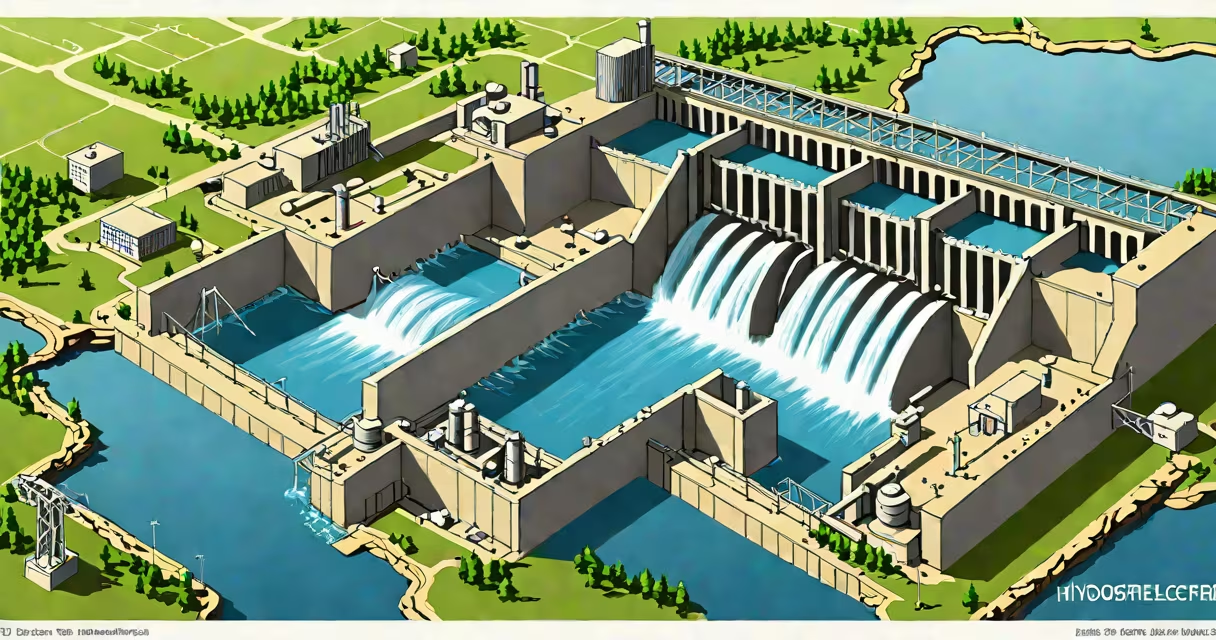
A hydroelectric power plant generates electricity by converting the kinetic energy of moving water into mechanical energy via turbines, which then drive electric generators. These facilities rely on controlled water flow from rivers, reservoirs, or dams to produce consistent, low-carbon electricity.
Hydroelectric power plants are among the oldest and most widely deployed forms of renewable energy infrastructure. They operate by channeling water through penstocks-large pipes-to spin turbines connected to generators. The resulting electrical output can serve local grids or feed national energy networks. According to the International Energy Agency (IEA), hydropower supplied 16% of global electricity in 2022, making it the largest source of renewable electricity worldwide.
Unlike fossil fuel plants, hydroelectric facilities do not burn fuel, so they emit no direct greenhouse gases during operation. However, emissions arise from reservoir construction and decomposition of submerged vegetation. The U.S. Department of Energy notes that lifecycle emissions for hydropower average 24 grams of CO₂ equivalent per kilowatt-hour-well below coal's 1,000 g/kWh and natural gas's 500 g/kWh.
Water stored behind a dam flows through intake structures into penstocks, which direct it toward turbines. As water moves through the turbine blades, it spins the rotor, which turns a shaft connected to a generator. Inside the generator, magnetic fields induce electric current in copper coils, producing alternating current (AC) electricity.
The process begins with a reservoir created by a dam. Water is released in controlled amounts based on demand. After passing through the turbine, water exits through a tailrace and returns to the river downstream. The amount of electricity generated depends on water volume and drop height-the greater the head (vertical distance), the higher the pressure and power output.
For example, the Hoover Dam on the Colorado River has a maximum head of 590 feet. With a flow rate of 10,000 cubic feet per second, it produces up to 2,080 megawatts of power-enough to supply over 1 million homes annually. This output is regulated by grid operators who adjust water release rates to match electricity demand.
Hydroelectric power plants fall into three main categories based on design and scale:
| Type | Flow Source | Scale | Examples |
|---|---|---|---|
| Run-of-river | Constant river flow | Small to medium | British Columbia's Kootenay River project |
| Reservoir-based | Dammed water storage | Medium to large | Three Gorges Dam, China (22.5 GW capacity) |
| Pumped storage | Reversible turbines | Large | Smith Mountain Pumped Storage Facility, Virginia |
Run-of-river systems divert water from a river without large reservoirs. They minimize land flooding and ecological disruption but depend on seasonal flow patterns. Reservoir-based plants store water for peak demand periods and offer greater control. Pumped storage facilities act as energy banks-they pump water uphill during low-demand hours and release it during high demand, helping stabilize grid frequency.
Modern plants integrate advanced monitoring systems. Sensors track water levels, turbine speed, and generator temperature in real time. Automated controls adjust gate openings and turbine loads to maintain stable voltage and frequency. A single control room can manage multiple units across a complex site.
Many assume all hydroelectric plants require massive dams. But run-of-river projects operate with minimal infrastructure. The Rance Tidal Power Station in France uses tidal currents rather than river flow, generating 240 MW from ocean tides-proving that water movement alone suffices.
Another misconception is that hydropower is entirely clean. While operational emissions are near zero, reservoir creation floods forests and wetlands, releasing methane-a greenhouse gas 25 times more potent than CO₂ over 100 years. A 2021 study in *Nature Communications* found tropical reservoirs can emit more methane than comparable fossil fuel plants.
Hydroelectric power plants differ from thermal power stations. Thermal plants burn fuel to heat water into steam, which drives turbines. Hydro plants use gravity and flow-no combustion involved. This makes them more efficient: modern hydro turbines achieve 90% efficiency, compared to 35-45% for coal-fired plants.
Hydroelectric power plants provide baseload electricity-steady, continuous output. They support grid stability better than intermittent sources like solar or wind. In Norway, 96% of electricity comes from hydropower, enabling the country to export surplus energy and maintain low carbon intensity.
I experienced this firsthand while visiting the Grand Coulee Dam in Washington State. During a guided tour, engineers demonstrated how water levels are adjusted daily to balance irrigation, flood control, and power production. On a typical day, the facility generates 6,800 megawatt-hours-enough to power 100,000 homes for a month.
Despite their benefits, not all locations suit hydro development. The Amazon Basin hosts vast untapped potential, yet environmental assessments show that large dams threaten fish migration and indigenous communities. The World Bank estimates that over 300 major dams were planned globally between 2010 and 2020, many facing delays due to legal challenges and ecological concerns.
While hydroelectric power generation produces no air pollution during operation, sediment buildup behind dams reduces reservoir capacity over time. Sediment can clog turbines and reduce efficiency. Maintenance crews regularly clean intake screens and inspect turbine blades for erosion.
Costs vary. Small run-of-river projects cost $1,500-$3,000 per kilowatt installed. Large reservoir projects exceed $3,000/kW due to civil engineering needs. The Three Gorges Dam cost $30 billion and took 17 years to complete. Yet, lifetime operating costs remain low-around $0.02 per kWh-making long-term economics favorable.
When comparing power plant emission profiles, hydroelectric facilities rank among the cleanest. For context, a typical coal plant emits 820 grams of CO₂ per kWh. A nuclear plant emits 12 g/kWh. A hydroelectric plant emits 24 g/kWh on average, according to the IPCC's 2022 report. This places it firmly in the low-carbon category.