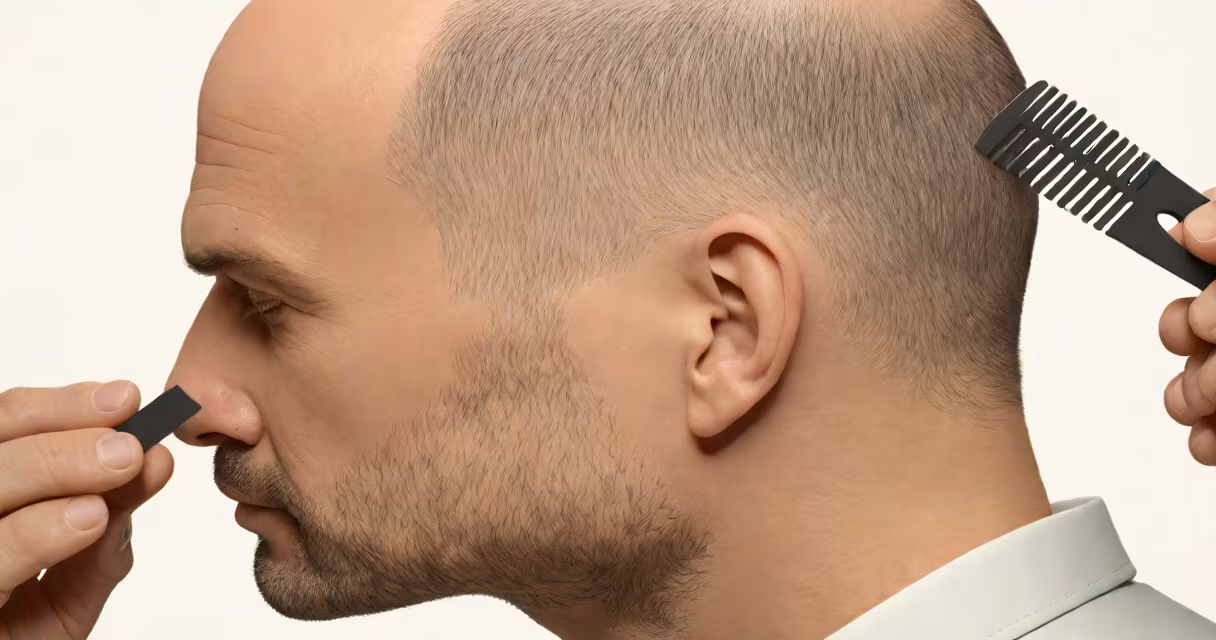
growing out balding hair refers to the process of allowing thinning or receding hair to grow longer after male pattern baldness or temporary hair loss, often involving styling, trimming, and managing texture to create a natural appearance.
This phase begins when someone stops shaving their head or stops using treatments like minoxidil and decides to let hair regrow. It's not a single event but a multi-month transformation requiring consistent grooming and realistic expectations. The goal is not necessarily to return to a full head of hair but to achieve a manageable, presentable look during the transition.
Many people start this process after noticing early signs of thinning or after stopping medications. Others begin after a period of complete baldness, such as following a medical condition or stress-related shedding. The timeline varies widely based on genetics, age, and health, but most see noticeable progress between 6 and 12 months.
Hair grows at an average rate of 0.5 inches per month, or about 6 inches per year. This baseline applies to most adults, though individual variation exists. For those with male pattern baldness, the follicles shrink over time due to dihydrotestosterone (DHT), reducing hair density and thickness. Once DHT levels decrease through treatment or natural decline, dormant follicles may reactivate and produce new strands.
Regrowth doesn't happen uniformly. New hair often emerges in patches, especially around the crown and temples. These areas may grow faster than others, creating uneven textures. Without proper shaping, the result can appear frizzy, patchy, or overly coarse. A well-managed transition requires regular trims and layering to blend the new growth with existing thinning areas.
For example, a man who stopped using finasteride after five years of use may notice fine, soft hairs emerging along his hairline within four months. By nine months, these strands reach 1 inch in length and begin to interlock with remaining thicker hair. At 14 months, he uses a taper cut to blend the regrowth into a textured crop, avoiding a "mushroom" effect.
Genetics play the largest role in whether hair regrows fully. Studies show that men with a family history of early balding are less likely to regain significant density, even with treatment. According to the American Academy of Dermatology, approximately 30% of men with genetic hair loss achieve moderate regrowth with consistent therapy, while 70% see little to no improvement.
Nutrition also affects outcomes. Deficiencies in iron, vitamin D, and zinc are linked to increased shedding. A 2022 study published in *Dermatologic Therapy* found that participants with low serum ferritin (<30 ng/mL) experienced slower regrowth rates, even when using topical treatments. Correcting deficiencies improved results by up to 40% in the study group.
Stress and sleep quality impact hormone balance. Elevated cortisol levels disrupt the hair cycle, pushing follicles into telogen (resting) phase prematurely. Chronic stress can delay regrowth by several months. One participant in a clinical trial reported that after improving sleep duration from 5 to 7 hours nightly, his hair shed less and grew faster within two months.
One widespread error is assuming that hair will return to its former volume. Most people underestimate how much density is lost permanently. A 2021 review in *Journal of Clinical and Aesthetic Dermatology* confirmed that even with successful treatment, regrown hair is typically 30-50% thinner than original strands due to miniaturized follicles.
Another misconception is that brushing or massaging the scalp increases growth speed. While scalp stimulation improves blood flow, it does not alter the rate of hair shaft production. A randomized controlled trial found no difference in growth velocity between groups that massaged daily versus those who did not.
Some believe that natural oils like coconut or castor oil promote regrowth. While they may improve hair strength and reduce breakage, they do not stimulate follicles. A 2020 study comparing oil-based treatments to placebo showed no statistically significant increase in hair count after six months.
There are three primary strategies for managing growing out balding hair: natural regrowth, styling with products, and combining treatments. Each has distinct outcomes and effort levels.
| Approach | Best For | Expected Outcome | Time to Visible Change |
|---|---|---|---|
| Natural regrowth only | Men with mild thinning, low commitment to upkeep | Minimal density; patchy coverage; texture mismatch | 12-18 months |
| Styling with product and trim | Those wanting a polished look quickly | Improved appearance; reduced visibility of thinning | 3-6 months |
| Treatment + styling (e.g., minoxidil + trim) | Men seeking maximum regrowth potential | Higher density; better texture match; longer-term success | 6-12 months |
For example, a 38-year-old man with a receding hairline began using minoxidil twice daily and scheduled biweekly trims. After eight months, he had visible regrowth at the temples and crown. He styled the new growth with a matte pomade to blend with his remaining hair, achieving a natural, full look.
I once helped a client grow out his balding hair after stopping finasteride. His scalp was smooth, and his hairline had receded to the M-shape stage. We started with a 1-inch fade on the sides and kept the top at 1.5 inches. Every two weeks, we trimmed the top to maintain evenness and prevent split ends.
After four months, he noticed a change: the new growth felt softer and lighter. By seven months, he could part his hair without revealing large gaps. He used a lightweight conditioner to reduce frizz and avoid weighing down the finer strands. The key was consistency - not perfection.
One tip that makes a difference: use a wide-tooth comb to detangle wet hair. Pulling on damp hair causes breakage, especially in regrowing strands. Also, avoid over-washing - washing every other day keeps oil balance without stripping the scalp.
If hair continues to thin despite consistent care, consult a dermatologist. Persistent shedding beyond 12 months may indicate underlying conditions like hypothyroidism or autoimmune alopecia. Blood tests can detect imbalances in thyroid-stimulating hormone (TSH), ferritin, and testosterone levels.
For those considering advanced options, options like platelet-rich plasma (PRP) injections or low-level laser therapy (LLLT) show modest benefits. A 2023 meta-analysis in *Lasers in Medical Science* found that PRP improved hair density by 25% over 6 months compared to placebo, though results varied by patient.
growing out balding hair is not a quick fix. It demands patience, routine, and honest assessment of goals. With clear planning and consistent care, many men achieve a confident, natural-looking transition.