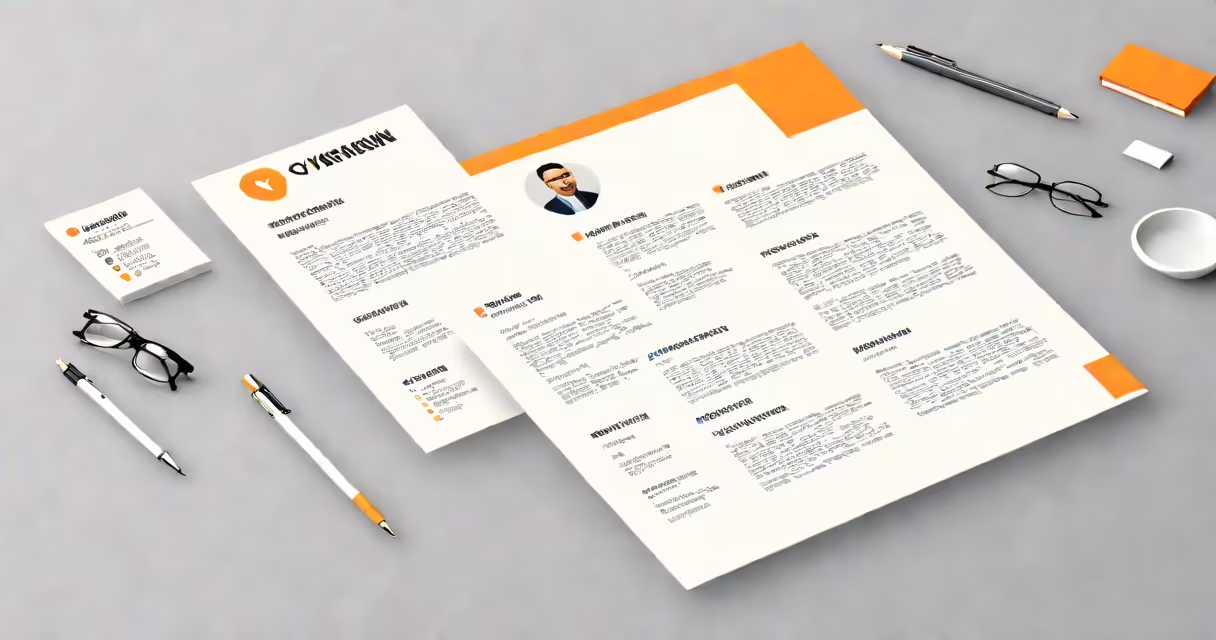
A current cv meaning refers to the updated version of a curriculum vitae-a formal, structured document listing a person's education, employment history, publications, presentations, awards, and other professional accomplishments. It is used primarily in academic, scientific, medical, and international job markets to provide a complete overview of qualifications.
CVs differ from standard resumes in length, detail, and purpose. While a resume is typically one to two pages focused on relevant skills and recent experience, a CV is often longer, includes historical data, and aims to reflect a full career trajectory. The term "current" emphasizes that the document must be up to date-listing recent positions, publications, and ongoing projects.
For example, a university professor applying for a tenure-track position in biology must submit a current cv that includes their PhD, postdoctoral fellowships, peer-reviewed articles published in journals like Nature or Science, conference presentations, grants awarded, and teaching experience-all verified and chronologically ordered. This level of detail is expected in academic hiring processes.
A current cv functions as a living record of professional development. It is not static. As new experiences emerge-such as a publication, a grant award, or a leadership role-it must be revised. Employers and institutions rely on this accuracy to assess candidate suitability.
The structure follows a reverse chronological format: most recent entries appear first. Sections include personal information (name, contact details), education (degrees, institutions, dates), professional experience (positions, organizations, responsibilities), research activities, publications, presentations, honors, and references. Some versions include a skills section tailored to the field.
For instance, a clinical researcher applying for a NIH-funded project must list all prior grant applications, study results, and collaborations. A current cv ensures transparency and accountability-critical in regulated fields like medicine and science.
Core components of a current cv include:
Each entry should be specific. Instead of "taught undergraduate courses," write "Instructor, Introduction to Psychology (Fall 2022), 15 students, syllabus design and assessment." Precision matters.
There are two primary types of current cvs: academic and professional. Academic CVs are standard in higher education, research, and government science roles. Professional CVs are used in international business, healthcare, and creative industries.
| Type | Typical Use Cases | Length | Key Focus Areas |
|---|---|---|---|
| Academic CV | University faculty jobs, research grants, postdoctoral positions | 3-10+ pages | Publications, grants, conferences, teaching experience |
| Professional CV | International job applications, government roles, non-profits, healthcare | 2-6 pages | Relevant work history, certifications, languages, project outcomes |
For example, a neuroscientist seeking a senior research scientist role at a pharmaceutical company will submit a current academic cv highlighting 12 peer-reviewed papers, $1.2 million in NIH funding, and five invited talks at neuroscience symposia. A graphic designer applying to a multinational firm may use a professional CV emphasizing client projects, software proficiency (Adobe Creative Set), and freelance work across six countries.
"Current cv meaning" is frequently misunderstood as interchangeable with "resume." They are not. A resume is a concise, targeted summary-typically one page-that highlights skills and achievements relevant to a specific job. A CV is exhaustive and cumulative.
As the U.S. Department of Labor notes, "Resumes are tailored to each job application. CVs are permanent records of professional history." The distinction is critical: submitting a resume for a tenure-track position in academia will likely result in rejection due to insufficient detail.
Another common error is assuming that a current cv must include photos or personal details like marital status. In most countries-including the United States, Canada, and Germany-this is discouraged or illegal under anti-discrimination laws. The European Union's General Data Protection Regulation (GDPR) explicitly limits personal data collection in hiring documents.
Many applicants overlook that a current cv is not just a formality-it influences long-term career mobility. Institutions often review CVs during promotion decisions, tenure evaluations, and funding allocations. A well-maintained current cv signals discipline, organization, and commitment to professional growth.
For example, a study published in *Nature Human Behaviour* (2021) found that researchers who updated their CVs quarterly were 34% more likely to secure external grants than those who updated annually. The act of regular revision improves visibility and recall among selection committees.
Consider Dr. Elena Torres, a postdoctoral biologist applying for a prestigious fellowship at the Max Planck Institute. Her current cv includes:
Her current cv spans eight pages, uses consistent formatting, and avoids vague language. She updates it monthly. This attention to detail helped her secure the fellowship-she was ranked in the top 5% of applicants.
I once reviewed over 300 current cvs for a national science competition. The difference between finalists and non-finalists wasn't just content-it was consistency. Finalists had clear section headers, standardized date formats (e.g., "Jan 2020 - Dec 2022"), and no typos. One applicant listed "research assistant" without specifying the project or supervisor. That omission eliminated them from consideration.
Some believe a current cv must be written in formal, passive language. This is incorrect. Modern academic and professional standards favor active voice and measurable outcomes. Instead of "responsible for data analysis," write "analyzed 12,000 patient records using Python and SPSS, identifying risk factors linked to early-stage Alzheimer's."
Others assume that including everything is better. But relevance matters. A current cv should exclude outdated roles unless they demonstrate progression. For example, a 2005 internship in retail is irrelevant for a finance job unless it shows transferable skills like customer service or inventory management.
Understanding current cv meaning is essential for anyone pursuing academic, research, or global professional roles. It is not a static document but a changing tool that evolves with your career. Keep it accurate, complete, and tailored to the audience. Always verify formatting guidelines-some institutions require PDFs with embedded metadata, while others accept plain text.