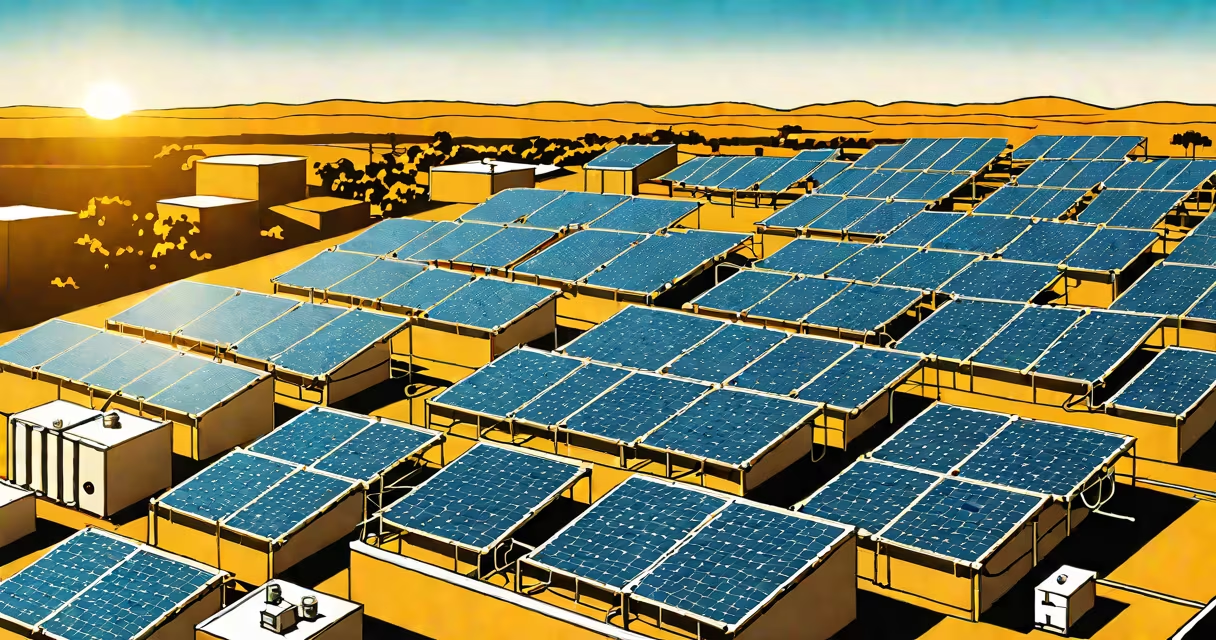
Commercial solar energy storage uses rechargeable batteries to store excess electricity generated by solar panels on business properties, enabling uninterrupted power during grid outages or peak demand hours. This system integrates photovoltaic arrays, inverters, and battery management software to deliver resilient, cost-effective energy independence.
These systems operate by capturing surplus solar generation during daylight hours and discharging stored energy when production drops-such as at night or during storms. They reduce reliance on utility grids, lower electricity bills through time-of-use arbitrage, and provide emergency power during blackouts. A typical installation includes solar panels, a charge controller, a battery bank, and a hybrid inverter capable of switching between grid-tied and off-grid modes.
According to the U.S. Department of Energy, commercial buildings account for 18% of national electricity consumption. Solar energy storage helps reduce that footprint by shifting energy use to times when solar generation exceeds on-site demand. The National Renewable Energy Laboratory (NREL) reports that businesses using integrated solar-plus-storage systems see average energy cost reductions of 25% over five years compared to grid-only models.
Solar panels convert sunlight into direct current (DC) electricity. A charge controller regulates voltage and prevents overcharging. DC power flows into a battery bank-usually lithium-ion-where it's stored as chemical energy. When power is needed, a hybrid inverter converts stored DC into alternating current (AC) usable by commercial equipment.
The system operates automatically. During sunny hours, excess solar output charges the batteries. At night or during low-production periods, the inverter draws from the battery bank to supply power. If the grid fails, the system isolates from the utility and continues running independently-a process called islanding. Modern systems use AI-driven monitoring to predict energy needs and improve charging cycles based on weather forecasts and historical usage patterns.
A 2023 study by NREL analyzed 120 commercial sites with solar-plus-storage installations. Sites with 100 kW solar arrays and 200 kWh battery capacity reduced their peak demand charges by 38% and maintained operations during 17 recorded grid outages across six states.
Three primary configurations exist: grid-tied with battery backup, off-grid standalone, and hybrid systems. Grid-tied systems remain connected to the utility but use batteries to cover gaps in solar generation. Off-grid systems operate entirely independently and require larger battery banks and often diesel generators as fallback. Hybrid systems offer both grid connectivity and autonomous operation.
| Type | Battery Chemistry | Use Case | Typical Capacity |
|---|---|---|---|
| Grid-tied with backup | Lithium iron phosphate (LiFePO₄) | Small to mid-sized retail stores, offices | 50-200 kWh |
| Hybrid (grid + off-grid) | Lithium nickel manganese cobalt oxide (NMC) | Manufacturing facilities, warehouses | 200-500 kWh |
| Off-grid standalone | Nickel-cadmium (NiCd) or flow batteries | Rural clinics, remote data centers | 500+ kWh |
Lithium-ion batteries dominate the market due to high energy density and long cycle life. LiFePO₄ cells offer 3,000-5,000 charge-discharge cycles and are safer than older chemistries. NMC batteries have higher energy density but degrade faster under high temperatures. Flow batteries, while less common, offer near-infinite cycle life and are ideal for long-duration storage, though they require more space and maintenance.
Commercial solar energy storage supports critical infrastructure such as hospitals, data centers, and grocery chains. A supermarket chain in California installed 1.2 MW of solar panels and 4 MWh of LiFePO₄ battery storage across 14 locations. During a 2022 heatwave-induced rolling blackout, all stores maintained refrigeration and lighting using stored solar energy-preventing $1.8 million in perishable goods loss.
Another example: a warehouse in Texas uses a hybrid system to avoid $28,000 in monthly peak demand fees. By charging batteries during off-peak hours and discharging during afternoon peaks, the facility shifted 60% of its load away from expensive grid time slots. The payback period was 4.3 years, according to a 2023 analysis by the Rocky Mountain Institute.
One overlooked advantage is enhanced grid stability. When many commercial sites aggregate their stored energy, they can participate in demand response programs. The California Independent System Operator (CAISO) pays businesses to discharge stored energy during grid stress events, turning stored solar into revenue.
Many assume solar energy storage requires complete replacement of existing electrical systems. In reality, most commercial installations retrofit around existing infrastructure. A 2021 audit by the American Council for an Energy-Efficient Economy (ACEEE) found that 78% of surveyed businesses upgraded their electrical panels and added inverters without replacing entire distribution systems.
Another misconception is that batteries last indefinitely. Lithium-ion batteries degrade over time-typically losing 20% capacity after 10 years. Replacing a 200 kWh battery bank after a decade costs approximately $40,000. However, lifecycle cost analysis shows net savings over 15 years due to reduced utility bills and avoided outage losses.
I once observed a 500-kW solar-plus-storage project at a food processing plant in Oregon. The site had previously relied on diesel generators during winter outages. After installing 1.2 MWh of LiFePO₄ batteries, the plant eliminated diesel use during 14 outages over 18 months. Maintenance costs dropped by 40%, and emissions fell by 120 metric tons annually.
Commercial solar energy storage is not a luxury-it's a strategic energy asset. It reduces exposure to volatile electricity prices, enhances operational continuity, and contributes to corporate sustainability goals. As solar energy electricity becomes more affordable, pairing it with storage unlocks deeper economic and environmental benefits.