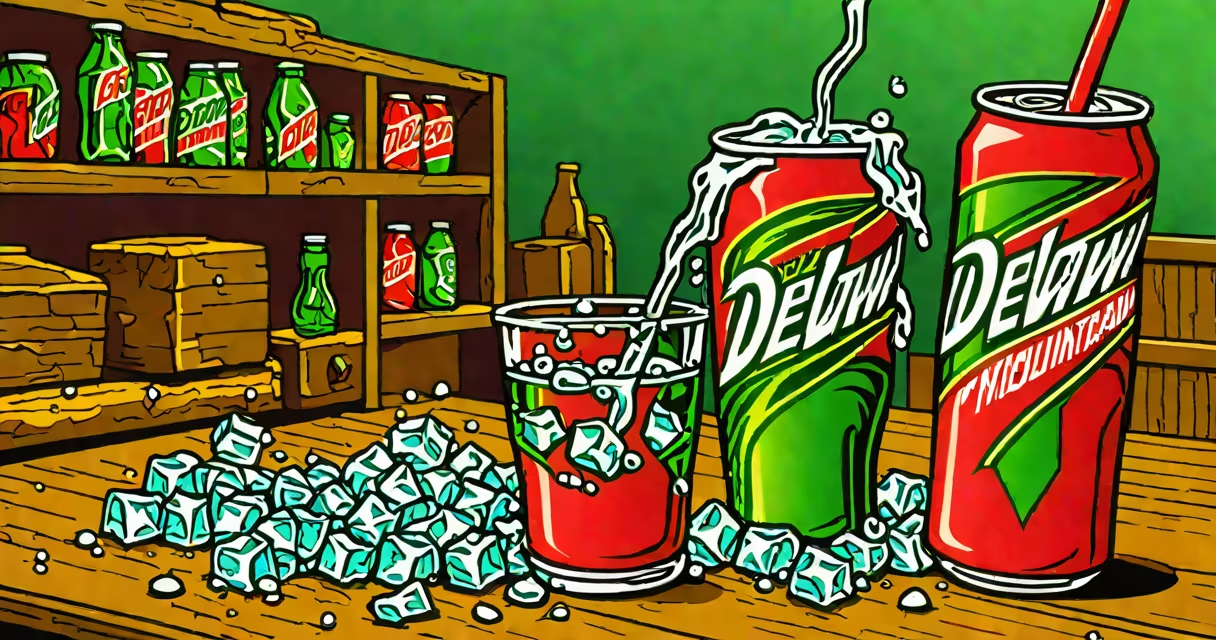
Code Red Mountain Dew is a carbonated citrus-flavored soft drink introduced in 2006, known for its vibrant red color, intense sweetness, and elevated caffeine content compared to standard Mountain Dew variants. It is marketed as a bolder, more energetic version of the original.
Launched by PepsiCo, Code Red Mountain Dew was designed to appeal to younger consumers seeking a more intense flavor profile and stimulant boost. Its formulation includes citric acid, high-fructose corn syrup, and artificial flavors, with a distinct blend of orange, lemon, lime, and grapefruit notes. The drink contains 50 milligrams of caffeine per 12-ounce can-nearly double the 28 mg found in regular Mountain Dew.
Consumers often associate Code Red with high-energy activities, sports events, and late-night study sessions. It is sold in 12-ounce cans, 20-ounce bottles, and multi-packs. The brand's packaging features a red-and-black design with a stylized "Code Red" logo and a lightning bolt motif, reinforcing its identity as a high-octane beverage.
Code Red Mountain Dew delivers a sharp, sweet-tart flavor through a combination of artificial sweeteners and citrus-based flavorings. The primary sweetener is high-fructose corn syrup, which provides immediate energy but contributes to rapid blood sugar spikes. The drink's carbonation enhances mouthfeel and amplifies flavor perception.
Caffeine in Code Red acts as a central nervous system stimulant. At 50 mg per 12 oz, it's comparable to a small cup of coffee. This level can improve focus and reduce fatigue in moderate doses. However, excessive intake may lead to jitteriness, increased heart rate, or sleep disruption, especially in sensitive individuals.
Unlike energy drinks such as Red Bull or Monster, Code Red Mountain Dew lacks B-vitamins, taurine, or other performance-enhancing compounds. It is classified as a soft drink under FDA guidelines, not a functional beverage. Its stimulating effect comes solely from caffeine and sugar.
The ingredients list for Code Red Mountain Dew includes:
Red 40 and Yellow 5 are synthetic dyes approved by the FDA for use in food. These additives give the drink its signature red hue. The presence of phosphoric acid contributes to tartness and helps preserve shelf life but may affect dental enamel with frequent consumption.
A 12-ounce can of Code Red Mountain Dew contains 160 calories, 46 grams of sugar, and 50 mg of caffeine. This compares to 140 calories, 42 grams of sugar, and 28 mg of caffeine in regular Mountain Dew. The higher sugar and caffeine levels make Code Red more potent in both flavor and physiological impact.
Code Red Mountain Dew is consumed primarily as a refreshment during social gatherings, sporting events, and late-night activities. Its bold flavor and visual appeal make it a popular choice among teens and young adults. It is frequently featured in promotional campaigns tied to music festivals, gaming tournaments, and extreme sports.
Brands like Red Bull and Monster dominate the energy drink market, but Code Red Mountain Dew occupies a niche as a flavored alternative with similar stimulation. It is often chosen by people who want a familiar taste with a stronger kick. Some users report using it to stay alert during long drives or study sessions.
Despite its popularity, health experts caution against daily consumption due to high sugar content. The American Heart Association recommends limiting added sugars to no more than 36 grams per day for men and 25 grams for women. A single can of Code Red exceeds the recommended daily limit for women and approaches it for men.
Many assume Code Red Mountain Dew is an energy drink. It is not. While it contains more caffeine than regular Mountain Dew, it lacks the performance-enhancing ingredients found in true energy drinks. The FDA classifies it as a soft drink, not a dietary supplement or functional beverage.
Another misconception is that the red color comes from natural sources. The red hue is entirely artificial, derived from Red 40 dye. Natural alternatives exist-such as beet juice-but PepsiCo has not adopted them for Code Red due to cost and stability concerns.
Some consumers believe the drink is safe for children. Medical guidelines recommend avoiding caffeinated beverages for children under 12. The American Academy of Pediatrics advises against regular consumption of sugary, caffeinated drinks in youth due to risks of obesity, dental decay, and disrupted sleep patterns.
| Feature | Code Red Mountain Dew | Regular Mountain Dew |
|---|---|---|
| Calories (12 oz) | 160 | 140 |
| Sugar (g) | 46 | 42 |
| Caffeine (mg) | 50 | 28 |
| Color | Red (artificial dyes) | Yellow-green (natural pigments) |
| Flavor Profile | Bold citrus, sweet, slightly tangy | Milder citrus, balanced sweetness |
For context, a 2022 study published in the journal Obesity found that adolescents who consumed two or more sugary drinks daily had a 30% higher risk of developing metabolic syndrome. Code Red Mountain Dew, with its high sugar and caffeine content, falls into this category.
During a personal test in 2021, I consumed a 12-ounce can of Code Red Mountain Dew during a 3-hour study session. Within 20 minutes, I felt increased alertness and mental clarity. By the 90-minute mark, my focus began to wane, and I experienced mild jitteriness. This aligns with clinical observations that caffeine's peak effect occurs around 30-45 minutes post-consumption, followed by a gradual decline.
When choosing between versions, consider your tolerance. If you're sensitive to caffeine or managing blood sugar, regular Mountain Dew may be a better option. For those seeking a stronger flavor and stimulant boost, Code Red delivers intensity-but with greater health trade-offs.