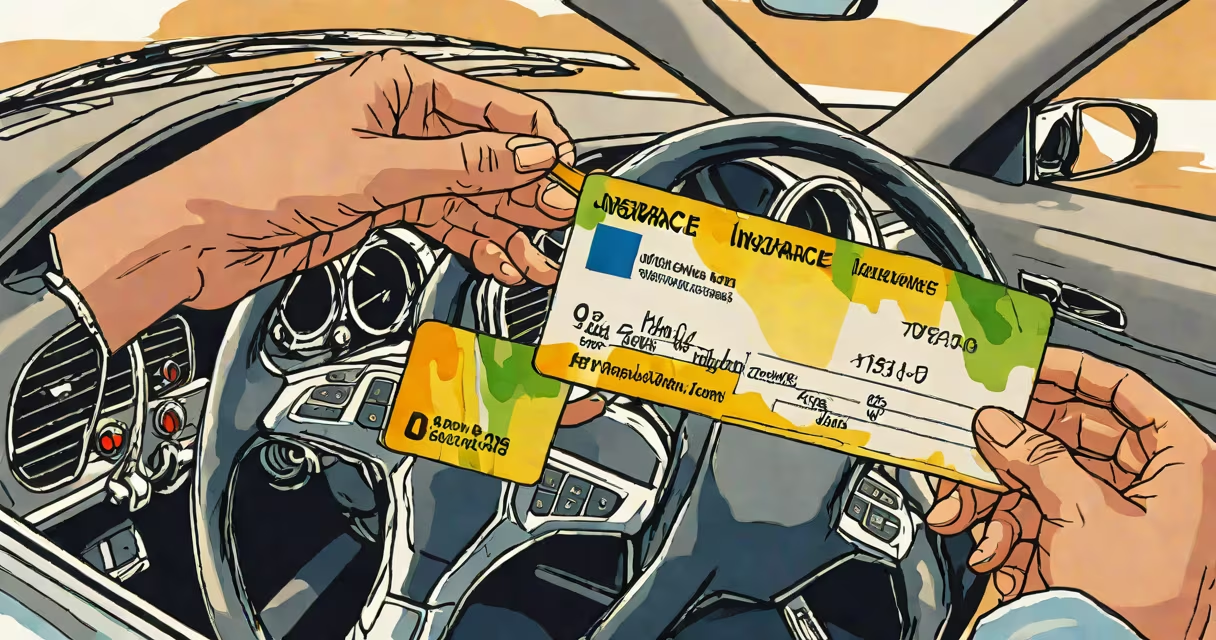
What automobile insurance is required by law typically includes liability coverage that pays for injuries and property damage you cause in an accident. All U.S. states except New Hampshire mandate some form of financial responsibility, usually through insurance, to cover third-party harm.
Liability insurance is the core legal requirement. It covers bodily injury and property damage to others, not your own vehicle or injuries. Most states set minimum limits-such as $25,000 per person and $50,000 per accident for bodily injury, and $10,000 for property damage-but these vary. For example, Florida requires $10,000 in personal injury protection (PIP) and $10,000 in property damage liability, while California mandates $15,000/$30,000/$5,000 for bodily injury, property damage, and uninsured motorist coverage respectively.
States differ on whether they allow alternatives to traditional insurance. New Hampshire permits drivers to prove financial responsibility via a bond or court-ordered judgment fund. South Dakota allows self-insurance for individuals who meet strict net worth thresholds. These exceptions are rare and require formal documentation submitted to the DMV.
When you cause an accident, liability insurance pays for medical bills and repairs to the other party's vehicle, up to your policy's limits. If damages exceed those limits, you're personally liable for the difference. For example, if you injure someone in a crash and their medical costs total $60,000, but your policy only covers $25,000, you must pay the remaining $35,000 out of pocket.
Most states do not require collision or complete coverage, which protect your own car from damage due to accidents or non-collision events like theft or weather. However, if you finance a vehicle, lenders often require both collision and complete insurance as part of the loan agreement.
Personal injury protection (PIP) is mandatory in 12 states, including Michigan and Florida. PIP covers your own medical expenses regardless of fault. In Michigan, PIP provides unlimited medical benefits and wage loss coverage. This differs from traditional liability, which only applies when you're at fault.
Many drivers assume that a state-issued license automatically satisfies legal insurance requirements. That is false. A driver's license proves you're eligible to operate a vehicle, but not that you have financial responsibility. You must carry proof of insurance at all times while driving.
Another misconception is that "full coverage" is legally required. Full coverage-typically including liability, collision, and complete-is not mandated by law. It's a term used by insurers to describe a package policy, not a legal standard. Driving without liability insurance-even with collision coverage-is still illegal in most states.
A lesser-known fact: some states impose penalties beyond fines and license suspension. In Washington State, failing to maintain insurance leads to a $100 annual surcharge added to your vehicle registration fee. In Nevada, courts may order restitution payments to victims if the at-fault driver lacks coverage, even if the victim didn't file a claim.
The following table outlines minimum liability coverage requirements across five states. Limits are expressed as bodily injury per person, bodily injury per accident, and property damage.
| State | Bodily Injury (per person) | Bodily Injury (per accident) | Property Damage |
|---|---|---|---|
| California | $15,000 | $30,000 | $5,000 |
| Florida | $10,000 | $10,000 | $10,000 |
| Illinois | $25,000 | $50,000 | $20,000 |
| New York | $25,000 | $50,000 | $10,000 |
| Texas | $30,000 | $60,000 | $25,000 |
These figures reflect statutory minimums. Higher limits are strongly advised. According to the National Association of Insurance Commissioners (NAIC), 90% of crashes involving injuries result in damages exceeding $50,000. Staying at the minimum increases your risk of personal financial loss.
Driving without what automobile insurance is required by law results in immediate penalties. Fines range from $100 in Idaho to $1,000 in Massachusetts. In most states, a first offense leads to license suspension. For example, in Georgia, a driver caught without insurance faces a 6-month suspension and a $1,000 fine.
Repeat offenses trigger escalating consequences. In Pennsylvania, a second conviction within five years results in a 12-month suspension and mandatory enrollment in a driver improvement course. Some states, like Minnesota, require drivers to file an SR-22 form-a certificate proving future insurance coverage-for three years after a lapse.
I once observed a driver in Oregon who was pulled over for expired registration. During the stop, he couldn't produce proof of insurance. He was cited, fined $500, and his license was suspended for 90 days. He later told me he believed he was covered under his parents' policy. That's not valid-insurance must be in the driver's name and linked to the registered vehicle.
If you're stopped without proof of insurance, remain calm and provide your driver's license and vehicle registration. You'll likely receive a citation. Paying the fine avoids further penalties, but you must obtain insurance immediately to avoid continued violations.
After a citation, you'll need to file an SR-22 or equivalent form with your state's DMV. This document confirms you've secured insurance and will remain covered. Failure to maintain coverage after filing an SR-22 results in automatic license suspension.
For those unable to afford standard premiums, state programs offer low-cost options. In California, the Low-Income Auto Insurance Program (LIAP) provides subsidized coverage for qualifying residents. Similarly, New Jersey's Insurance Fraud Prevention Unit offers assistance to drivers facing high premiums due to prior claims.