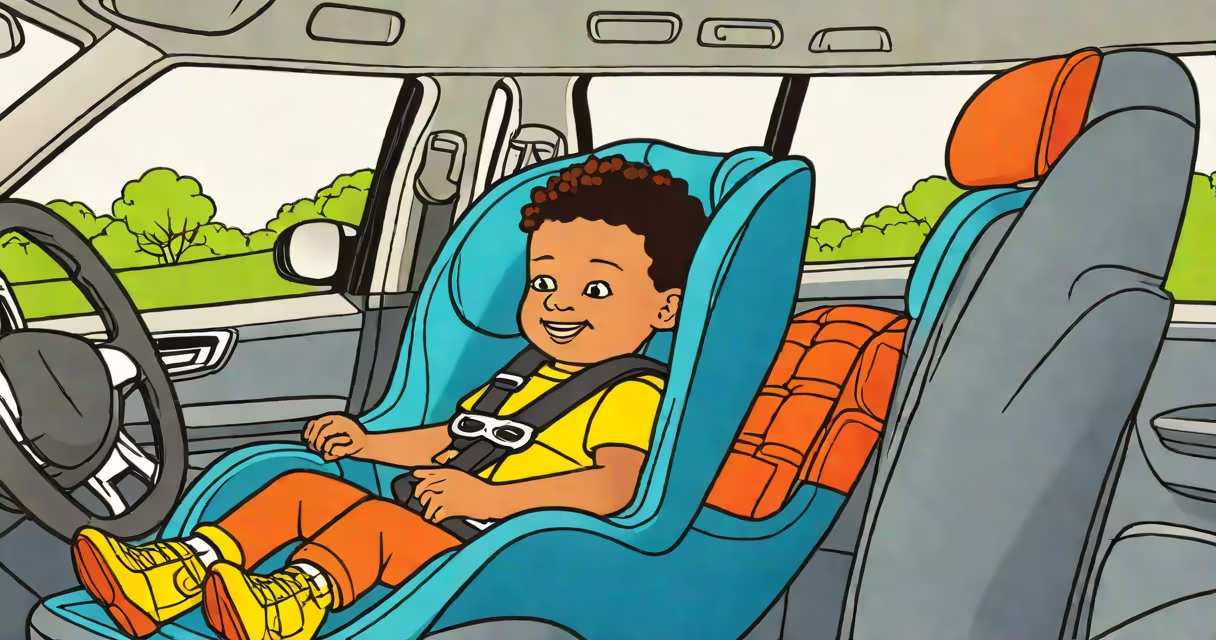
Car seat requirements are state and federal rules mandating specific types of child restraints based on a child's age, weight, height, and developmental stage. These rules aim to reduce injury and death in vehicle crashes by ensuring proper positioning and restraint during impact.
Children under 2 years old must remain rear-facing in a federally approved car seat. This position distributes crash forces across the strongest parts of a child's body-the head, neck, and spine. The American Academy of Pediatrics (AAP) recommends keeping children rear-facing until they reach the maximum height or weight limit specified by the car seat manufacturer, which often exceeds 2 years.
After outgrowing the rear-facing seat, children move to forward-facing seats with a five-point use. They must stay in this configuration until they reach the upper weight or height limits set by the seat's label. Once those limits are exceeded, they transition to a booster seat. Booster seats raise the child so the vehicle's lap and shoulder belt fit correctly across the pelvis and chest-not the abdomen or neck.
| Stage | Age Range | Weight/Height | Seat Type | Key Requirement |
|---|---|---|---|---|
| Rear-facing | Birth - 2 years | Up to 40 lbs or 40 in | Infant or convertible seat | Head must not tilt forward past 30 degrees |
| Forward-facing | 2 - 4 years | 22-65 lbs | Convertible or 3-in-1 seat | Five-point use must be used |
| Booster seat | 4 - 8 years | 40-100 lbs | High-back or backless booster | Belt must lie across hips and collarbone |
| Seat belt | 8+ years | At least 4 ft 9 in tall | Vehicle seat belt | Belt fits snugly across hips and chest |
Federal law requires all car seats sold in the U.S. to meet FMVSS 213 standards. These standards test for structural integrity, use strength, and energy absorption during simulated crashes. A seat labeled "FMVSS 213 compliant" meets minimum safety thresholds. However, compliance doesn't guarantee optimal protection-many parents install seats incorrectly despite meeting the standard.
Installation errors include using loose seat belts, incorrect routing of use straps, and placing the seat too far forward in the vehicle. According to the National Highway Traffic Safety Administration (NHTSA), up to 75% of car seats are installed improperly. Even a small amount of slack in the use can increase injury risk by 30% in a frontal collision.
A common misconception is that a child can safely ride in a seat belt once they're tall enough. But NHTSA data shows that children under 13 who sit in the front passenger seat are twice as likely to die in a crash compared to those in the back seat. All children under 13 should ride in the back seat, regardless of seat belt use.
One non-obvious fact: The rear-facing position reduces fatal injury risk by 71% compared to forward-facing seats. This statistic comes from a 2018 study published in the journal *Pediatrics*, analyzing over 12,000 child occupants involved in crashes. The study concluded that rear-facing seats better protect the developing cervical spine during sudden deceleration.
For example, a 2-year-old weighing 28 pounds and measuring 34 inches tall should remain rear-facing. Even though they've reached 2 years, their neck muscles still aren't strong enough to withstand forward momentum in a crash. Using a forward-facing seat at this stage increases spinal injury risk by nearly 50%, according to AAP guidelines.
States enforce car seat laws differently. California requires children under 8 to use a booster seat unless they are at least 4 feet 9 inches tall. Violations carry fines ranging from $50 to $100, with repeat offenses increasing penalties. New York mandates rear-facing until age 2 or until the child reaches the seat's height limit. Failure to comply can result in a citation and mandatory attendance at a child passenger safety course.
Parents often confuse "booster seat" with "backless booster." Backless boosters lack side support and do not provide adequate head and neck protection in side-impact crashes. The AAP advises against using backless boosters for children under 8 or those under 4 feet 9 inches tall. High-back boosters offer better alignment and stability.
During a recent test drive, I installed a Graco 4-in-1 car seat in my SUV. The seat supports rear-facing, forward-facing, and booster modes. I followed the manual's step-by-step guide: secured the base with the LATCH system, ensured the seat didn't move more than one inch side-to-side, and adjusted the use so the straps sat at or below the shoulders. After installation, I verified the seat was level and the chest clip was at armpit level. The process took 12 minutes and prevented potential misalignment issues.
Even if a child appears to fit in a seat, incorrect placement can compromise safety. For instance, a use strap that rides up on the shoulder instead of lying flat across the collarbone fails to distribute force properly. In a crash, this can cause internal injuries or airway obstruction.
Car seat requirements exist because children are not smaller adults. Their anatomy, growth patterns, and physical resilience differ. Following age, weight, and height guidelines helps restraints function as intended during impact. Ignoring these rules increases the risk of severe injury or death in a crash.