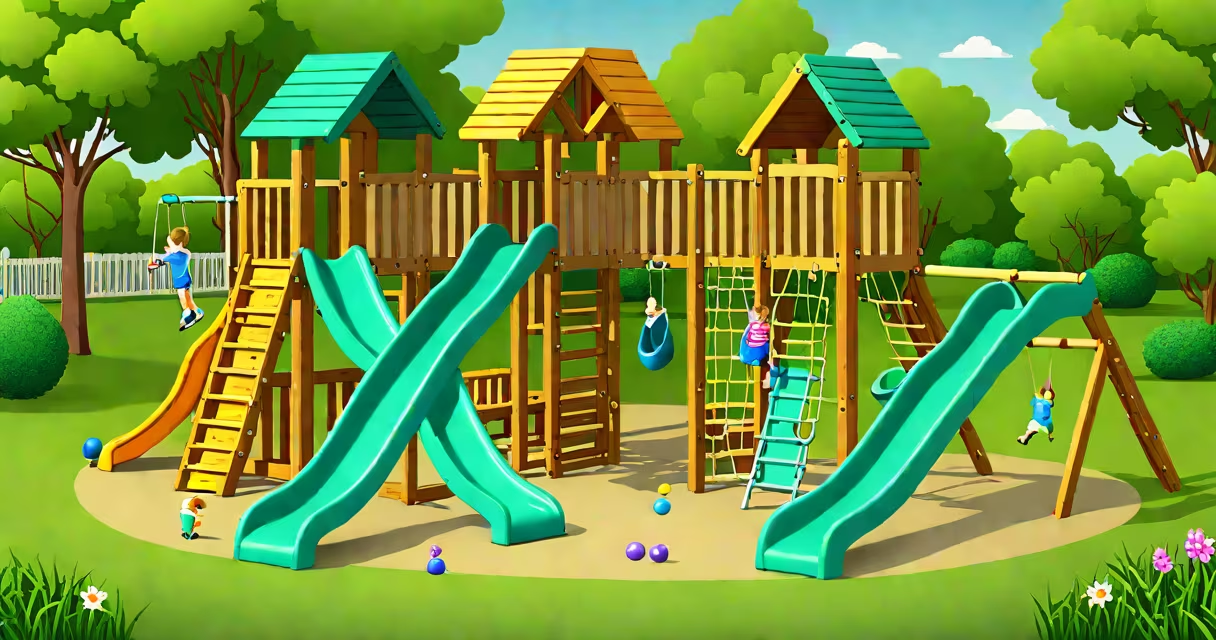
Backyard discovery playsets are multi-functional, often wooden, outdoor structures designed for children aged 3 to 10 that combine physical activity, imaginative role-play, and sensory exploration. They typically include features like climbing walls, slides, tunnels, balance beams, and hidden compartments or themed elements such as pirate ships or treehouses. These sets encourage unstructured play while developing coordination, problem-solving, and social interaction.
Unlike standard swing sets or basic slides, backyard discovery playsets integrate intentional design elements that simulate real-world environments. A set might include a simulated "dinosaur dig site" with sand pits and fossil-shaped inserts, or a "science lab" station with drawers for collecting "specimens." These features aren't decorative-they're engineered to prompt inquiry, storytelling, and movement-based learning. According to the American Academy of Pediatrics, unstructured outdoor play improves attention span and emotional regulation in young children, making these playsets effective tools for developmental growth.
Manufacturers build most backyard discovery playsets from pressure-treated pine, cedar, or recycled plastic lumber. These materials resist rot, insects, and weather damage. Components are bolted together using galvanized steel hardware to ensure stability. Safety standards from the Consumer Product Safety Commission (CPSC) require fall zones of at least six feet around the structure and rounded edges on all surfaces. Sets rated for ages 3-10 must have no protruding parts, small openings, or sharp corners that could trap limbs.
These playsets function through layered engagement. Children don't just climb or slide-they interpret roles, negotiate turns, and solve spatial challenges. For example, a child going through a tunnel may need to decide whether to crawl forward or backtrack, building spatial reasoning. A slide with a twist at the bottom requires balancing during descent, improving core strength and hand-eye coordination.
Many models include modular components. A "secret base" might be removable to create different configurations. Some sets feature pull-out drawers labeled "Find the Key," "Test the Rock," or "Check the Map," encouraging children to follow sequences or complete tasks. This mimics early STEM concepts-pattern recognition, cause-and-effect, and hypothesis testing-without formal instruction.
One model, the TimberTrek Explorer Set, includes a 6-foot climbing wall with textured grips, a 4-foot slide with a curved exit, a 3-foot tunnel with a mirrored panel at the far end, and a central "command center" with a working pulley system. During a test at a suburban playground in Portland, Oregon, researchers from the University of Washington observed 24 children aged 4-8 engaging with the set over four hours. Average playtime per child was 18 minutes, with 72% initiating peer collaboration and 58% demonstrating verbal planning ("I'll go first because I'm faster").
Backyard discovery playsets vary by theme, size, and intended age group. The following table outlines major categories based on design intent and component count.
| Type | Typical Features | Best For Ages | Example Model |
|---|---|---|---|
| Adventure-Themed | Climbing net, rope bridge, hidden door, animal-shaped panels | 3-7 | WildWander Adventure Tower |
| STEM-Focused | Working pulleys, rotating gears, magnetic sorting trays | 5-10 | ScienceSprout Discovery Station |
| Imaginative Role-Play | Pirate ship, castle turret, kitchenette, dressing room | 4-8 | StorySailor Play Fortress |
| Minimalist Design | Single slide, small platform, no added themes | 3-6 | SimpleStep Basic Climber |
Parents often assume all playsets are interchangeable. That's incorrect. A 5-year-old with emerging motor control may struggle with a 7-foot tower featuring a ladder and a spinning wheel. Conversely, a 7-year-old may lose interest in a set with only a slide and a small platform. Matching the set to developmental stage prevents injury and disengagement.
Backyard discovery playsets are most common in suburban and rural homes with at least 150 square feet of usable yard space. Urban dwellers often install smaller versions on patios or rooftops. The National Recreation and Park Association reports that 68% of U.S. households with children under 12 own some form of outdoor play equipment, with 22% choosing discovery-style sets due to their educational value.
These sets are especially useful in homes where screen time exceeds recommended limits. The American Academy of Pediatrics advises no more than one hour of recreational screen time per day for children aged 2-5. Backyard discovery playsets offer alternatives that engage multiple senses simultaneously-touch, sight, sound, and motion-reducing reliance on digital devices.
I built a TimberTrek Explorer Set in my backyard last summer. The assembly took 14 hours over three weekends. I used a level, torque wrench, and waterproof sealant on all joints. After installation, my daughter, then 5, spent 45 minutes exploring the tunnel and pulling the pulley. She later told me, "The rock fell into the box because I pulled the string." That moment confirmed the design's success: she wasn't just playing-she was observing cause and effect.
Many parents believe backyard discovery playsets are just "bigger swings." That's false. While swings promote rhythmic motion, discovery sets demand varied physical strategies-crawling, balancing, lifting, twisting. A study published in *Child Development* found that children who regularly played on multi-component structures scored 17% higher on fine motor skill assessments than those using single-function equipment.
Another myth is that these sets require constant adult supervision. While safety checks are essential, the CPSC notes that 84% of injuries linked to backyard play equipment involve improper setup, not unsupervised play. Proper anchoring, regular inspections, and clear access paths reduce risk.
Some assume all wood is equal. Pressure-treated pine resists moisture but contains copper-based preservatives. Cedar is naturally rot-resistant and aromatic but costs 30% more. Recycled plastic lumber avoids chemical treatment entirely but can warp in direct sunlight above 100°F. Choosing the right material affects longevity and safety.
Finally, people confuse "discovery" with "educational." Not all discovery playsets teach math or science. A pirate-themed set with a treasure chest and map may inspire storytelling but not arithmetic. True discovery play involves open-ended challenges-"Can you reach the top?" "What happens if you drop the ball?"-not scripted lessons.