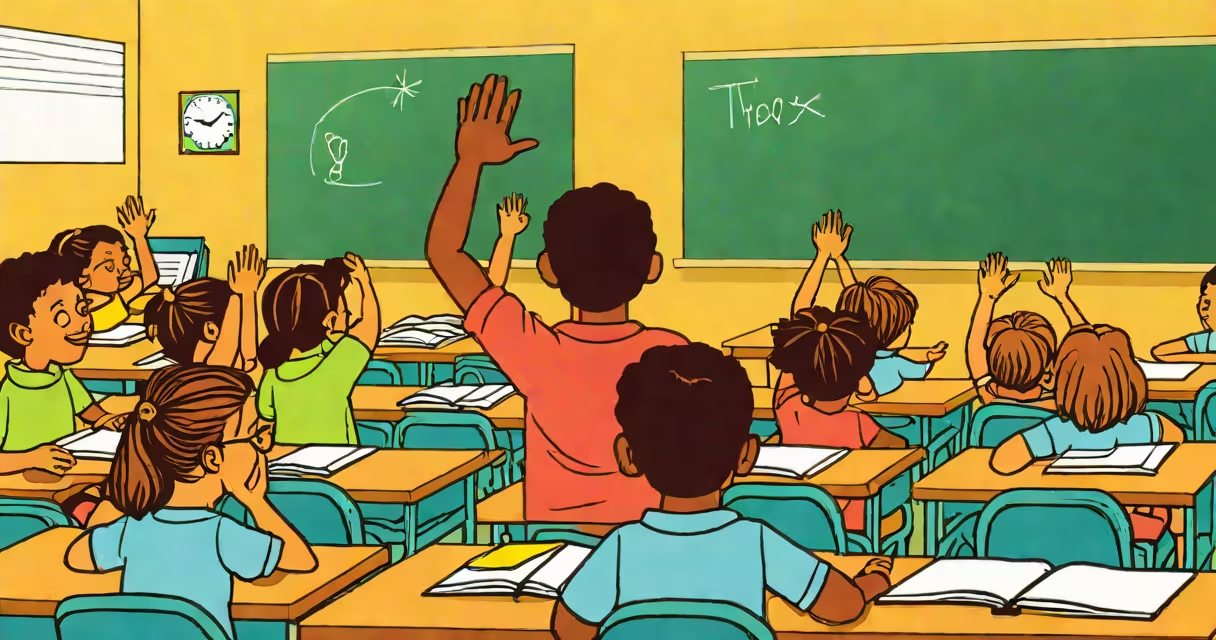
Behavior is any observable and measurable action or response made by a person or animal in reaction to internal or external stimuli. It includes movements, vocalizations, facial expressions, and physiological changes that can be recorded and analyzed. Behavior is not limited to voluntary acts-it encompasses reflexes, habits, and automatic responses shaped by environment and biology.
Behavior forms the foundation of psychological research, education, and clinical intervention. Scientists study behavior to understand decision-making, emotional regulation, and learning processes. In applied settings like classrooms and clinics, behavior is assessed to identify patterns, triggers, and outcomes. For example, a student's refusal to complete math homework may be linked to anxiety, lack of skill, or environmental distractions-all measurable through behavior observation.
The field of behavioral science relies on objective data rather than assumptions. According to the American Psychological Association (APA), behavior is defined as "any action that can be observed and measured," excluding thoughts or feelings unless they are expressed through physical actions. This focus ensures consistency across studies and treatments.
Behavior occurs in response to stimuli. An antecedent-a trigger-precedes the behavior. A consequence follows it and influences whether the behavior happens again. This sequence is known as the ABC model: Antecedent-Behavior-Consequence. For example, a teacher says, "Time to clean up," which is the antecedent. A student drops a toy, which is the behavior. The teacher removes the toy, which is the consequence.
Reinforcement increases the likelihood of a behavior recurring. Positive reinforcement adds something desirable (e.g., praise after completing a task). Negative reinforcement removes something unpleasant (e.g., skipping a worksheet after finishing a reading assignment). Punishment decreases behavior frequency-positive punishment adds an aversive stimulus (e.g., time-out), while negative punishment removes a desired item (e.g., losing screen time).
Research shows that consistent consequences shape long-term behavior. A 2020 study published in the Journal of Applied Behavior Analysis found that children with autism who received structured reinforcement for communication attempts increased verbal requests by 68% over eight weeks. This demonstrates that behavior is not random-it responds predictably to environmental conditions.
Behaviors serve specific purposes. They are not inherently good or bad-they exist to meet needs. The most common functions include gaining attention, accessing a preferred item, avoiding or escaping a demand, and fulfilling sensory needs.
| Type | Function | Example | Common Misinterpretation |
|---|---|---|---|
| Attention-seeking | To gain notice or interaction | A child screams during quiet time to be called on | Seen as defiance, not a need for connection |
| Escape/avoidance | To stop or delay a task or situation | An adult covers their ears during loud noises | Labeled as anxiety, but may be sensory regulation |
| Access to tangibles | To obtain a desired object or activity | A teenager argues to keep their phone after dinner | Interpreted as disrespect, not desire for autonomy |
| Sensory | To satisfy internal sensory needs | A student rocks back and forth during lessons | Mistaken for distraction, not self-regulation |
Understanding function prevents mislabeling. A child throwing a tantrum in a store isn't being "bad"-they may be seeking access to candy or trying to escape a crowded space. Identifying the function allows caregivers and educators to respond effectively, using strategies like teaching alternative behaviors or modifying the environment.
Behavior analysis underpins many effective interventions. In schools, teachers use behavior charts and token economies to encourage on-task behavior. In homes, parents apply consistent routines to reduce meltdowns. In clinical settings, therapists assess behavior to diagnose and treat conditions like ADHD, autism, and anxiety disorders.
ABA therapy for aggressive behavior uses systematic observation and reinforcement to replace harmful actions with safer alternatives. For example, a child who hits others during playtime is taught to say "I want to play" instead. Over time, hitting decreases because the new behavior achieves the same goal-gaining peer attention-but in a socially acceptable way. Data from the National Institute of Mental Health confirms that 70% of children with autism show improved social skills after 12 months of ABA therapy.
Even in workplaces, behavior drives performance. Employees who consistently arrive early are reinforced by recognition or promotions. Those who avoid meetings may be avoiding conflict or feeling overwhelmed. Addressing the root cause of behavior-not just the symptom-leads to lasting change.
Behavior is often misunderstood as synonymous with personality or emotion. But behavior is distinct: it's what someone does, not what they feel. A child who cries after falling off a bike is expressing pain-but the crying itself is behavior. The tear is not behavior; the act of sobbing is.
Another misconception is that behavior is purely voluntary. In reality, many behaviors are automatic. Blinking, breathing, and startle responses happen without conscious choice. These are still classified as behavior because they are observable and measurable. The nervous system controls them, but they remain within the domain of behavioral science.
A less obvious point: behavior can be shaped by indirect factors. For example, a student's poor test scores may result from inconsistent sleep, not lack of intelligence. Sleep deprivation alters brain function, reducing attention and memory-leading to lower academic performance. This chain-poor sleep → reduced cognitive control → poor test results-is a behavioral pathway influenced by biology and environment.
In a third-grade classroom, a student named Jamal frequently leaves his seat during math lessons. His teacher records the ABCs:
After three days, the teacher observes that Jamal leaves the room only when asked to do independent work. She conducts a functional behavior assessment and discovers the behavior functions as escape from difficult tasks. She then introduces a support strategy: Jamal earns a 5-minute break after completing two problems. He now stays seated and completes more work.
Over four weeks, Jamal's off-task behavior dropped from 12 incidents per week to 2. The teacher documented the change using a graph-showing a clear downward trend. This outcome proves that behavior is modifiable through targeted environmental adjustments.
My experience working with middle school students confirmed this. One boy repeatedly disrupted group work. After tracking triggers, we discovered he was avoiding tasks requiring collaboration. We introduced a visual schedule and assigned him a role (note-taker) that matched his strengths. Within two weeks, his disruptive behaviors ceased. The change wasn't due to discipline-it was due to understanding and responding to the function of his behavior.
Understanding what is behavior enables accurate diagnosis, effective teaching, and meaningful support. Whether in education, mental health, or daily life, behavior is not noise-it's data. By observing, recording, and responding systematically, individuals and systems can create lasting improvements.
When you see a child cry, a worker skip a meeting, or a pet hide during thunderstorms-ask not "Why are they acting this way?" but "What is this behavior doing for them?" That shift in perspective turns confusion into clarity.