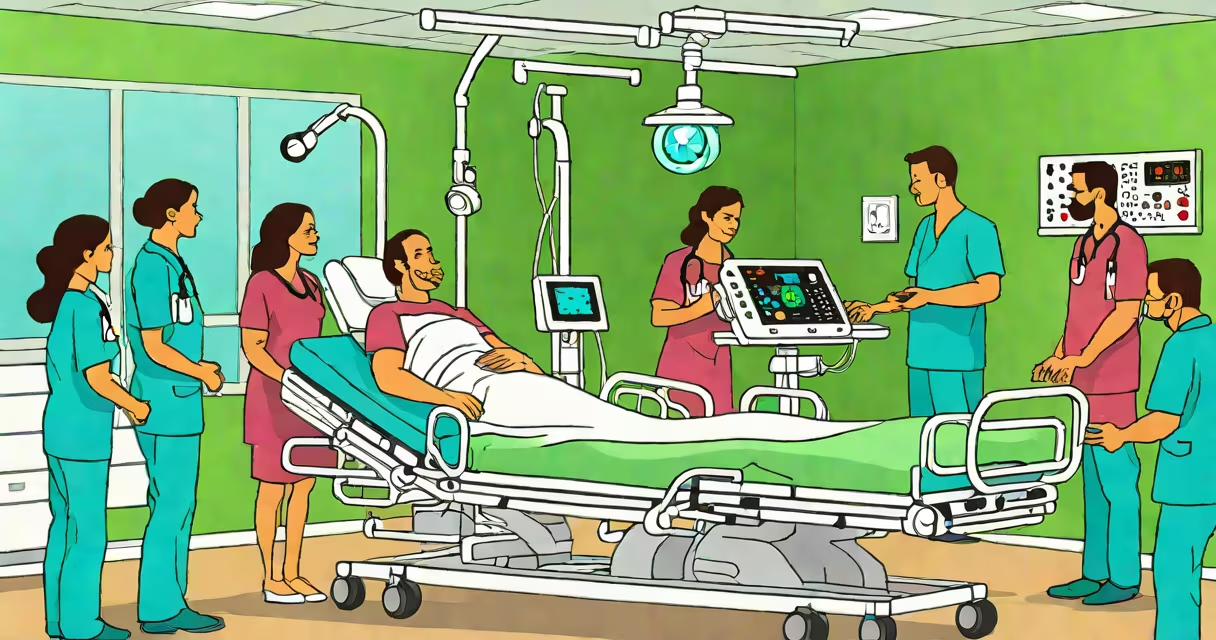
Acute care solutions are coordinated medical interventions designed to treat serious, time-sensitive health conditions requiring immediate attention, such as heart attacks, strokes, trauma, or severe infections. These services focus on stabilizing patients, preventing complications, and initiating recovery within hours to days.
Acute care solutions operate within structured clinical environments-primarily hospitals and emergency departments-where rapid diagnosis and treatment are essential. They involve multidisciplinary teams including physicians, nurses, pharmacists, and specialists who respond to emergencies using standardized protocols. The goal is to deliver high-intensity care during the initial phase of illness or injury, typically lasting from hours to up to 30 days.
According to the American Hospital Association, acute care accounts for approximately 60% of all hospital admissions in the U.S., with most cases resolved within a week. This includes surgical procedures, intensive care unit (ICU) stays, and post-operative monitoring. Acute care is distinct from chronic care, which manages long-term conditions like diabetes or COPD over months or years.
When a patient arrives with a suspected acute condition-such as chest pain indicating a myocardial infarction-acute care solutions activate a sequence of rapid-response steps. First, triage assesses severity using tools like the Emergency Severity Index (ESI). Patients rated ESI Level 1 or 2 receive immediate evaluation.
Next, diagnostic imaging (e.g., CT scans or echocardiograms), lab tests, and specialist consultations occur within minutes to hours. For example, a stroke patient must undergo a non-contrast CT scan within 25 minutes of arrival to determine eligibility for thrombolytic therapy. Delays beyond this window reduce chances of recovery.
If intervention is needed, procedures like angioplasty, intubation, or emergency surgery are performed. Post-procedure, patients are monitored in ICU or step-down units. Care plans are adjusted hourly based on important signs, lab results, and response to treatment. Discharge planning begins early-often within 24 hours-to prevent readmissions.
Acute care solutions fall into four primary categories based on clinical context:
| Type | Scope | Duration | Example |
|---|---|---|---|
| Emergency care | Unplanned, life-threatening events | Minutes to 24 hours | Heart attack, severe trauma |
| Postoperative care | Recovery after surgery | 1-7 days | Open-heart surgery, joint replacement |
| Intensive care | Life support for unstable patients | 2-14 days | Respiratory failure, septic shock |
| Inpatient medical care | Treatment of sudden illnesses | 3-10 days | Sepsis, pneumonia, acute kidney injury |
Each category uses specific equipment and staffing levels. For instance, ICU units require continuous cardiac monitoring, ventilators, and trained critical care nurses. A 2022 study published in *Critical Care Medicine* found that hospitals with dedicated ICU teams reduced mortality rates by 18% compared to those without.
Many confuse acute care solutions with outpatient urgent care centers. While both handle urgent issues, acute care operates in inpatient settings with full diagnostic and therapeutic capabilities. Urgent care clinics manage minor injuries and infections but refer complex cases to hospitals.
A frequent error is assuming acute care ends at discharge. In reality, follow-up is part of the solution. The Centers for Medicare & Medicaid Services (CMS) reports that 15% of patients readmitted within 30 days due to inadequate post-acute coordination. Effective acute care includes referral to rehabilitation, home health, or outpatient therapy.
Another misconception is that acute care applies only to adults. Children under 18 account for nearly 20% of emergency department visits annually, per the CDC. Pediatric acute care requires specialized training and equipment-such as smaller IV lines and child-sized ventilators-because physiological responses differ from adults.
In January 2023, a 54-year-old man arrived at a Level I trauma center with blunt abdominal trauma after a motor vehicle collision. His blood pressure was 88/50 mmHg, heart rate 130 bpm, and he was pale and diaphoretic. Acute care solutions were initiated immediately.
First, the trauma team performed a FAST ultrasound (Focused Assessment with Sonography in Trauma), revealing free fluid in the abdomen. A CT scan confirmed a splenic laceration with active bleeding. Within 45 minutes, the patient was taken to the operating room for splenectomy.
Post-op, he spent 48 hours in the ICU with hemodynamic monitoring, blood transfusions, and antibiotics. By day 3, he was transferred to a medical ward. He was discharged on day 7 with a follow-up appointment scheduled for 10 days later. No complications occurred during recovery.
This case illustrates how acute care solutions integrate rapid assessment, timely intervention, and structured follow-up to ensure positive outcomes. The entire process took less than 72 hours from arrival to discharge.
Effective acute care solutions reduce mortality, shorten hospital stays, and lower healthcare costs. A 2021 analysis by the Agency for Healthcare Research and Quality (AHRQ) showed that hospitals with integrated acute care pathways had 22% lower average length of stay and 14% fewer complications.
One non-obvious fact: acute care success depends heavily on communication systems. A 2020 study in *The New England Journal of Medicine* found that miscommunication between providers contributed to 30% of adverse events in acute care settings. Electronic health records (EHRs) with real-time alerts and handoff checklists improve coordination and reduce errors.
Acute care solutions are not a single service but a system of rapid response, precise intervention, and smooth transition. They save lives by acting swiftly during medical crises and remain central to effective healthcare delivery worldwide.