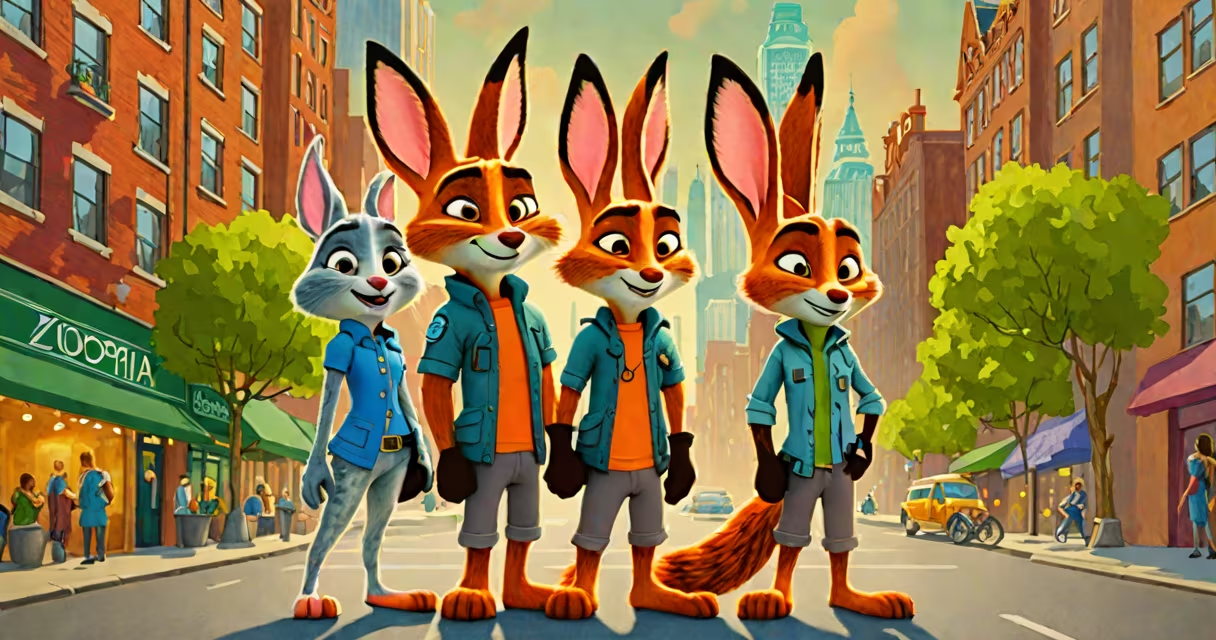
Zootopia characters names refer to the ensemble of anthropomorphic animals who inhabit the fictional city of Zootopia, each representing distinct species, personalities, and social archetypes. These names are central to the film's narrative structure and thematic exploration of prejudice, identity, and systemic bias.
The film centers on Officer Judy Hopps, a rabbit from Bunnyburrow who becomes the first bunny police officer in Zootopia. Her name reflects her species and origin, grounding her in both individuality and societal expectation. She is paired with Nick Wilde, a sly red fox known for his quick wit and street-smart demeanor. His name signals his role as a trickster figure, yet also hints at his potential for growth and redemption.
Other key names include Mayor Bellwether, a small sheep whose calm exterior masks a manipulative agenda. Her name is a deliberate contrast to her actions-"bellwether" traditionally means a leader or indicator of trends-but she subverts that meaning through deception. Similarly, Mr. Big, a large, intimidating shrew who runs a criminal empire, uses his size and name to command respect, though he is protective of his family.
Each Zootopia character name serves a narrative purpose beyond identification. They signal species, social status, and behavioral traits. For example, Judy Hopps' name includes "Hopps," which evokes agility and energy-traits she embodies. Her species, a rabbit, is culturally associated with being timid or small, making her rise to authority a direct challenge to stereotypes.
Nick Wilde's name combines "Wilde" (suggesting wildness or unpredictability) with "Nick," a common nickname implying informality and charm. This duality mirrors his internal conflict: he presents himself as a con artist to survive, but his true nature is loyal and empathetic. His arc hinges on proving that species do not define character.
Even minor characters carry symbolic weight. Officer Benjamin Clawhauser, a large, cheerful cheetah, is a parody of the "lovable fat cop" trope. His name is deliberately silly-"Clawhauser" sounds like a German surname, contrasting with his cartoonish personality. He is a counterpoint to the film's more serious themes, offering levity while reinforcing that appearance doesn't determine capability.
Characters in Zootopia fall into clear archetypes based on species, profession, and behavior. The following table outlines major figures by category:
| Category | Character Name | Species | Role/Function |
|---|---|---|---|
| Main Protagonist | Judy Hopps | Rabbit | First female rabbit officer; challenges institutional bias |
| Partner/Companion | Nick Wilde | Red Fox | Former con artist; learns empathy and integrity |
| Villain | Mayor Bellwether | Sheep | Secretly orchestrates fear campaign against predators |
| Antagonist (symbolic) | Mr. Big | Shrew | Useful mob boss; represents hidden strength in small beings |
| Supporting Character | Officer Benjamin Clawhauser | Cheetah | Receptionist; humorous foil to seriousness of police work |
These categories reveal how the film uses naming to reinforce themes. The antagonist is not a predator but a prey animal-Bellwether's name and species create irony. Her manipulation of fear exploits the very biases the film critiques. This twist is not just plot-driven; it's a structural commentary on how power can be wielded by those society expects to be harmless.
Another non-obvious detail: the names are chosen to reflect cultural associations. "Wilde" in Nick's name echoes Oscar Wilde, the Irish writer known for sharp satire and wit-fitting for a character who uses humor to deflect pain. "Bellwether" is a real term for a lead animal in a flock, often used in agriculture. Its use here subverts expectations, showing how language can be weaponized.
Many viewers assume Nick Wilde is a villain due to his initial portrayal as a scammer. His name, however, is not meant to imply malice. Instead, it reinforces his complexity. He is not evil-he is defensive. His name reflects his survival strategy, not his moral core.
Some confuse Judy Hopps' name with a generic "heroine" archetype. But her name is specific: "Judy" is a common name in American culture, suggesting relatability. "Hopps" ties her to her species and rural roots. This naming choice avoids mythologizing her-she is not a legendary figure, but someone who earns her place through persistence.
A frequent error is assuming all Zootopia characters are meant to represent real-world political groups. While the film engages with issues of racism and xenophobia, the characters are not direct allegories. For example, Mr. Big is not a stand-in for organized crime leaders in any one country. His name and size are exaggerated for comedic effect, but his loyalty to family adds emotional depth beyond stereotype.
I once used Zootopia characters names in a classroom workshop on identity and bias. Students were assigned names like "Judy Hopps" or "Nick Wilde" and asked to write monologues from their character's perspective. One student playing Nick said, "I don't want to be seen as a fox. I want to be seen as me." That moment revealed how deeply names shape perception-even in fiction.
Disney's official character bios confirm that Judy Hopps was inspired by real-life trailblazers in law enforcement. According to the Disney Wiki, her design reflects the determination of early female officers. Nick Wilde's name was selected to balance charm and edge-writers wanted a name that sounded clever, not threatening.
Zootopia characters names are not random. They are tools of storytelling, identity, and social critique. From Judy Hopps' aspirational name to Mayor Bellwether's deceptive symmetry, each name contributes to a layered narrative about belonging, fairness, and the danger of assumptions.