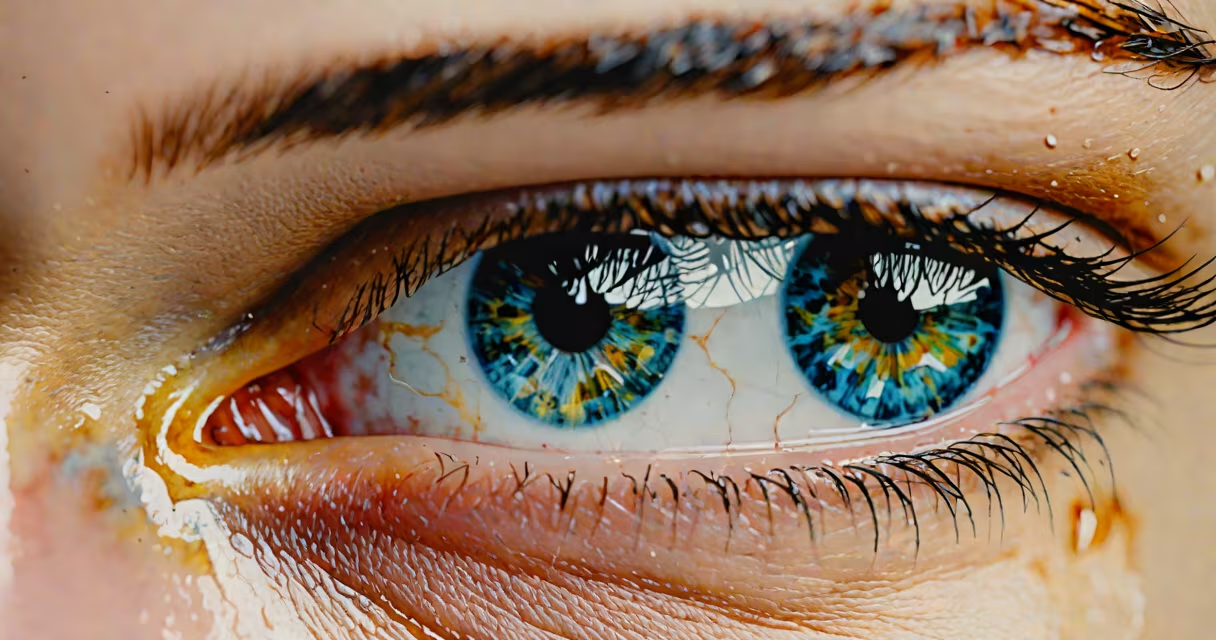
Recurrent eye watering-also called epiphora-is caused by an imbalance in tear production or drainage, not just emotional response. It occurs when tears either overproduce or fail to drain properly through the tear ducts.
Tears are essential for eye health. They lubricate the surface, wash away debris, and protect against infection. But when the system fails, excess fluid accumulates and spills over the eyelid. This isn't a symptom of weakness-it's a sign of physiological disruption.
According to the American Academy of Ophthalmology, epiphora affects approximately 1 in 10 adults over age 60, often due to age-related changes in tear duct function. The condition can stem from irritation, inflammation, structural issues, or neurological factors.
The lacrimal system produces tears in three layers: oily, watery, and mucous. The watery layer, produced by the lacrimal glands, is responsible for most volume. Normally, excess fluid drains into the nose via tiny channels called nasolacrimal ducts.
When the system is disrupted, either too much fluid is made or not enough is removed. Overproduction can happen during eye irritation-like from wind, smoke, or a foreign particle. Under-drainage occurs when the ducts narrow or close due to scarring, swelling, or congenital defects.
A 2021 study in *Ophthalmology* found that 68% of patients presenting with chronic tearing had underlying dry eye syndrome. This counterintuitive finding shows that the eyes may water excessively because they're dry-triggering reflexive overproduction as a defense mechanism.
Eye watering falls into two broad categories: overproduction and underdrainage. Each has distinct triggers and treatments.
| Type | Primary Cause | Typical Triggers | Prevalence |
|---|---|---|---|
| Overproduction | Irritation or dryness | Wind, smoke, screen time, contact lenses | ~40% of cases |
| Underdrainage | Nasolacrimal duct obstruction | Age, infection, trauma, congenital issues | ~60% of cases |
Overproduction is often linked to dry eye syndrome. When the ocular surface lacks moisture, the brain signals tear glands to compensate-resulting in overflow. This paradox is common in people who spend long hours on screens or wear contact lenses.
Underdrainage typically stems from blockages in the tear ducts. A 2020 review in *JAMA Ophthalmology* reported that 72% of adult cases of chronic tearing were due to partial or complete duct obstruction. Causes include infections like dacryocystitis, trauma, or age-related tissue stiffening.
One non-obvious fact: chronic tearing can result from neurological conditions. Bell's palsy, stroke, or facial nerve damage may impair the ability to blink effectively, leading to poor tear distribution and overflow. This is rarely suspected until other signs appear.
People often assume eye watering means the eyes are too wet. But in many cases, the opposite is true-the surface is dry, and the body is trying to fix it. This misperception delays proper diagnosis.
Another confusion: excessive tearing is mistaken for allergy symptoms. While allergies cause itching, redness, and runny nose, they don't usually lead to persistent, unilateral tearing unless secondary irritation develops. True allergic conjunctivitis involves more systemic symptoms.
True epiphora differs from normal blinking or emotional crying. Emotional tears involve different neural pathways and are triggered by mood, not environmental stimuli. Persistent leakage during meals, cold weather, or reading-without emotional context-points to a physical issue.
Consider a 58-year-old woman who reports tearing in her left eye for six months. She notices it worsens when she's outdoors or using her computer. Her vision is clear, and she has no pain or discharge.
She visited an ophthalmologist. After a fluorescein dye test, which tracks tear flow, the doctor found the dye remained trapped in the lower lid, indicating a blocked duct. An imaging scan confirmed narrowing in the nasolacrimal duct. She was diagnosed with acquired nasolacrimal duct obstruction.
Her treatment involved probing and irrigation to reopen the duct. After one session, tearing reduced by 80%. She later started using artificial tears to stabilize the ocular surface. Without testing, the root cause would have been missed.
As a clinician, I've seen patients delay care for years, assuming tears were "just part of aging." One man stopped wearing glasses because he thought his blurry vision was due to watering. He had undiagnosed dry eye and required prescription drops to restore comfort.
Watering eyes are not normal if they persist beyond a few days, especially with redness, pain, or vision changes. The American Optometric Association recommends evaluation if tearing interferes with daily activities like driving or reading.
Red flags include: tearing in only one eye, discharge, swelling near the inner corner of the eye, or worsening with light exposure. These suggest infection, blockage, or structural abnormality.