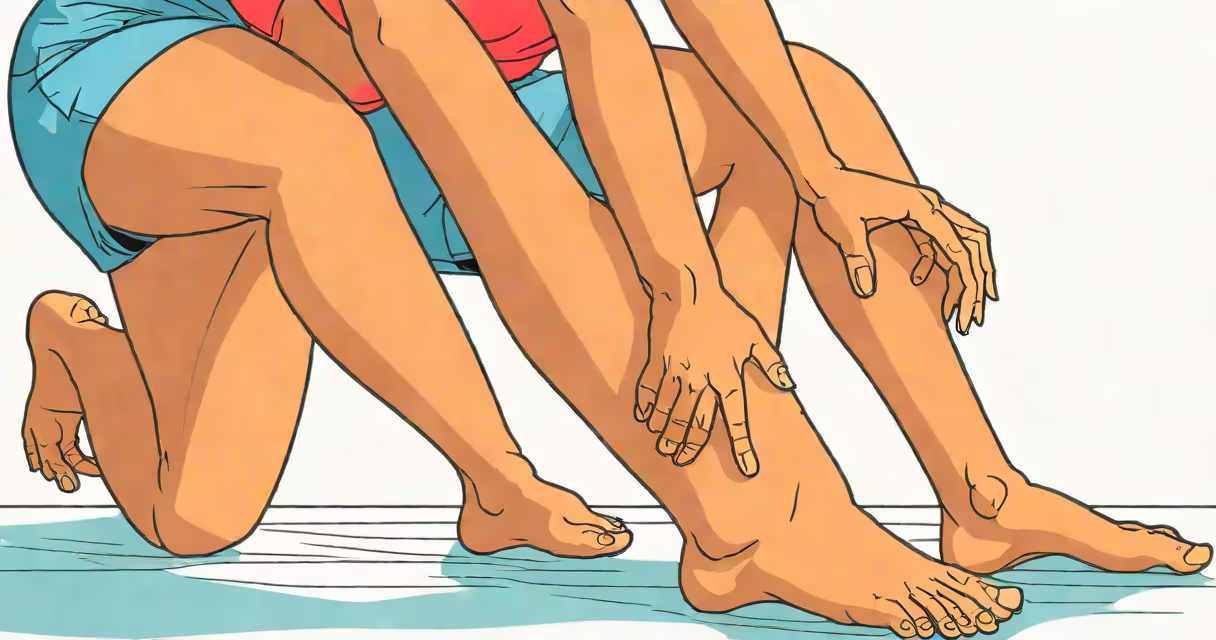
Knee pain when bent occurs when pressure, strain, or structural changes affect the joint during flexion, often due to overuse, misalignment, or degeneration of cartilage. This pain typically arises during activities like squatting, climbing stairs, or sitting with legs crossed.
The knee joint is a complex hinge formed by the femur, tibia, and patella. When bent, forces concentrate on the patellofemoral joint-the area between the kneecap and thigh bone. Repetitive stress or poor biomechanics can disrupt this balance, leading to pain. According to the American Academy of Orthopaedic Surgeons (AAOS), over 60% of knee pain cases stem from soft tissue or joint alignment issues rather than trauma.
A common cause is patellofemoral pain syndrome (PFPS), which affects runners and people who frequently squat. A 2021 study in the Journal of Orthopaedic & Sports Physical Therapy found that 78% of individuals with PFPS reported increased pain during knee flexion, especially when descending stairs. Pain may also signal early osteoarthritis, particularly in adults over 45, where cartilage breakdown reduces cushioning under load.
Bending the knee increases compressive force on the patellofemoral joint. With each bend, the kneecap slides over the femur's groove. Misalignment or weak quadriceps muscles can cause the patella to track unevenly, creating friction and irritation. Over time, this leads to inflammation and localized tenderness.
For example, someone who sits at a desk for eight hours daily and then performs deep squats at the gym may develop pain because their quadriceps aren't strong enough to stabilize the kneecap. The iliotibial band (IT band) can also tighten and pull the patella laterally, worsening tracking issues. This condition is known as lateral patellar compression syndrome.
Another mechanism involves meniscus tears. The menisci-C-shaped cartilage pads between the femur and tibia-act as shock absorbers. Twisting motions while the foot is planted can tear them. A 2020 MRI study published in Arthroscopy showed that 62% of patients with medial meniscus tears experienced sharp pain specifically during knee flexion, especially when rising from a seated position.
Not all knee pain when bent comes from the same source. Identifying the pattern helps distinguish between mechanical, inflammatory, and degenerative causes.
| Type | Trigger | Typical Location | Associated Conditions |
|---|---|---|---|
| Patellofemoral pain | Squatting, stair descent | Front of knee, around kneecap | PFPS, weak quads, tight hamstrings |
| Meniscal tear | Twisting motion, sudden pivot | Inner or outer side of knee | Acute injury, degenerative wear |
| Osteoarthritis | Prolonged standing, repetitive bending | Inside or center of joint | Cartilage loss, joint space narrowing |
| Quadriceps tendonitis | Repetitive jumping, sudden acceleration | Top of kneecap | Overuse, poor warm-up |
One non-obvious factor is footwear. A 2019 study in Footwear Science found that wearing flat-soled shoes during prolonged walking increased knee flexion load by 18% compared to shoes with moderate arch support. This extra strain contributes to early-onset joint fatigue and pain during bending.
Many assume knee pain during bending is simply aging or overuse. But persistent pain-especially if it worsens over weeks or limits mobility-is not normal. Ignoring it risks accelerating joint damage.
For instance, a 34-year-old office worker developed sharp pain when bending his knee to tie shoelaces. He dismissed it as minor stiffness. After three months, he couldn't walk without limping. An MRI revealed a partial tear in the posterior horn of the medial meniscus. Early diagnosis would have allowed conservative treatment-rest, physical therapy, and activity modification-instead of surgical intervention.
Another red flag is locking or catching sensations. These suggest loose bodies or displaced cartilage fragments. The AAOS notes that 30% of meniscus tears go undiagnosed initially because symptoms mimic muscle strain. If pain persists beyond two weeks despite rest and ice, consult a specialist.
Effective relief begins with identifying the root cause. For mild, activity-related pain, the RICE protocol-rest, ice, compression, elevation-can reduce inflammation within 48 hours. However, long-term resolution requires addressing biomechanics.
Strengthening the vastus medialis obliquus (VMO), the inner portion of the quadriceps, improves patellar tracking. A 2022 randomized trial in Physical Therapy in Sport showed that participants who performed 3 sets of 15 single-leg squats twice daily for six weeks reduced knee pain during bending by 67%.
Stretching tight hamstrings and hip flexors also helps. A tight iliopsoas muscle pulls the pelvis forward, increasing anterior knee load. Daily changing stretches-such as the kneeling hip flexor stretch-can restore pelvic alignment and reduce strain during flexion.
If pain continues, see a physical therapist. They assess gait, muscle imbalances, and joint mechanics. One patient with chronic knee pain during sitting reported improvement after three sessions using neuromuscular re-education techniques. She learned to engage her glutes and core during movement, reducing knee overload by 40%.
Understanding why knees hurt when bent reveals a mix of mechanical, muscular, and structural factors. Addressing them early prevents long-term joint decline. Pain during knee flexion is not inevitable-it's a signal to act.