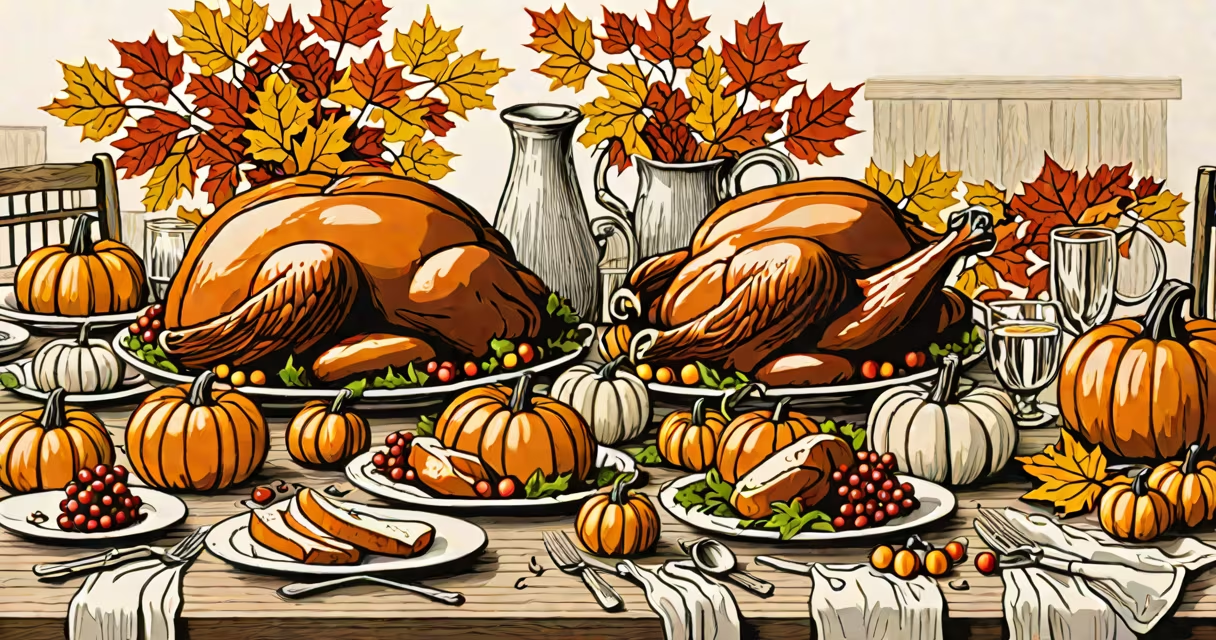
Canadians celebrate Thanksgiving on the second Monday of October to mark the harvest season and express gratitude, rooted in early colonial harvest festivals and distinct from the American version. The holiday honors seasonal abundance and communal unity, with regional variations in customs and timing.
Thanksgiving in Canada traces its origins to 1578, when English explorer Martin Frobisher held a ceremony on Newfoundland after surviving a harsh Atlantic crossing. He gave thanks for safe passage and offered a feast of roast mutton and bread. Though not a formal holiday then, this event is recognized as the earliest recorded Canadian Thanksgiving. By the 18th century, British settlers in Nova Scotia and Quebec began holding annual harvest celebrations, often tied to religious observances and local crop yields.
The modern Canadian Thanksgiving was formalized in 1879 when Prime Minister Sir John A. Macdonald declared it a national holiday. Initially set for late November, the date shifted in 1957 to the second Monday of October under the Uniform Holidays Act. This change aligned the holiday with the end of the harvest season across most of Canada's agricultural regions, particularly in Ontario and the Prairies, where fall crops like wheat, barley, and potatoes were gathered.
While both countries celebrate harvest and gratitude, Canadian Thanksgiving occurs earlier and lacks the same historical narrative. The U.S. holiday centers on the 1621 Plymouth gathering between Pilgrims and Wampanoag people, a story widely taught in schools. Canada's version has no equivalent single origin event and is less tied to colonial mythology.
A key difference lies in timing. The U.S. celebrates on the fourth Thursday of November, reflecting the late autumn harvest in New England. Canada's October date aligns with earlier harvests in colder climates. For example, in Manitoba, grain harvesting typically ends by mid-October, making the holiday practical as well as symbolic.
| Feature | Canadian Thanksgiving | U.S. Thanksgiving |
|---|---|---|
| Date | Second Monday of October | Fourth Thursday of November |
| Primary Crop Focus | Wheat, barley, potatoes | Corn, squash, sweet potatoes |
| Historical Origin | 1578 Frobisher expedition; 1879 federal holiday | 1621 Plymouth feast; 1863 Lincoln proclamation |
| Regional Variations | More prominent in central and eastern provinces | Widespread nationwide observance |
Another distinction is scale. U.S. Thanksgiving is deeply embedded in national culture, with widespread travel, football games, and commercial events. In Canada, the holiday is quieter, with fewer large-scale public festivities. Most celebrations remain family-centered, focused on meals and time together rather than parades or retail promotions.
Traditional Canadian Thanksgiving meals center around roasted turkey, stuffing, mashed potatoes, cranberry sauce, and pumpkin pie. These dishes reflect European settler cuisine adapted to local ingredients. Maple syrup, native to Canada, is often used in desserts and glazes, distinguishing the menu from American versions.
Many families host potlucks or community dinners, especially in multicultural cities like Toronto and Vancouver. In 2022, the City of Toronto hosted a free Thanksgiving lunch at the St. Lawrence Market, serving over 1,200 meals to residents. Such events emphasize inclusion and shared gratitude, values central to the holiday's spirit.
One lesser-known fact: Indigenous communities in Canada have long practiced seasonal feasting and giving thanks. The Mi'kmaq of Atlantic Canada refer to the fall season as "Kwéykwéy" - a time of reflection and sharing. Some modern Canadian Thanksgiving celebrations now include Indigenous voices and food, such as bannock and wild rice, acknowledging pre-colonial traditions.
Some assume Canadian Thanksgiving is a copy of the American holiday. That's incorrect. While both involve feasting and gratitude, the dates, historical roots, and cultural weight differ. The U.S. holiday includes national myths and political symbolism, while Canada's version remains more secular and regionally grounded.
Another misconception is that Thanksgiving is a major national holiday with extended vacations. In reality, most provinces observe it as a statutory holiday with a paid day off, but not a long weekend. Schools and businesses close, but travel patterns are modest compared to the U.S., where millions commute home each year.
I once attended a Thanksgiving dinner in Ottawa during a cold October evening. The host, a third-generation Ukrainian-Canadian, served perogies alongside turkey and maple-glazed carrots. Her mother had grown the vegetables in a backyard garden, and the meal included a toast to the season's yield. That moment illustrated how Canadian Thanksgiving blends heritage, local produce, and quiet gratitude - not spectacle.
Thanksgiving continues to serve as a moment of pause in a busy year. With rising concerns about mental health and social isolation, the act of gathering to share food and express appreciation holds value. According to Statistics Canada, 63% of Canadians reported attending a family Thanksgiving meal in 2023, up from 57% in 2019.
For many, the holiday reinforces community ties. In rural towns like Melfort, Saskatchewan, local churches organize food drives and community dinners. These efforts blend tradition with social responsibility, showing how the holiday adapts to modern needs.
Understanding why Canadians celebrate Thanksgiving reveals more than a seasonal custom - it reflects a cultural preference for modest celebration, regional identity, and connection to land and labor. The holiday is not about conquest or founding myths, but about harvest, presence, and shared tables.