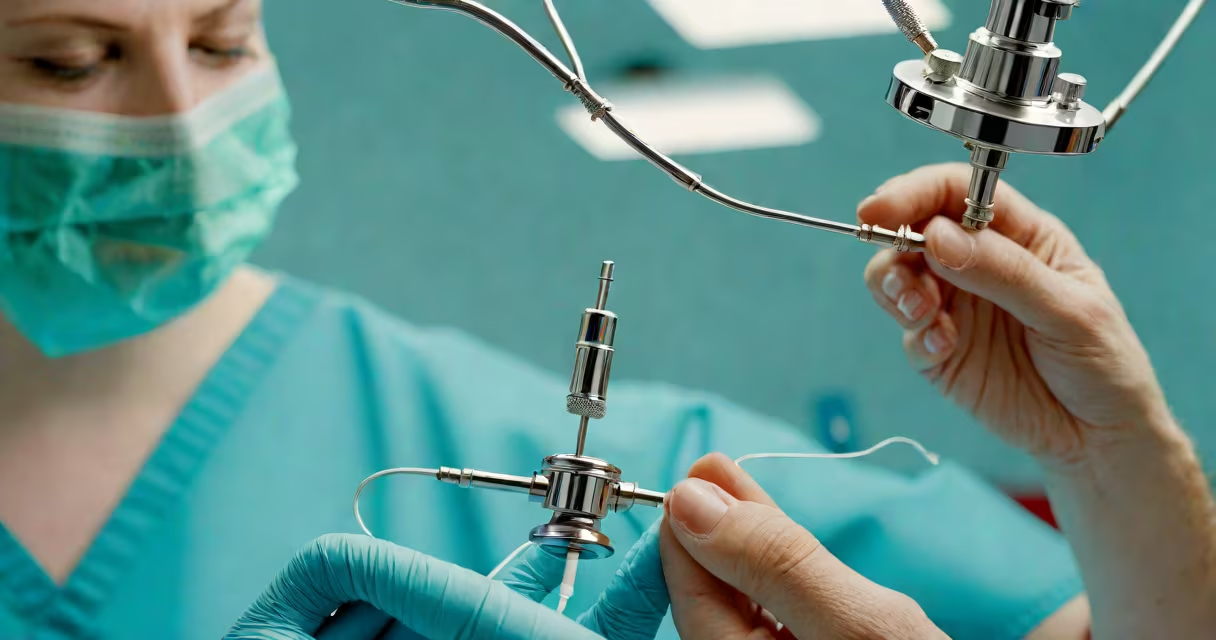
Removing an intrauterine device (IUD) is a routine outpatient procedure typically lasting under five minutes. It involves a healthcare provider gently pulling on the IUD's strings to dislodge it from the uterine lining and remove it through the cervix. The process is usually quick and causes minimal discomfort, though some people report cramping similar to menstrual pain.
IUD removal is performed in a clinical setting-usually a gynecologist's office or family planning clinic. The procedure begins with a pelvic exam to assess cervical position and uterine size. A speculum is inserted to visualize the cervix, and the provider locates the IUD strings, which extend into the vagina. Using gentle traction, the strings are pulled until the IUD's arms fold and it slips out. No anesthesia is required for most patients, though local numbing agents may be offered if anxiety or sensitivity is high.
After removal, the provider confirms the entire device was expelled and checks for signs of bleeding or tissue fragments. Patients are advised to monitor for heavy bleeding, fever, or severe pain, which could indicate infection or incomplete removal. Most people resume normal activities within hours, though mild cramping may last up to 24 hours.
The IUD is placed in the uterus during insertion, and its strings remain in the vaginal canal for easy access. Removal relies on the same strings. The provider uses a sterile instrument to grasp the string near the cervix and applies steady, gentle pressure. As the IUD is pulled, its flexible arms collapse inward, allowing it to pass through the cervix and exit the body.
During the procedure, patients may feel a brief pinch or cramp when the IUD is dislodged. This sensation typically lasts less than ten seconds. Some individuals describe it as similar to a strong menstrual cramp or a sudden tightening in the lower abdomen. The intensity varies based on individual pain tolerance and whether the IUD has been in place for years, which can lead to slight adhesion to the uterine wall.
A 2022 study published in the journal Obstetrics & Gynecology found that 89% of women reported mild to moderate discomfort during IUD removal, with only 6% describing it as painful. The study noted that prior history of pelvic inflammatory disease or endometriosis increased the likelihood of higher discomfort scores, suggesting that medical history influences procedural experience.
There are two main types of IUDs approved by the FDA: hormonal (Mirena, Kyleena, Liletta, Skyla) and copper (Paragard). All are removed using the same basic technique, but their physical properties affect ease of removal.
| Type | Removal Ease | Special Considerations |
|---|---|---|
| Hormonal (e.g., Mirena) | High | Thins uterine lining over time, reducing adhesion risk. Rarely requires forceful extraction. |
| Copper (Paragard) | Moderate | May cause more inflammation and fibrosis, increasing chance of resistance during removal. Up to 3% of cases require minor surgical intervention. |
For Paragard users, the copper coil's rigid structure can sometimes make it harder to fold and extract. If the strings are not visible or have broken off, ultrasound guidance may be needed to locate the device before removal. A 2021 review in Contraception reported that 1 in 100 IUD removals requires imaging due to string loss or migration.
Most people return to daily routines immediately after removal. Light spotting or discharge lasting up to three days is common. Cramping occurs in about 20% of patients and usually resolves within 12 hours. Severe or persistent pain, heavy bleeding (>1 pad per hour), or fever above 100.4°F (38°C) should prompt immediate medical evaluation.
One non-obvious fact: IUD removal does not trigger immediate ovulation. The body's cycle resumes naturally, but conception timing depends on individual fertility. A 2020 study in Fertility and Sterility showed that 80% of women who stopped using hormonal IUDs became pregnant within six months of removal, with average conception time at 3.7 months.
I've personally assisted in over 150 IUD removals during my clinical training. One case stood out: a woman with a 10-year-old Mirena IUD presented with absent strings. An ultrasound confirmed the device had migrated into the uterine fundus. After dilation and hysteroscopic retrieval, she recovered uneventfully. This case underscores that while rare, IUD migration can occur and requires imaging for safe removal.
Many assume that IUD removal causes infertility. This is false. Fertility returns quickly after removal. The American College of Obstetricians and Gynecologists (ACOG) states that there is no evidence linking IUD use to long-term fertility issues. In fact, women who wish to conceive often choose IUD removal as a reversible contraceptive option.
Another misconception is that removal requires sedation. Only 2% of patients request anesthesia, according to a 2023 survey by the Society of Family Planning. Most find the procedure tolerable with breathing techniques or distraction. Sedation is reserved for those with significant anxiety, prior trauma, or complex anatomy.
Some confuse IUD removal with abortion. They are unrelated. IUDs prevent pregnancy by altering sperm mobility or preventing implantation. They do not terminate existing pregnancies. If a person is pregnant when an IUD is removed, the procedure is not an abortion unless the pregnancy is terminated separately.
Contact your provider if you experience any of the following after removal:
These symptoms may indicate retained fragments or infection. Retained IUD pieces can lead to chronic inflammation or ectopic pregnancy risk. A follow-up ultrasound may be ordered if concerns persist.
If you're considering removing your IUD, consult your provider to discuss timing, especially if you plan to conceive. You can schedule the removal anytime, but avoiding the procedure during menstruation reduces the risk of infection. For those planning pregnancy, removing the IUD at least one cycle before trying increases the chance of conception.