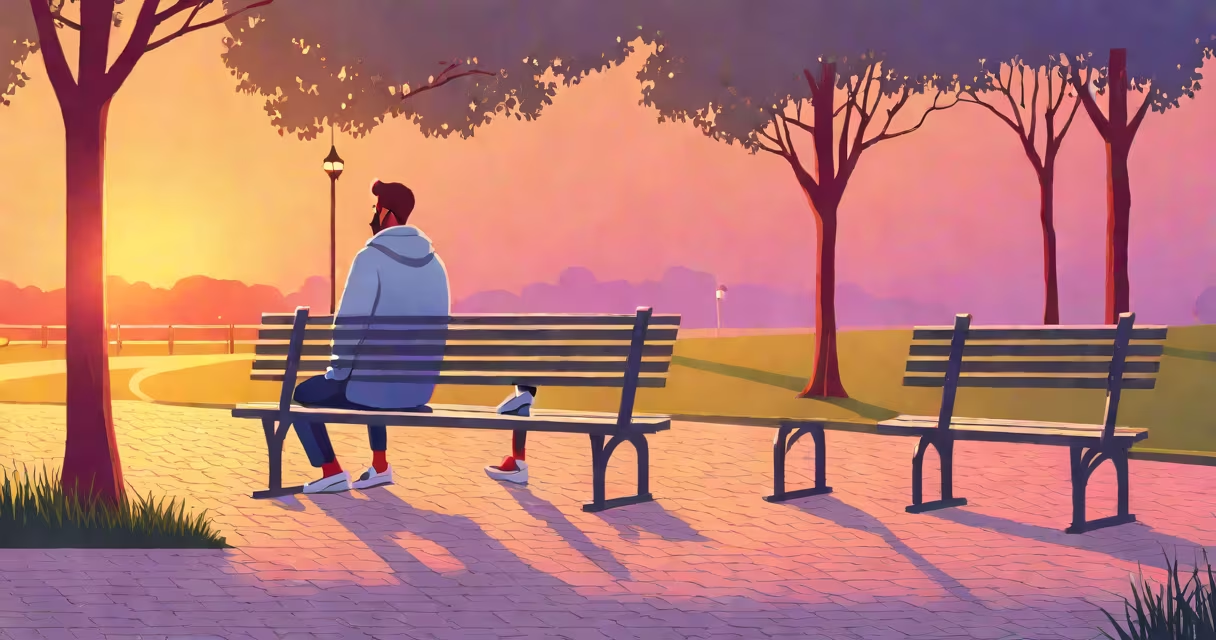
When you feel lonely is a subjective experience of emotional isolation despite being surrounded by people or physically alone. It arises when your sense of connection to others falls below your internal expectation of meaningful interaction. Loneliness is not simply being alone-it's the gap between desired and actual social relationships.
Loneliness is distinct from solitude. Solitude is the physical state of being alone, often chosen and accompanied by peace or reflection. Loneliness is the emotional response to perceived lack of connection. A person may be surrounded by coworkers yet feel deeply isolated. Conversely, someone alone in nature may feel calm and centered. The difference lies in perception, not presence.
Research shows loneliness affects nearly half of adults in the U.S. at some point each year, according to the American Psychological Association (APA). It correlates strongly with increased risk of depression, anxiety, cardiovascular disease, and premature mortality. The National Institute of Mental Health (NIMH) notes that chronic loneliness activates stress pathways similar to those triggered by physical pain.
Loneliness is not just a feeling-it's a biological signal. Evolutionarily, humans developed a neural system that treats social exclusion as a threat to survival. The brain's anterior cingulate cortex and insula activate during social rejection, producing discomfort akin to physical pain. This mechanism encourages re-engagement with others.
When you feel lonely, your brain prioritizes social cues. You may notice subtle signs of disinterest in conversations, misinterpret neutral expressions as coldness, or ruminate on past interactions. These cognitive shifts are adaptive in short bursts but harmful if prolonged. Chronic loneliness alters attention, memory, and decision-making.
A 2020 study published in *Nature Human Behaviour* tracked 1,000 adults over two years. Participants reporting frequent loneliness showed reduced activity in the prefrontal cortex-the area responsible for empathy and perspective-taking. This suggests loneliness doesn't just hurt emotionally; it changes how you process social information.
Loneliness often follows life transitions: moving to a new city, starting a new job, ending a relationship, or becoming a parent. But it can also strike during periods of stability. A 2021 survey by the Cigna U.S. Loneliness Index found that 61% of adults aged 18-34 reported feeling lonely, even when socially active online.
Many confuse loneliness with introversion. Introverts enjoy time alone and recharge through solitude. Loneliness is not about preference-it's about unmet relational needs. An introvert can feel lonely if they lack deep connections, just as an extrovert can feel isolated in a crowd.
Another misconception: loneliness is a sign of weakness. It's not. Feeling lonely is normal. The World Health Organization (WHO) recognizes loneliness as a public health concern, particularly among older adults and youth. It's not a personal failing-it's a human condition shaped by environment, biology, and culture.
Psychologists identify four primary types based on context and duration:
| Type | Duration | Trigger | Example |
|---|---|---|---|
| Transient | Short-term | Situational | Feeling disconnected after a long flight home |
| Chronic | Long-term | Recurrent isolation | Living alone with no regular contact for months |
| Relational | Variable | Relationship gaps | Missing a close friend who moved away |
| Existential | Persistent | Philosophical | Questioning purpose in life despite social ties |
Transitional loneliness is brief and usually resolves with routine re-establishment. Chronic loneliness persists and requires intervention. Relational loneliness stems from specific lost connections. Existential loneliness involves deeper questions about identity and belonging.
One non-obvious fact: loneliness can increase with access to digital communication. A 2018 study in *Computers in Human Behavior* found that heavy social media users reported higher loneliness levels than light users-even when their number of online contacts was high. Superficial interactions don't satisfy the brain's need for authentic connection.
Consider Maya, a 32-year-old software developer. She lives in a city with friends nearby but works remotely. Her days consist of video calls, emails, and solo coding sessions. She sees colleagues only in meetings. After six months, she begins to feel disconnected. She misses casual coffee chats, shared laughter in hallways, and spontaneous weekend plans.
Maya feels lonely-not because she lacks people, but because her interactions lack depth. She attends virtual happy hours but feels invisible. Her brain interprets this as social rejection. She starts avoiding invitations, fearing judgment. Over time, her mood declines. She feels tired, irritable, and withdrawn.
This pattern reflects a common trap: social proximity without emotional intimacy. Maya isn't isolated-she's disconnected. Her loneliness stems from unmet relational needs, not absence of contact.
Recognizing loneliness is the first step. The next is action. Evidence-based responses include:
I once spent a weekend in a small town, attending a community garden event. I didn't know anyone. I sat quietly at first. Then a woman asked me to help plant tomatoes. We talked about soil quality, weather patterns, and our childhood gardens. By the end, I felt seen. That moment taught me: connection isn't always about grand gestures. It starts with a shared task.
If loneliness persists beyond a few weeks, consider speaking with a therapist. Cognitive Behavioral Therapy (CBT) has shown effectiveness in reducing loneliness by reshaping negative thoughts about social interaction. The National Alliance on Mental Illness (NAMI) recommends seeking help when loneliness leads to sleep disruption, loss of appetite, or suicidal thoughts.
Understanding when you feel lonely isn't about fixing yourself-it's about recognizing a universal human experience. It's not a flaw. It's a signal. Responding with kindness, curiosity, and small steps toward connection restores balance.