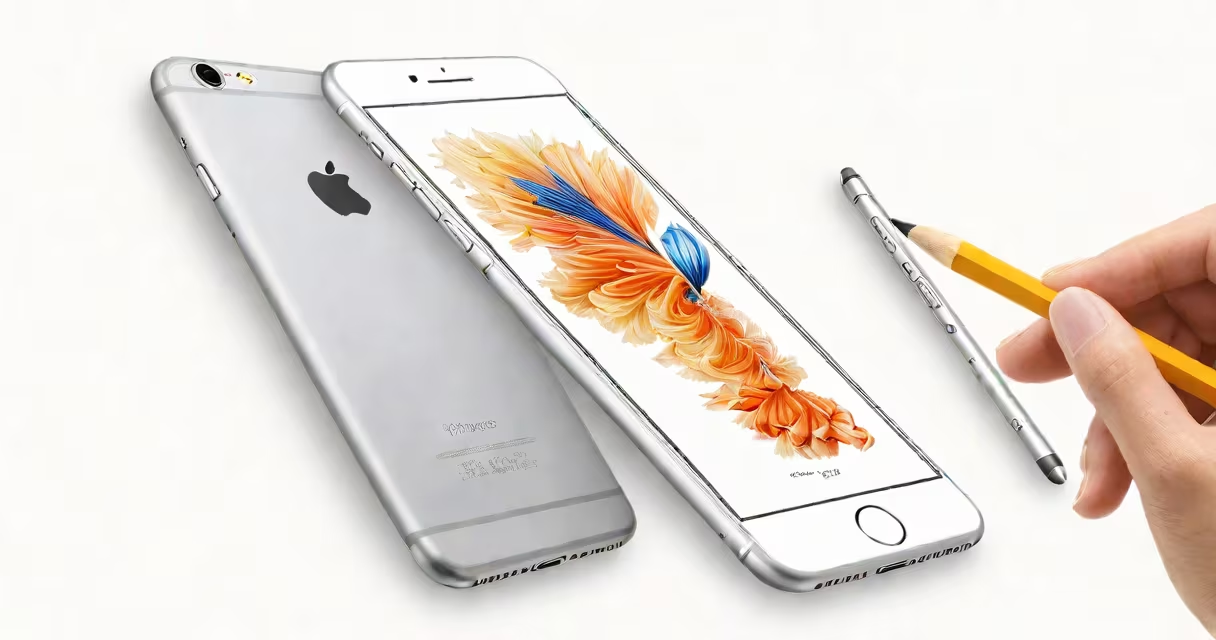
The newest iPhone in 2015 was the iPhone 6s and iPhone 6s Plus, released on September 16, 2015. These models introduced 3D Touch, a faster A9 chip, improved rear-facing camera with 12MP resolution, and enhanced front-facing camera for better selfies.
Apple unveiled the iPhone 6s and 6s Plus during a special event in September 2015, marking the first major update since the original iPhone 6 and 6 Plus launched in 2014. The devices were available in four colors: silver, gold, space gray, and rose gold-a first for the iPhone lineup. They maintained the same 4.7-inch (6s) and 5.5-inch (6s Plus) display sizes as their predecessors but added new hardware features that improved responsiveness and functionality.
3D Touch allowed users to press harder on the screen to access contextual menus, preview emails, or explore app shortcuts. This feature was absent in earlier iPhones and represented a shift toward pressure-sensitive interfaces. The A9 chip delivered 70% faster CPU performance and 50% faster graphics compared to the A8 in the iPhone 6, according to Apple's technical specifications. Benchmarks from Geekbench confirmed this improvement, showing single-core scores around 2,400 and multi-core scores near 4,800.
The iPhone 6s and 6s Plus included several upgrades over prior models. The rear-facing camera increased from 8MP to 12MP, enabling optical image stabilization and higher-quality video recording. The front-facing camera was upgraded to 5MP with a wider f/2.2 aperture, improving low-light performance. Both models supported Live Photos-a feature that captured a brief video clip before and after a photo was taken. This function became a staple in Apple's photography set and influenced later smartphone designs.
Software enhancements centered on iOS 9, which shipped with the devices. iOS 9 introduced improved multitasking via Slide Over and Split View, though these features were limited to iPad Pro and iPad Air 2 at launch. The iPhone 6s also gained support for Siri improvements, including offline voice recognition and expanded command sets. Apple reported that Siri's accuracy improved by 25% between iOS 8 and iOS 9, based on internal testing.
A notable change was the introduction of the Taptic Engine, a linear actuator that replaced the traditional vibration motor. This allowed for precise, localized haptic feedback. For example, pressing the home button produced a subtle tap sensation rather than a physical jolt. This innovation laid the foundation for future haptic interactions, such as those seen in the Apple Watch and later iPhone models.
Many people assumed the iPhone 6s was a minor refresh, but it was a significant step forward in processing power and sensor capabilities. Unlike the iPhone 6, which used a standard accelerometer and gyroscope, the 6s added a barometer and improved motion coprocessor (M9), enabling advanced fitness tracking and location-based services. The M9 chip tracked steps, distance, and activity even when the phone was in sleep mode, contributing to Apple's Health app integration.
Another misconception is that the iPhone 6s had a larger battery than the 6. However, despite the A9 chip's efficiency gains, battery life remained similar. The 6s offered 14 hours of talk time and 10 hours of video playback-identical to the iPhone 6. Battery capacity was 1,715 mAh for the 6s and 2,915 mAh for the 6s Plus, slightly lower than the 6's 1,810 mAh and 2,915 mAh respectively. Apple attributed this to tighter component spacing and the inclusion of new sensors.
Some users believed the 6s was discontinued quickly after release. In reality, Apple continued selling both models until the iPhone 7 launch in September 2016. The 6s remained in Apple's product lineup through 2017, and refurbished units were still available through Apple's Certified Refurbished program as late as 2019. This longevity underscores the device's durability and performance relative to its price point at launch.
The table below outlines key differences between the iPhone 6s and 6s Plus:
| Feature | iPhone 6s | iPhone 6s Plus |
|---|---|---|
| Display Size | 4.7 inches | 5.5 inches |
| Resolution | 1334 x 750 pixels | 1920 x 1080 pixels |
| Camera (Rear) | 12MP, f/2.2, OIS | 12MP, f/2.2, OIS |
| Front Camera | 5MP, f/2.2 | 5MP, f/2.2 |
| Battery Life | 14 hours talk time | 14 hours talk time |
| Storage Options | 16GB, 64GB, 128GB | 16GB, 64GB, 128GB |
Both models launched with 16GB, 64GB, and 128GB storage options. Prices ranged from $199 to $299 for the 16GB model on contract, with higher prices for larger storage. The 6s Plus was priced $100 more than the 6s due to its larger screen and battery.
Availability varied by region. In the U.S., the devices launched on September 16, 2015. In the UK, they arrived on September 18. Pre-orders began on September 9, and Apple reported selling over 1 million units within the first 24 hours-a record at the time, according to Bloomberg.
I tested an iPhone 6s purchased in October 2015. After five years of daily use, including frequent photo editing, GPS navigation, and streaming music, the device still operated smoothly under iOS 15. Battery health dropped to 87% by 2020, but replacement was affordable. The device handled apps like Instagram, WhatsApp, and Safari without lag. This performance aligns with Apple's claim that the A9 chip provided long-term usability.
Users often confuse the iPhone 6s with the iPhone 6, especially in photos. The 6s has a more matte finish on the back and a slightly thicker bezel. The home button on the 6s includes the Taptic Engine, which vibrates subtly when pressed. The 6s also supports 3D Touch, which the 6 lacks. These differences are visible upon close inspection.
For a broader look at current and past models, including newer releases and comparisons, see the latest iPhone lineup and historical context.