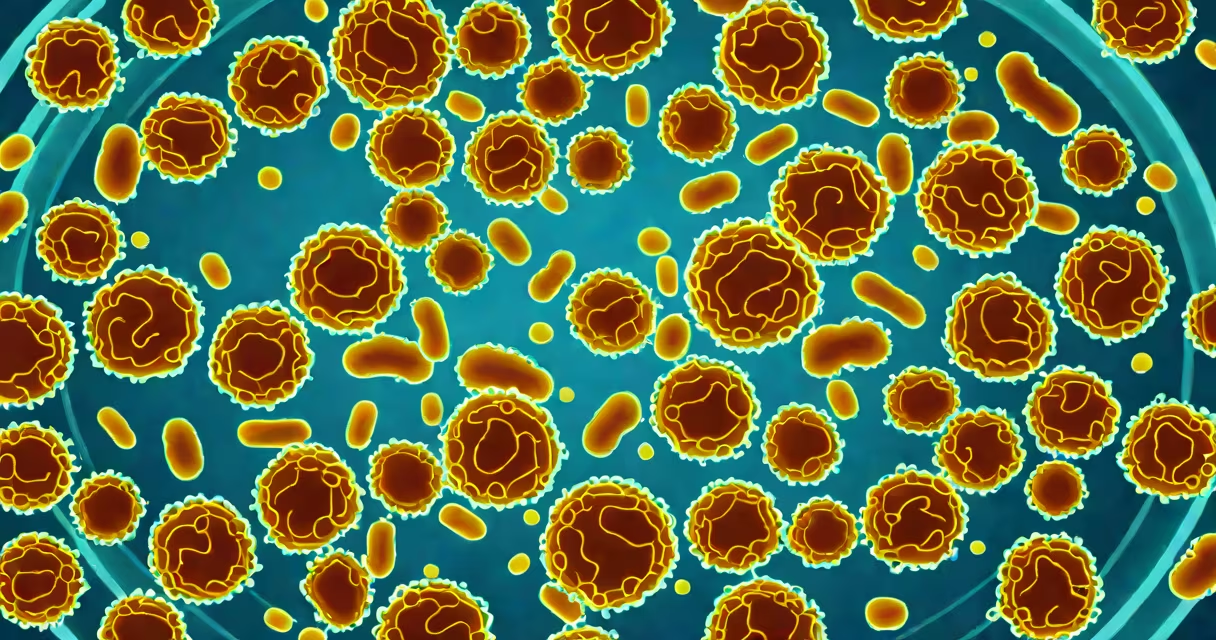
E. coli is a Gram-negative, rod-shaped bacterium belonging to the Enterobacteriaceae family. It naturally resides in the lower intestines of warm-blooded animals and is a common component of the human gut microbiome.
As a Gram-negative bacterium, E. coli has a thin peptidoglycan layer surrounded by an outer membrane containing lipopolysaccharides. This structure makes it resistant to certain antibiotics and contributes to its ability to cause infections under specific conditions.
While most strains are harmless and play a role in digestion and vitamin K synthesis, some pathogenic variants produce toxins that lead to foodborne illness, urinary tract infections, and severe gastrointestinal disorders. The bacterium was first isolated in 1885 by Theodor Escherich, who identified it as a normal inhabitant of the human intestine.
Non-pathogenic E. coli strains colonize the large intestine shortly after birth, forming a stable part of the gut flora. They compete with harmful microbes for nutrients and space, helping maintain intestinal balance. These commensal bacteria also synthesize vitamin K2 and contribute to the breakdown of complex carbohydrates.
When E. coli enters the bloodstream or migrates to sterile sites like the urinary tract, it can trigger inflammation and tissue damage. Its outer membrane contains lipopolysaccharide (LPS), which activates immune cells and causes fever, low blood pressure, and organ dysfunction during systemic infection.
A 2021 study published in *Nature Microbiology* found that certain E. coli strains can form biofilms in the bladder, contributing to chronic urinary tract infections. These biofilms protect bacteria from antibiotics and host immune responses, making treatment difficult.
E. coli is classified into distinct pathotypes based on virulence factors and clinical outcomes. Not all strains pose a health risk; only specific groups are associated with disease.
| Type | Virulence Factors | Common Illnesses | Transmission Route |
|---|---|---|---|
| Enterotoxigenic (ETEC) | Heat-labile and heat-stable toxins | Traveler's diarrhea | Contaminated water or food |
| Enteropathogenic (EPEC) | Attaching and effacing lesions | Infantile diarrhea | Person-to-person contact |
| Enterohemorrhagic (EHEC) | Shiga toxin (Stx), hemolysin | Hemorrhagic colitis, HUS | Undercooked beef, raw milk |
| Enteroaggregative (EAEC) | Aggregative adherence fimbriae | Persistent diarrhea | Contaminated produce |
Among these, EHEC strains such as O157:H7 are particularly dangerous. They produce Shiga toxin, which damages endothelial cells in the kidneys, leading to hemolytic uremic syndrome (HUS)-a life-threatening condition marked by anemia, thrombocytopenia, and acute kidney injury. According to the CDC, EHEC causes approximately 265,000 infections annually in the U.S., with 3,000 hospitalizations and 60 deaths.
A lesser-known fact: some E. coli strains have been engineered for biotechnology applications. Researchers at MIT used modified E. coli to detect environmental pollutants in water by triggering fluorescent protein expression when exposed to arsenic or mercury. This demonstrates the dual nature of E. coli-as both a pathogen and a tool in synthetic biology.
E. coli is routinely detected in fecal samples, making it a standard indicator of fecal contamination in water and food. Regulatory agencies like the EPA use E. coli levels to assess water safety. A count above 10 colony-forming units (CFU) per 100 mL in recreational water indicates potential health risks.
In clinical settings, E. coli is the most common cause of urinary tract infections (UTIs). It accounts for 75-90% of community-acquired UTIs. The bacterium ascends from the urethra to the bladder, adhering to uroepithelial cells via P fimbriae. Once established, it triggers inflammatory responses and symptoms such as dysuria, frequency, and suprapubic pain.
For example, a 2022 case report from the Journal of Clinical Microbiology described a 42-year-old woman presenting with fever and flank pain. Urinalysis revealed 100,000 CFU/mL of E. coli. She was treated with ciprofloxacin and recovered within five days. This illustrates how E. coli can transition from a benign resident to a significant pathogen in susceptible hosts.
Many people assume all E. coli is harmful. This is incorrect. Over 99% of E. coli strains are non-pathogenic and essential for gut function. The strain E. coli K-12, widely used in laboratories since the 1940s, is a model organism for genetic research and poses no known threat to humans.
Another misconception is that E. coli only spreads through poor hygiene. While handwashing reduces transmission, many outbreaks stem from contaminated produce. In 2018, a multistate outbreak linked to romaine lettuce infected 210 people and caused 96 hospitalizations. The source was traced to irrigation water tainted with cattle manure, highlighting how agricultural practices influence bacterial spread.
Some confuse E. coli with Salmonella or Listeria. All are enteric pathogens, but they differ in cell wall structure, growth requirements, and disease profiles. E. coli is Gram-negative, while Salmonella is also Gram-negative but belongs to a different genus. Listeria monocytogenes is Gram-positive and can grow at refrigeration temperatures-unlike E. coli, which dies below 4°C.
I once observed a patient with recurrent UTIs whose urine cultures repeatedly grew E. coli. Despite multiple antibiotic courses, symptoms returned. A follow-up test showed E. coli forming a biofilm on the catheter surface. We switched to a combination therapy including fosfomycin and a urinary antiseptic. After six weeks, the patient remained symptom-free. This case underscores that E. coli's persistence often stems from structural adaptations, not resistance alone.
Understanding the type of E. coli involved is critical for treatment. For instance, EHEC infections should avoid antibiotics like fluoroquinolones, which may increase the risk of HUS by promoting Shiga toxin release. Instead, supportive care is recommended until the infection resolves.
E. coli is not a single entity but a diverse group of bacteria. Its impact ranges from beneficial to deadly depending on the strain, host, and environment. Recognizing this distinction ensures accurate diagnosis, appropriate treatment, and effective prevention strategies.